





Replacement Migration and the Demographic Challenge
Scope and Countries Covered
Projected Declines and Ageing
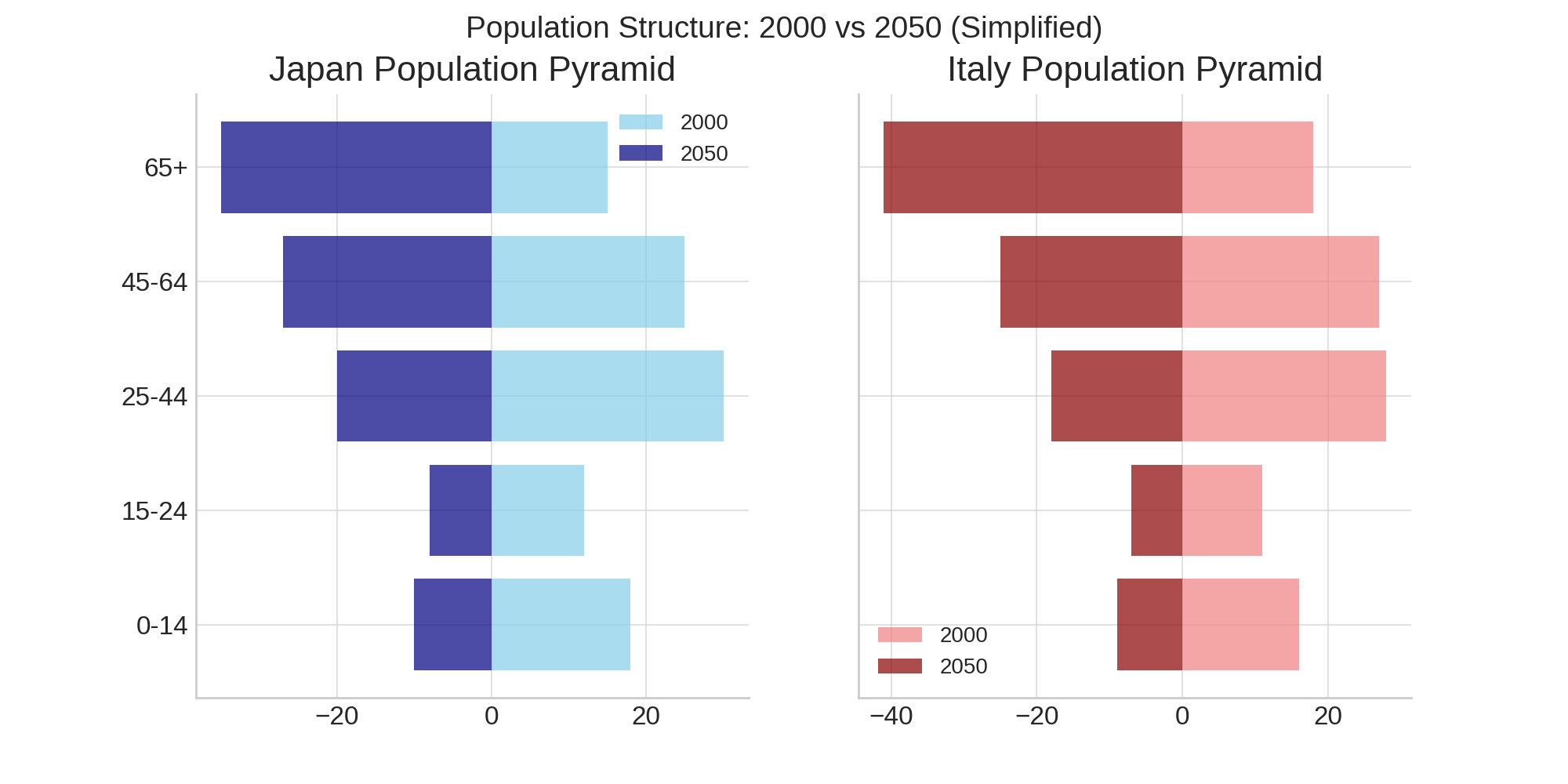
Ageing intensifies the challenge. In Japan, “the median age of the population is expected to increase by some eight years, from 41 to 49 years. And the proportion of the Japanese population 65 years or older is expected to increase from its current 17 per cent to 32 per cent”. Similarly, in Italy “the median age of the population increases from 41 years to 53 years and the proportion of the population 65 years or older goes from 18 per cent to 35 per cent”.
Scenario I: Medium-variant UN projections (baseline).
Scenario II: Zero migration after 1995.
Scenario III: Migration required to maintain total population at peak size.
Scenario IV: Migration required to maintain the working-age population.
Scenario V: Migration required to maintain the potential support ratio (PSR).
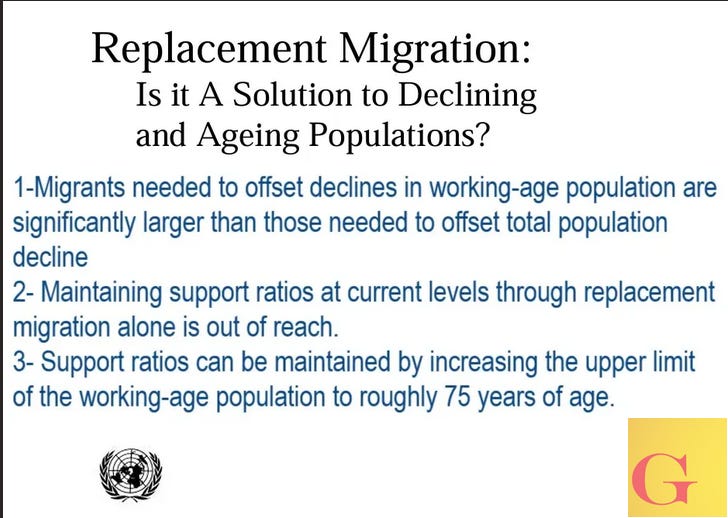
The authors conclude that “maintaining potential support ratios through migration alone seems out of reach, because of the extraordinarily large numbers of migrants that would be required”.
Quantifying Migration Requirements
Under Scenario III (constant total population), Italy would need 12.6 million immigrants (251,000 annually) versus only 0.3 million under the baseline. The European Union as a whole would require 47 million migrants, compared with 13 million.
Under Scenario IV (constant working-age population), Germany would require 24 million migrants by 2050, or 487,000 annually, compared with 17 million under Scenario III. Italy’s requirement grows to nearly 19 million.
Under Scenario V (constant PSR), “the total number of migrants in Japan is 524 million, or 10.5 million per year. For the European Union, the total number is 674 million, or 13 million per year”.
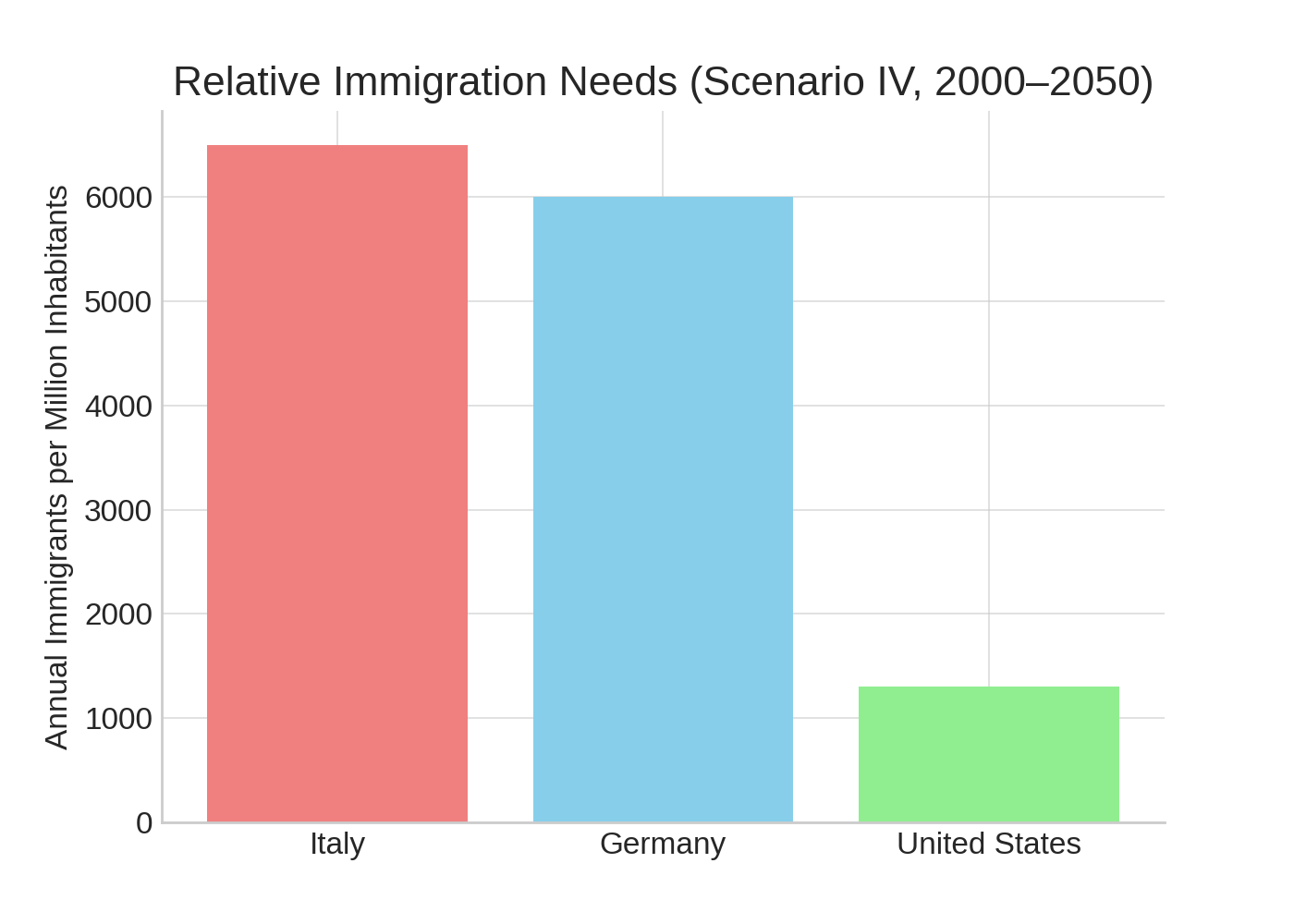
Relative to population size, Italy and Germany would require the highest per capita inflows to sustain their labor forces—6,500 and 6,000 annual immigrants per million inhabitants, respectively. By contrast, “the United States would require the smallest number of immigrants, approximately 1,300 per million inhabitants to prevent the decline of its working-age population”.
“During the first half of the 21st century, the populations of most developed countries are projected to become smaller and older as a result of below-replacement fertility and increased longevity”.
In the absence of migration, declines will be sharper and ageing faster.
Fertility is unlikely to recover to replacement levels, making population decline inevitable.
For France, the UK, the United States, and the European Union, “the numbers of migrants needed to offset population decline are less than or comparable to recent past experience”.
Migratory Replacement is Herehttps://t.co/dRFQNCCYF3
— VBL’s Ghost (@Sorenthek) September 24, 2026
Free Posts To Your Mailbox