





Who Pays For AI's Power Plants?
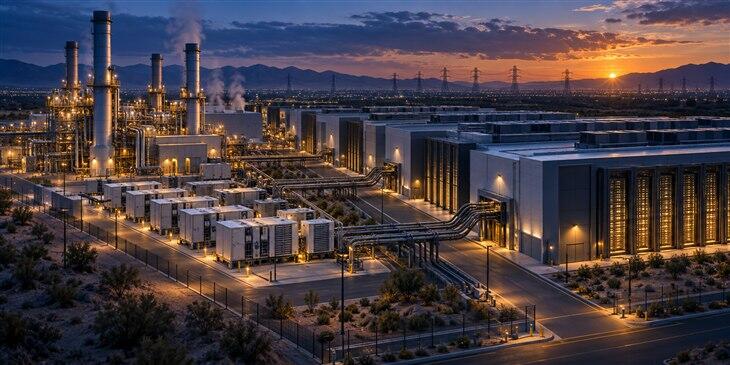
The Power Plant Moves Next Door
Two Zero Hedge reports on Sunday described the same AI buildout from different ends. In its account of Goldman Sachs’ research, Zero Hedge reported that the bank raised its forecast for behind-the-meter data-center power capacity to 67 gigawatts by 2030, enough to supply a quarter of global data-center power demand. A separate Bank of America debt map showed the range of financing structures being used for AI and data-center infrastructure. Put the two together: as more data centers bring power on-site, someone has to finance the plant, supply the equipment, and move the electricity into the racks.
Long grid-connection waits make on-site generation attractive. Goldman sees fuel cells gaining share despite a higher modeled cost per megawatt-hour than gas engines or turbines, because fuel cells can deliver power sooner. The timing matters when a completed data center is waiting for electricity before it can generate revenue.
The Money Behind The Megawatts
An on-site power plant requires financing for generating equipment, fuel supply, construction and electrical distribution. Corporate bonds, private credit and project-finance vehicles put repayment risk on different balance sheets. For investors, the questions are concrete: how firm is the customer’s power commitment, when will the plant begin operating, and who absorbs a delay?
Bloom Energy (BE) offers a live example. The company says a $1.7 billion project investment supports deployment of its on-site fuel cells for Nebius’ AI infrastructure. Oaktree supplies infrastructure capital, Morgan Stanley provides tax equity, and MUFG leads the senior debt financing. The equipment and its financing are being assembled together.
Our Current Exposure
Babcock & Wilcox Enterprises (BW) has received full approval to proceed on a 1.2-gigawatt power project for AI factory campuses backed by Applied Digital. GE Vernova (GEV) offers gas-turbine configurations for data centers generating power behind the meter. Powell Industries (POWL) makes the switchgear and distribution equipment that can serve both grid-connected and on-site generation.
We currently have two Bloom Energy options trades open, along with options trades in Babcock & Wilcox, GE Vernova and Powell Industries. Together, they span fuel cells, boilers and steam generation, gas turbines, and electrical distribution.
We’ve Traded This Space Successfully Before
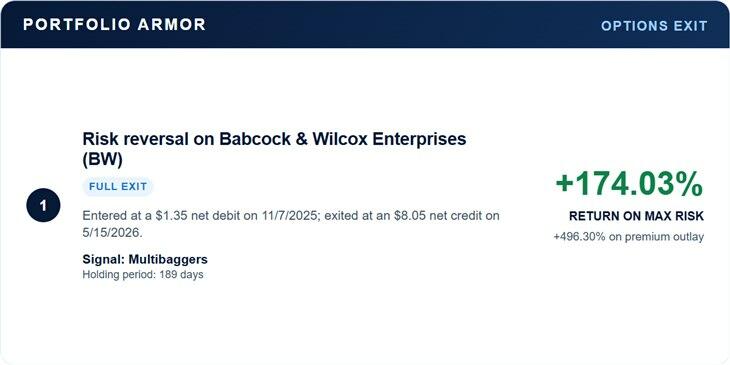
Our Babcock & Wilcox risk reversal was one example:
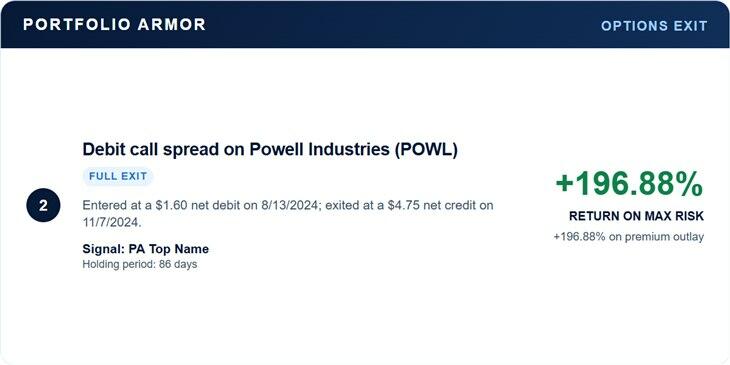
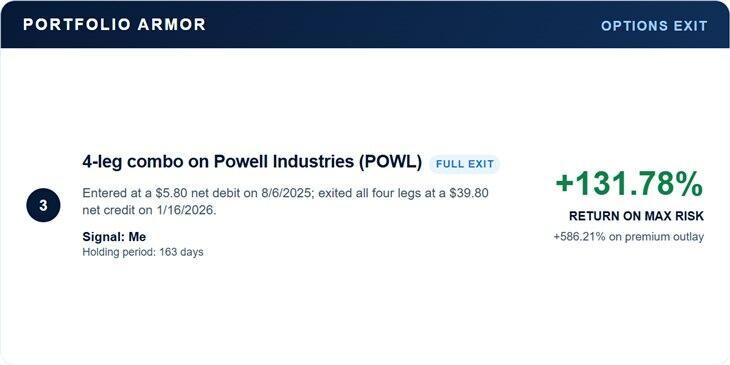
We’ve returned to Powell with different options structures. These are two separate completed trades:
To be fair, not all of our trades in this space have been winners. For example, we lost 100% on a Powell call spread last year.
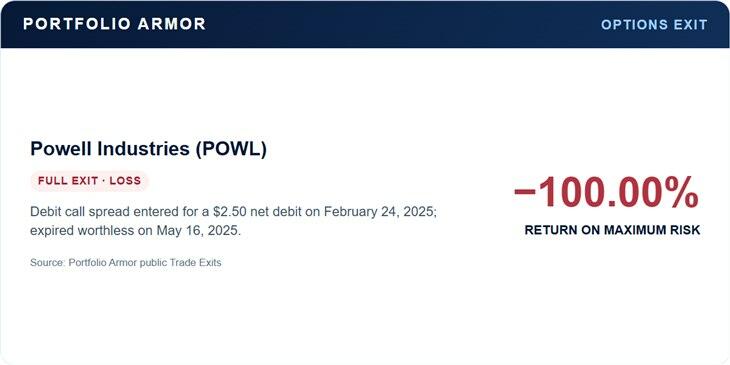
You can find a record of all of our trade exits since July of 2024—win or lose—in this spreadsheet.
Orders Have To Become Megawatts
The next test is whether suppliers turn orders into operating megawatts on schedules their customers can finance. We’ll keep screening the less obvious parts of the AI power buildout and structure trades when the company evidence and options pricing line up.
Companies like Babcock & Wilcox and Powell Industries may be unfamiliar to investors focused on chipmakers. If you’d like a heads-up when we place our next trade in this theme, you can become a free subscriber to our trading Substack here:
To learn how we find and structure trades, see our Start Here page: