





The Macro Butler’s Monthly Meditation : Gloom, Boom, Shrooms
Since 2020 the world has survived a pandemic, a cost-of-living shock the CPLie somehow never noticed, a housing market that now requires a lottery ticket, two regional wars, and the sullen hangover of Trump Stagflation. Economies are made of people, and people are not coping. The WHO counted a 25% jump in anxiety and depression in COVID’s first year and now counts over a billion people living with a mental health condition, at a cost of US$1 trillion a year in lost productivity. That is not a health statistic. That is a GDP statistic with a therapist.
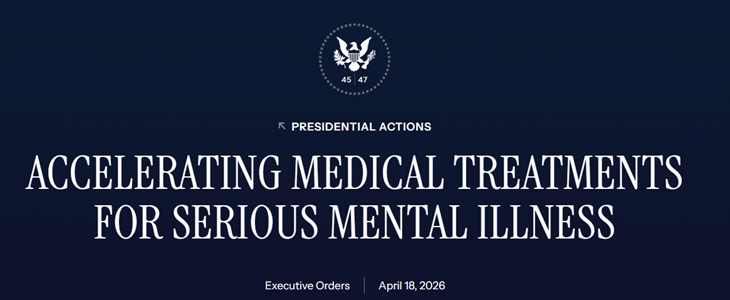
Enter the molecules that governments spent fifty years treating as public enemy number one: psilocybin, LSD, MDMA, DMT, mescaline and ibogaine. In 2026 they are strolling back through the front door of medicine, wiping their feet. In April the President signed an executive order to fast-track the whole field, pausing only to ask, “Can I have some, please?” Donald Copperfield never misses a trick, nor a dose.
The word Psychedelic is barely seventy years old. In 1957 the psychiatrist Humphry Osmond, fresh from supervising Aldous Huxley’s first mescaline trip, offered the New York Academy of Sciences a new coinage from the Greek for “mind-manifesting“. Huxley had lobbied for phanerothyme. Osmond won with a rhyme: “To fathom Hell or soar angelic, just take a pinch of psychedelic.“ Even then, the sector was sold on branding rather than data.
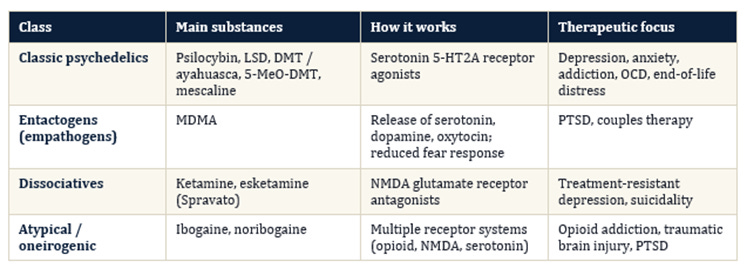
The classic psychedelics — psilocybin, LSD, DMT, mescaline — all tickle the same switch, the serotonin 2A receptor, which the cortex carries in abundance. Depending on dose and company, the result runs from brighter colours to the complete resignation of one’s ego. Imaging work at Imperial College shows they quieten the default mode network: the committee in your head that narrates who you are, what you did in 2009, and why it was mortifying. In depression that narrator is stuck on repeat. Psychedelics appear to unstick it.
They may also be gardeners. Lab work suggests they sprout new connections between neurons and briefly reopen the “critical periods” of learning that slam shut after childhood. Hence the therapeutic theory: the molecule cures nothing on its own, it merely opens a window, and the therapist is meant to climb through it with something useful. Hence too the obsession with set and setting — mindset and surroundings. A supervised clinic and a muddy field at 3am contain the same chemistry and produce entirely different afternoons.
In everyday use, and in the investment universe, the label has stretched well beyond the classic compounds. The table below sketches the family.
Psychedelic, psycholytic and psilocybin therapy
Three phrases, used interchangeably by journalists, with genuinely different pedigrees. Psycholytic therapy — “mind-loosening“ — was the European house style of the 1950s and 1960s, practised by Ronald Sandison at Powick Hospital and Hanscarl Leuner in Germany. Small doses of LSD or psilocybin, repeated over dozens of sessions, used to grease the wheels of psychoanalysis so that buried material could surface and be talked to death in the usual way.
Psychedelic therapy, the North American answer from Osmond and Abram Hoffer in Saskatchewan, dispensed with the greasing. One or two enormous doses, bracketed by preparation beforehand and “integration” afterwards. Where the European model was archaeology, the American model was seismology. Modern trials, psilocybin and MDMA alike, are a hybrid: screening, preparation, one to three all-day sessions under the eyes of two facilitators, then integration.
Psilocybin therapy is that model run on psilocybin, the prodrug in more than two hundred mushroom species — mostly Psilocybe — which the body converts to psilocin. It leads the race to become the first approved classic psychedelic because it is short (four to six hours rather than LSD’s working day), carries less countercultural luggage, and has the fattest data file.
The industry has since invented a fourth category the pioneers would not recognise: psychedelics designed to work with little or no psychotherapy attached. Progress, or the pharmaceutical equivalent of selling the lesson without the teacher?

Humanity did not discover psychedelics in a Swiss laboratory. It inherited them. The oldest hard evidence sits in Shumla Cave in the lower Pecos of Texas: two peyote buttons, radiocarbon-dated to about 3700 BCE and still carrying measurable mescaline, which is more than can be said for most things six thousand years old. Rock art at Tassili n’Ajjer in the Sahara and Selva Pascuala in Spain is said to show mushroom-headed figures, though scholars still argue whether our ancestors were painting their visions or simply their lunch.
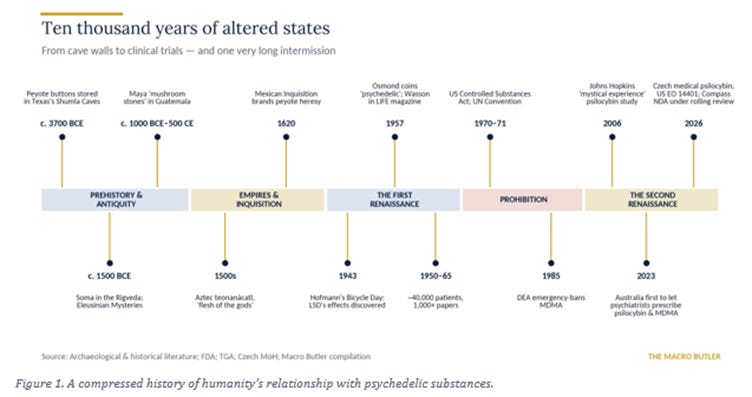
Then the texts arrive. The Rigveda, around 1500 BCE, devotes over a hundred hymns to Soma, a drink promising divine insight and immortality, whose recipe is now lost — the candidates range from fly agaric to ephedra, which is quite a spread. Near Athens, initiates at the Eleusinian Mysteries drank the barley potion kykeon for nearly two thousand years and emerged transformed; Plato, Cicero and assorted emperors reportedly among them. In 1978 Wasson, Ruck and Hofmann proposed the active ingredient was ergot, the barley fungus that gave Hofmann LSD. The Mysteries closed in 392 CE when the emperor Theodosius shut the pagan sanctuaries: the world’s first war on drugs, conducted by decree and with rather better robes.
Mesoamerica leaves no room for doubt. Hundreds of carved “mushroom stones” from Guatemala and southern Mexico, spanning 1000 BCE to 500 CE, attest to a cult that outlasted empires. The Aztecs ate teonanácatl, “flesh of the gods”, with peyote and morning glory seeds on the side. In the Amazon, Indigenous peoples devised ayahuasca, pairing a DMT leaf with a vine that disables the enzyme which would otherwise destroy it — a two-part pharmacological trick discovered among tens of thousands of species without a laboratory, a control group or a single grant application. In Gabon, the Bwiti used iboga root bark for initiations lasting days.
The Spanish arrived and organised the suppression. Friars such as Bernardino de Sahagún catalogued the sacred mushrooms with one hand and crossed themselves with the other. In 1620 the Mexican Inquisition declared peyote heresy, the devil’s work, and therefore illegal. The ceremonies did not stop; they simply moved to the mountains of Oaxaca and into the folds of Indigenous Catholicism, where they waited out three centuries of Western amnesia in the care of healers like the Mazatec curandera María Sabina — who would later be repaid for her hospitality by the entire 1960s.

Modern psychedelic science opened in 1897, when Arthur Heffter isolated mescaline from peyote and, in the finest tradition of German chemistry, swallowed it himself. Späth synthesised it in 1919. But the decisive accident happened in Basel. In 1938 Albert Hofmann, hunting a circulatory stimulant among ergot derivatives at Sandoz, produced the twenty-fifth compound in his series, LSD-25. The animals were unimpressed and it was shelved. Five years later, on a hunch, Hofmann went back to it, absorbed a trace through his fingertips, and enjoyed “an uninterrupted stream of fantastic pictures”. Three days later, on 19 April 1943, he swallowed 250 micrograms — a dose he believed to be modest and which was nothing of the sort — and cycled home through Basel while the scenery melted. The faithful still observe Bicycle Day.
Sandoz then did what any pharmaceutical company does with a miracle molecule: it launched a brand. From the late 1940s LSD went out to researchers as Delysid, recommended for “analytical psychotherapy” and for psychiatrists curious to sample psychosis in person. In 1957 the banker-turned-mycologist Gordon Wasson described a ceremony with María Sabina in LIFE magazine, and a village in Oaxaca has never been the same since. Hofmann isolated psilocybin the next year; Sandoz sold it as Indocybin. Huxley’s The Doors of Perception had already made mescaline respectable in literary drawing rooms.
The output was industrial: over a thousand clinical papers between 1950 and the mid-1960s, several international conferences, and some 40,000 patients treated. Osmond and Hoffer dosed alcoholics in Saskatchewan and reported recovery rates that embarrassed conventional treatment; a 2012 meta-analysis of six randomised trials from the era, covering 536 patients, found they were broadly right. Sandison ran an LSD unit at Powick. Grof, in Czechoslovakia and later at Spring Grove in Maryland, worked with dying cancer patients.
Then two companions joined the story, both unwelcome. The CIA’s MKUltra (1953–1973) dosed unwitting citizens in search of a truth serum, and left behind a permanent stain the field is still scrubbing. And Timothy Leary. The Harvard Psilocybin Project he founded with Richard Alpert in 1960 did produce real work, notably the 1962 Good Friday Experiment, in which theology students in a Boston chapel met God on schedule. But Leary’s evangelism, casual methodology and enthusiasm for dosing students got him…
Since January 1, 2026, The Macro Butler Monthly Meditation has become a subscribers-only edge.
Unlock the framework, understand the signals, and learn how to trade it—subscribe here to gain access.
https://themacrobutler.com/monthly-meditation/
Join The Macro Butler on Telegram here : https://t.me/TheMacroButlerSubstack
Learn the principles behind:
📈 Investing & Portfolio Building
🌍 Economics & Market Cycles
💡 Smarter Financial Decision-Making
Whether you’re starting your investment journey or looking to sharpen your financial knowledge, The Macro Butler gives you the framework to think differently about money.
👉 Start Learning Now
https://themacrobutler.com/financial-academy/
You can contact The Macro Butler at info@themacrobutler.com
Disclaimer
The content provided in this newsletter is for general information purposes only. No information, materials, services, and other content provided in this post constitute solicitation, recommendation, endorsement or any financial, investment, or other advice.
Seek independent professional consultation in the form of legal, financial, and fiscal advice before making any investment decisions.
Always perform your own due diligence.