


Inflation Surprise
Welcome to MktContext! I am a professional money manager, trader, and investor who has been timing and beating the market for over a decade. We specialize in predicting market direction by studying the economy and market signals. Join 13,000 subscribers at MktContext.com for our weekly deep dives and analysis.
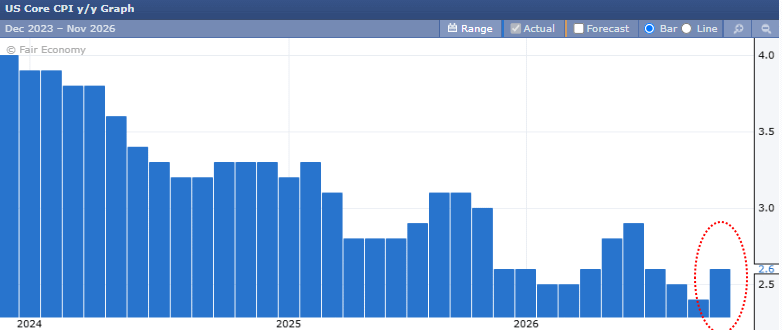
For a long time now, we’ve been sanguine on inflation. But this week’s hot CPI print is impossible to ignore. While last month’s print was mostly driven by one component (cellphone services), this one was broader. It makes us reassess the slowing inflation narrative.
Following a string of cool prints, this month delivered the largest upside surprise since March 2024, pushing core CPI (excluding volatile food and energy) to 2.6%/year. So we need to assess whether the increases will be persistent.
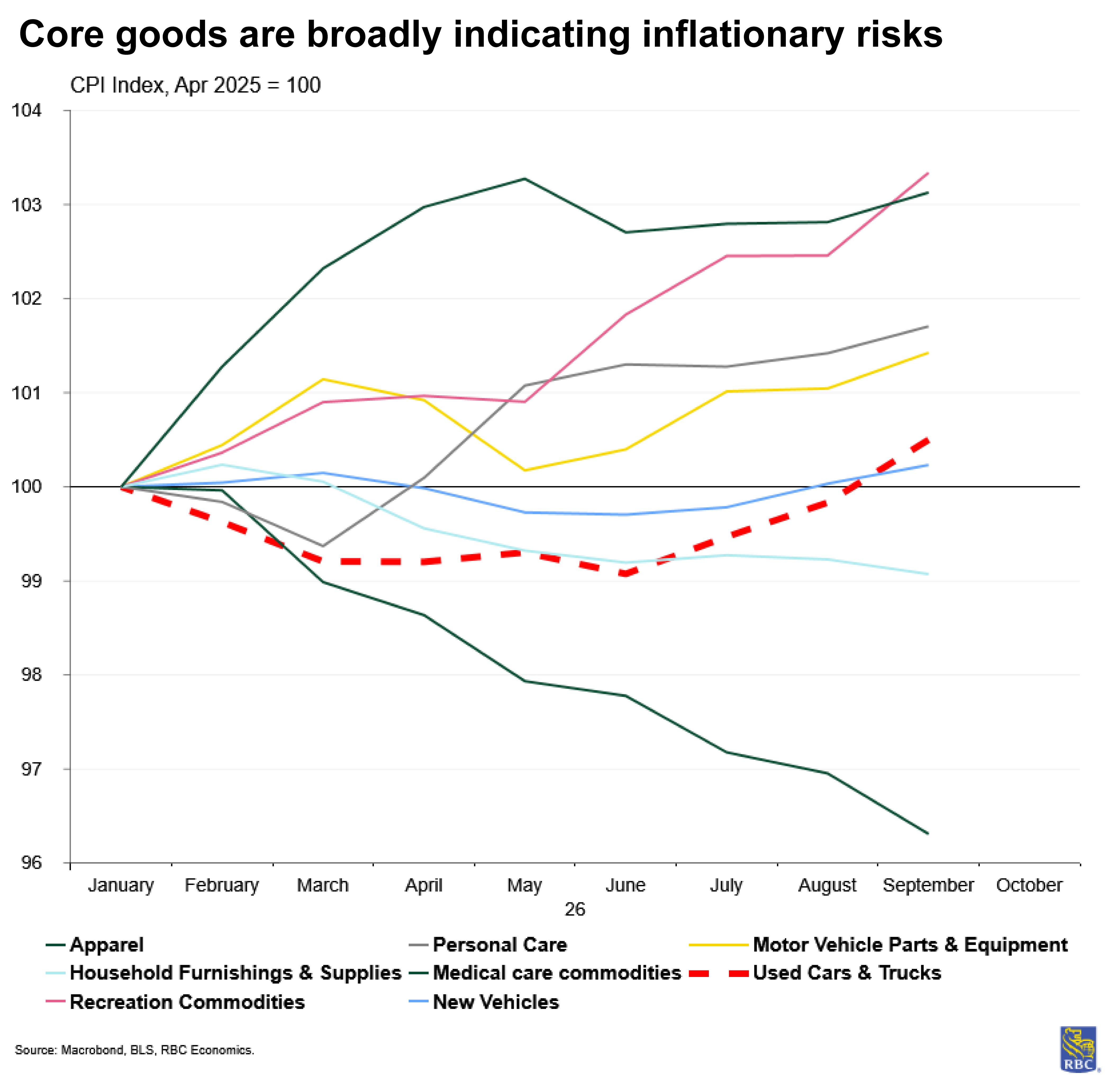
Both goods and services prices were problematic in September. We’re starting to see the effects of supply chain pressures and rising transport costs bleeding into everyday items.
In core goods: prices for cars, car parts, clothing, and sports equipment are all higher. These are the import categories reporting the highest price increases. Computer electronics deserve special mention because tech companies are hoarding components for AI servers, driving up prices for everyone else.
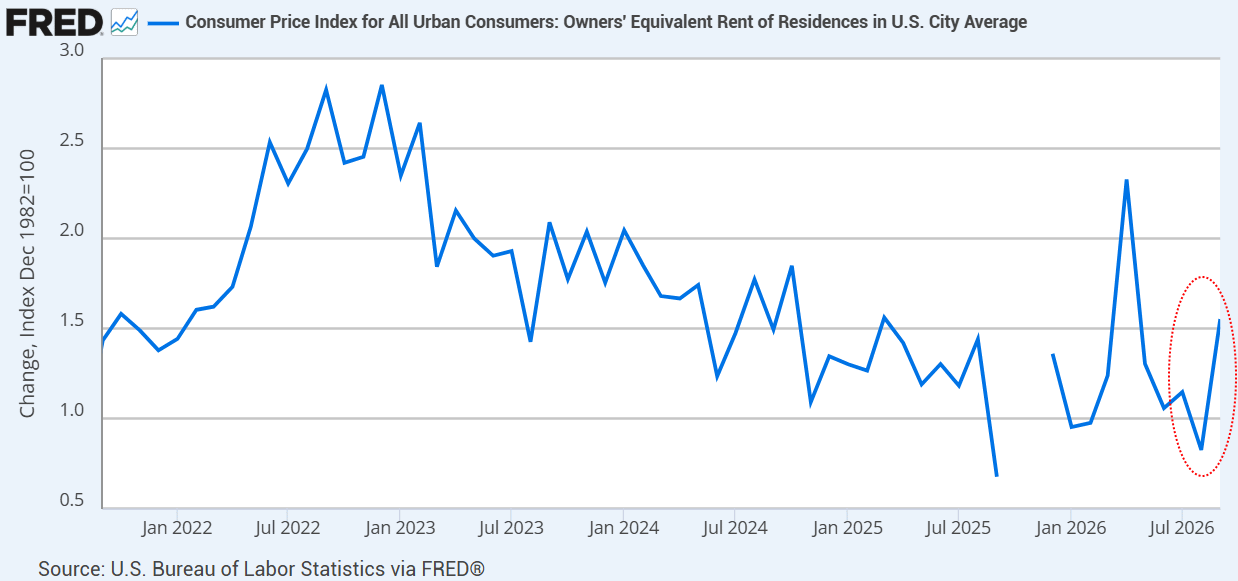
Meanwhile, rent and shelter costs spiked after cooling through the summer:
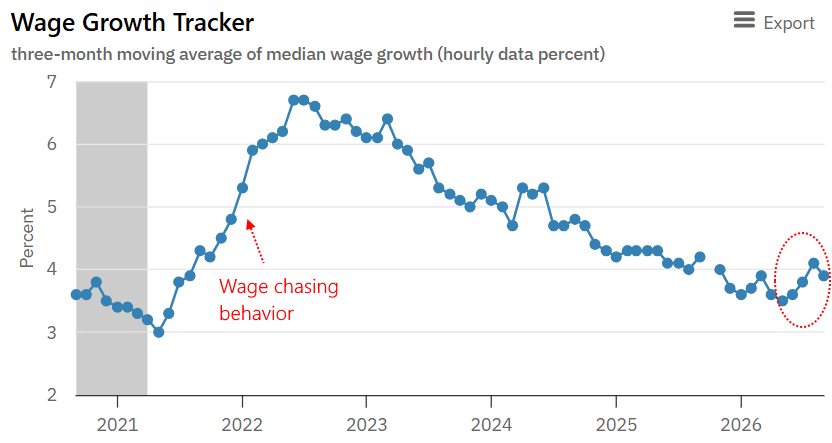
Wage inflation has remained stable in recent months, lacking the frantic wage-chasing behavior seen post-Covid. Because rising productivity allows workers to generate more value per hour, employers aren’t forced to hike prices just to cover labor costs.
Strong economic growth had previously failed to spark higher inflation, but that dynamic may be shifting as economic strength finally catches up to price levels.
Furthermore, we now view the Middle East conflict as a permanent fixture rather than temporary. This shift is driving diesel prices sky-high; hence the pressure on import and transport costs.
Most intriguing was the market reaction: after an initial upward spike, interest rates fell drastically. Market-implied inflation rates didn’t budge.
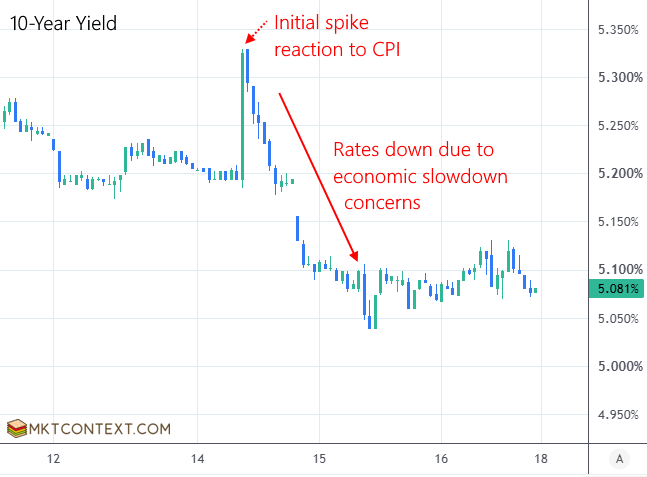
The message? The market is growing worried about an economic slowdown. Restrictive interest rates are making it difficult for companies to secure construction financing (ouch for AI data centers) or refinance debt. That’s why junky, profitless, speculative stocks sold off in favor of the quality and well-capitalized firms.
As we like to say, one data point doesn’t make a trend. But this inflation print forces a reality check as the Fed feels the need to react. Inflationary regimes are unfriendly to equity markets, so we watch this data closely.
Get the rest of this article, including our portfolios and trades, at MktContext.com!
Join 13,000+ investors who are timing the market!