


The Architect Of America’s Prosperity
A 14,450% Gain On A $4 Premium
Last week, our friend Dr. David Janello closed a Moderna call calendar he’d bought for us on October 22. The net option premium went from $0.04 to $5.82—a 14,450% gain on the premium. For one calendar, those quoted premiums were $4 at entry and $582 at exit.
SpreadHunter’s algorithms found the trade. Here’s the original record of Janello’s entry and exit:

Here are the calendar’s entry and exit premiums in a readable summary:
| Date | Action | Net premium |
|---|---|---|
| October 22 | Bought | $0.04 |
| November 4 | Sold | $5.82 |
One calendar, with a 100-share options multiplier.
The man behind that trade is also today’s guest author. In the essay below, Janello explains how Joseph P. Kennedy Sr., the SEC’s first chairman, helped make America the world’s capital market.
Dr. Janello is the founder of SpreadHunter, and the author of The Nuclear Option: Trading To Win With Options Momentum Strategies.
Two Ways To Approach Nvidia
Before we turn to his essay, two quick notes. Yesterday, in Time To Buy Nvidia, we made the bullish case for Nvidia. We followed it with an options trade on our Substack. Subscribe to see the trade and our exit plan:
Quoth the Raven sees more trouble ahead for Nvidia. If you own the shares and want to limit your downside, our iPhone app and Basic website find optimal puts and collars at the risk limit you choose. Tap the illustration below to see the app:

Now on to Dr. Janello’s guest post.
Authored by David Janello, PhD, CFA, at Nuclear’s Substack.
The Architect of America’s Prosperity
Joseph P. Kennedy, Sr. SEC Chairman
Mainstream History tends to focus on political and military “leaders” and ignore the enormous day to day impact of less visible actors on the world stage. In our example today we look at the origins of American Prosperity after World War II. The conventional narrative is that America’s military victory under the leadership of President Franklin D. Roosevelt, followed by the dollar-centered monetary system established at Bretton Woods set the stage for the unprecedented prosperity in the decades that followed. On a superficial level this analysis appears airtight. The annihilation of industry in Europe and Asia, combined with the self-imposed destructive tendencies of Communist Economics in China and the Soviet Union created a perfect storm favoring US business hegemony. But these factors were short lived. By the mid 1950s the military losers of the War (in Germany at least) were producing higher quality cars than the nominal victors. In a truly free market economy, investment capital gravitates toward winning producers and leaves the losers in the dust. But for some reason, the roads in the United States during the 1950s were not flooded with Mercedes Gullwings and Porsche 550s, much to the detriment of the driving public.

The Porsche below is from the same period.

What we saw in the 1950s – where investment capital was flowing to products regardless of quality – is explained by the fact that even though the products may have been merely adequate, the capital markets in the United States were of the highest quality imaginable in terms of both enforceable property rights and operational flexibility. This leads to a world of legal and regulatory arbitrage, where capital flows not only to the best products but to the best markets and the best legal systems. The superiority of America’s capital market structure becomes even more remarkable when viewed through the lens of currency movements. Beginning in the 1970s the US Dollar was not always the strongest currency, and was often eclipsed by the Swiss Franc or Deutsche Mark in the role as the Worlds Hardest Currency. U.S. firms continued to attract equity investment even during periods of dollar weakness.
To better understand the situation, we need to rewind the clock to the 1920s, when the United States practiced what today would be considered a “third world” approach to capital investment: anything goes. Insider Trading, orchestrated pump and dump operations, CEOs shorting shares of their own firm (this actually happened at Chase National Bank), holding companies holding 3-4x leverage at multiple layers in the system, and other practices that are now criminal felonies were non-controversial and even considered mainstream best practice. After the catastrophic Market Crash of 1929 and the Great Depression which followed, the United States Financial system hit a reputational nadir leading to the public humiliation of once highly regarded captains of industry in Congress and in society at large.
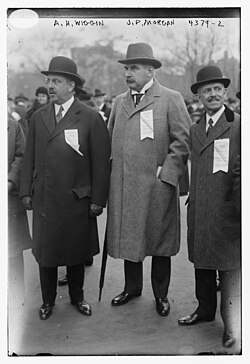
To restore confidence in the American Financial system, and more importantly, bring in proven financial talent to cover up embarrassing shortcomings in his signature New Deal economic program, President Roosevelt turned to an unlikely figure: banker, speculator and Hollywood mogul Joseph P. Kennedy. After Harvard, Kennedy encountered ethnic prejudice as he sought a banking career. He became a state bank examiner, building connections and learning how banks operated.
Kennedy applied the foundational knowledge he learned as a Bank Examiner across widely varied domains, becoming one of the youngest bank presidents in the US at age 25 and following up with successful careers in stock market speculation and Hollywood film production. As an investor, Kennedy specialized in targeting industries with high cash flow and lax accounting standards, a strategy which explains his investments in the seemingly unrelated fields of banking and film distribution. A major donor to Roosevelt’s 1932 Presidential campaign, he lobbied for an appointment in the new Administration, only to be turned down for any position at all, no doubt for the same cultural compatibility reasons that stymied his early career, amplified by the ideological differences that always separate business operators from bureaucrats.
With the New Deal hitting the wall economically, Roosevelt needed to restore confidence in the business sector which was almost unanimously opposed to the socialistic tendencies in the new programs, and understandably reluctant to risk capital in the new environment. Appointing Kennedy as SEC Chairman brought high visibility business interests into the Administration while at the same time, kept sound management practices isolated at a safe distance from the core ideological programs of the New Deal.
The SEC’s First Chairman
In 1934 Kennedy assembled a first rate legal team at the SEC (including two future Supreme Court Justices) and attacked head on the issues facing the Stock Market in the depths of the Depression. Drawing on his decades of experience as an accountant, speculator and short seller, Kennedy crafted a regulatory regime that balanced the needs of both risk takers and risk averse investors, as well as that of businesses looking to raise equity capital. Without Kennedy’s leadership the United States Stock Market would almost certainly have received a regulatory regime resembling that of the banking system. And if the banking regulations failed to prevent crisis after crisis involving the most bland milquetoast financial instruments imaginable – Savings and Loan institutions in the 1980s, Mortgage Backed Securities in the Great Financial Crisis, to cite just two examples – one can only imagine the destruction that would have ensued in the far more dangerous world of common stocks. The Dot Com Boom running on 1920s securities regulations is an interesting thought experiment along these lines.
Ironically, the Regulatory Arbitrage Effect nullified many of the pessimistic economic forecasts that Kennedy made during his later years as Ambassador to Great Britain, for the United States at least. His forecast that England would lose its Empire, most of its economic and military power as well as its civil liberties – was far more accurate.
America’s Capital-Market Advantage Today
Are there threats to America’s Regulatory Arbitrage Advantage today? Certainly not from less stringent securities regulation. Actually, if you drop by your broker dealer for a visit today there are probably more FINRA auditors on site than employees at this point.
The chief external threat to the US quasi monopoly on efficient and fair equity markets comes from foreign governments adopting similar policies and siphoning off capital that would otherwise be invested in the United States.
Chinese “nail house” cases illustrate owners holding out while construction proceeds around them. Chinese law also permits expropriation for public purposes, with compensation. In the United States, the Supreme Court upheld the practice of taking private land for an economic redevelopment plan in its infamous 2005 Kelo decision. The plan was intended to complement Pfizer’s nearby research facility. Which solidifies the Court as perhaps the biggest internal threat to US prosperity, foreign or domestic. If property rights are not safe, investors will look elsewhere.

Kennedy’s reforms echo in today’s securities markets, where firms often postpone an initial public offering far longer than they did in the past so they can sidestep Kennedy’s reforms. For these firms, Kennedy’s strict accounting mandates are the last thing they want. It is far easier to spend wildly, lose billions of dollars and then turn around and raise another Series C round from GroupThink VCs. They can avoid the public-market reporting regime, although investors and some private-offering rules can still require audits.
DISCLAIMER: All Content On the Nuclear Option Substack is for Information and Education Purposes Only. It is not a recommendation to buy or sell any security. Before trading options, consult your Professional Financial Advisor and read Characteristics and Risks of Standardized Options Contracts published by the Options Clearing Corporation.