


Will Nvidia Pull Guidance And Restate Earnings?
Submitted by QTR's Fringe Finance
Damn. It feels like just yesterday no one was talking about Jensen Huang resigning and I was asking about it here on this very blog just hours before he admitted his first in a growing line of affairs.
Today, similar layout, different question. Now the one thing no one is really talking about (yet) that I want to know is whether Nvidia will pull guidance and restate earnings. And I think the chance is higher than many people think. Here’s why.
Nvidia’s biggest risk may no longer be slowing AI demand. It may now be that new leadership becomes unwilling to stand behind the company’s past financial statements or future forecasts.
With the leadership transition, the board has a powerful incentive to protect itself from potential legal and financial exposure. That could mean taking a much harder look at transactions, accounting assumptions, and financial commitments previously accepted without much public scrutiny. And of course, probably some PR team somewhere painting Jensen now in the worst possible light while basking in the brilliance of the incoming CEO.

Put simply, as I’ve been saying all week, Singapore could be the main catalyst.
With questions surrounding the ultimate destinations of chips and possible export-control violations, the new leadership may face pressure to independently verify who actually purchased chips, where they went, and whether the transactions were properly documented.
Meanwhile, several financial warning signs deserve attention. Receivables and DSOs have grown sharply, with some customers receiving extended payment terms.
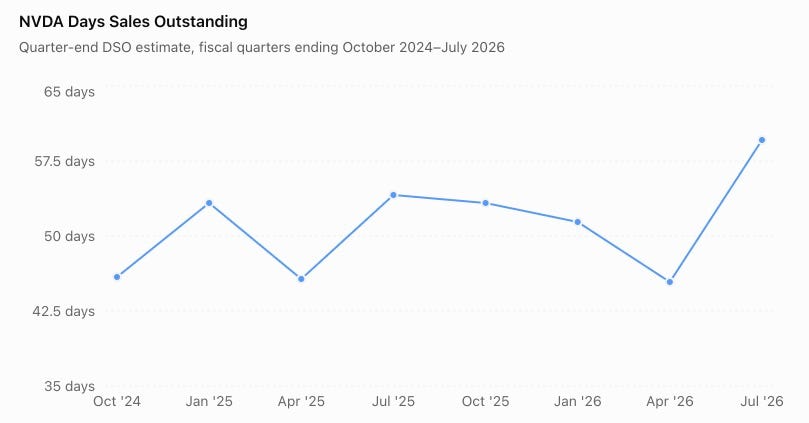
(Source: NVIDIA SEC Forms 10-Q and 10-K, NVIDIA Investor Relations quarterly financial reports, and YCharts; DSO calculated using quarter-end accounts receivable ÷ quarterly revenue × 91 days.)
Nvidia has invested in AI companies and committed to purchasing computing capacity from businesses that also buy its chips, raising questions about how much demand is independently funded. GPUs may be sitting unused or generating inadequate returns, while financing structures and special-purpose vehicles depend on optimistic assumptions about chip values, depreciation, and future demand.
The concern is that these issues may be...(READ THIS FULL ARTICLE HERE).
--
QTR’s Disclaimer: Please read my full legal disclaimer on my About page here.