




Banning Short Sellers Won't Stop A Crash
Submitted by QTR's Fringe Finance
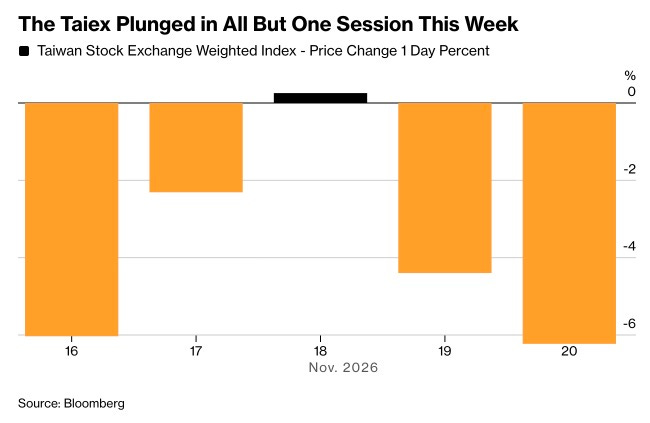
As global markets reel from a violent selloff in technology and AI stocks, Taiwan is tightening restrictions on short selling in a desperate attempt to stabilize its stock market. This has started chatter about whether similar measures will again be taken in the U.S. if our markets continue to plunge. I argue that such action is not only pointless, but actually counterintuitive. But, the government loves a boogeyman.
Following the Taiex’s worst weekly decline in 35 years, Taiwanese regulators announced a blanket ban on short selling below the previous day’s closing price, covering both margin short sales and borrowed shares this weekend.
The restrictions take effect tomorrow, November 23, and mark the third round of short-selling curbs this month. Meanwhile, Taiwan’s $15 billion National Financial Stabilization Fund has already begun buying stocks in an effort to restore investor confidence.
It seems that whenever markets start falling hard enough, governments inevitably begin looking for someone to blame. It’s never the speculative fervor on the way up that encouraged the excess and pornographic valuations. It’s always the market’s favorite scapegoat for shitty investment decisions: the short seller.
The logic is always the same: stocks are falling, short sellers are betting against them, and therefore short sellers must be responsible for the decline. Ban the short sellers, remove the downward pressure, and confidence will magically return.
Except that’s not how markets work. We have decades of evidence that say otherwise.
One of the most important things to understand about short-selling bans is when governments implement them. They don’t usually happen after markets have stabilized, valuations have reset, and the underlying economic problems have been resolved. They happen when policymakers are panicking.
During the 2008 financial crisis, the SEC temporarily banned short selling in 799 financial stocks on September 19, ostensibly to restore confidence and prevent disorderly trading. It didn’t exactly fix the underlying problem. The ban remained in effect until October 8, and over those 14 trading days, financial stocks fell more than...(READ THIS FULL PIECE 100% FREE HERE).
--
QTR’s Disclaimer: Please read my full legal disclaimer on my About page here.