




Who Is Selling Their Gold?
Authored by GoldFix
Russia sold gold for ten straight months. Tether went from buying 14 tonnes in a quarter to barely adding to its holdings. So who else could be selling?
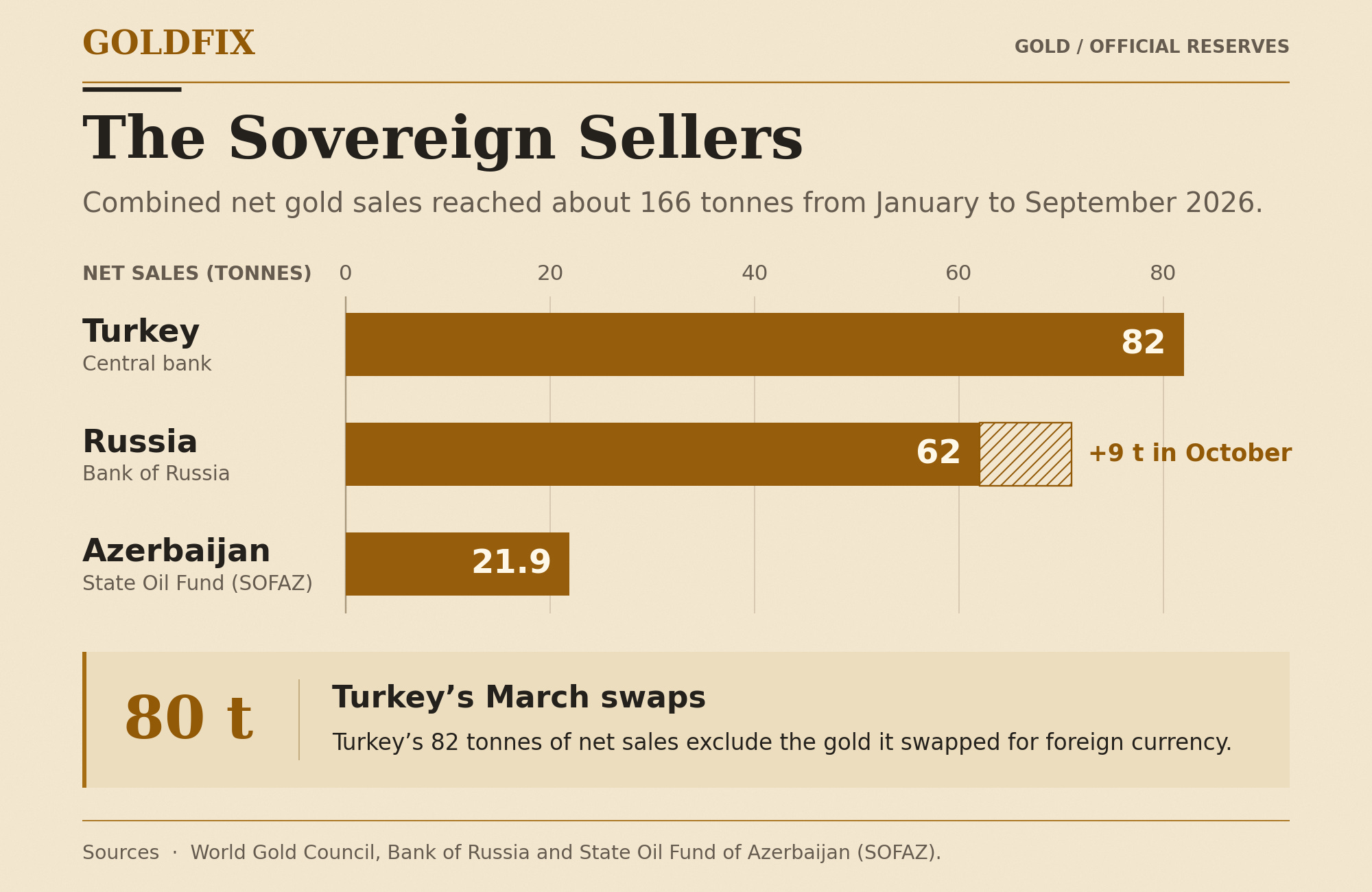
Gold fell from $4,652 an ounce on March 31 to $3,558 on November 24. A hawkish Fed gave buyers reason to lower their bids. November’s selloff in AI stocks gave investors reason to raise cash. What interests us about a $1,094 decline is whether a big holder had to keep selling as gold got cheaper. Turkey, Russia and Azerbaijan’s state oil fund sold about 166 tonnes between them through September. Russia is the one that came back every month. Tether, the name making the rounds, bought gold in the quarter it lost $4.2 billion.
Turkey’s energy bill and Russia’s budget
When the war disrupted traffic through Hormuz, Turkey faced a more expensive energy import bill and a lira to defend. Its central bank sold about 70 tonnes of gold on a net basis in the first quarter, chiefly in March. It used another 80 tonnes that month in gold-for-currency swaps. Governor Fatih Karahan spelled out what the swap meant for Turkey’s gold.
“In other words, when it matures, the gold in question will return to our reserves.”
By June, outstanding swaps had fallen to around 60 tonnes. Outright net sales in the second quarter came to just four tonnes. Turkey was still the largest reported seller through September, largely on the strength of what it sold in March.
Russia’s central bank sold gold in its domestic market as the Finance Ministry drew on the National Wealth Fund to finance the budget. Its holdings fell every month from January through October, roughly 72 tonnes in all. That recurring call on reserves is what makes Russia a structural seller. Azerbaijan’s state oil fund sold 21.9 tonnes in Q1 after the rally pushed gold above its portfolio limit. Six months later it still held the same 178.1 tonnes it had at the end of March.
Which Saudi balance sheet?
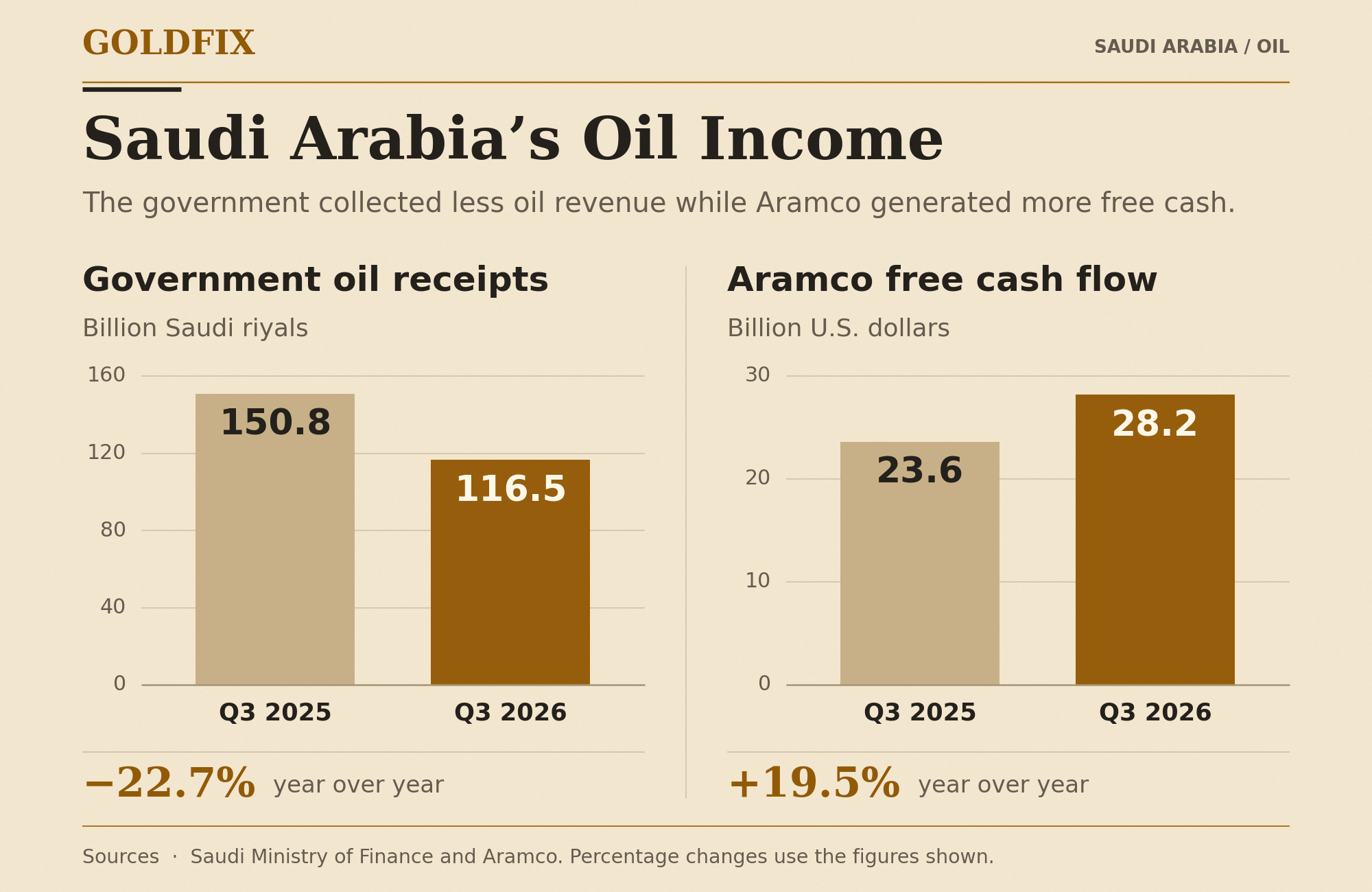
Saudi government oil receipts fell 23% year over year in the third quarter. Riyadh ran an 84.3 billion riyal deficit and had a dollar peg to maintain. At Aramco, revenue and other sales-related income rose from $111.5 billion to $140.5 billion. Free cash flow rose too. In October, as Houthi attacks threatened Saudi facilities and the port of Yanbu, Bloomberg reported that Aramco was negotiating a $10 billion revolving credit line. A corporate credit line gives Aramco another source of dollars if shipments are interrupted.
The political case for selling gold assumes Riyadh would prefer to avoid a visible sale of Treasuries. U.S. data already show $18.7 billion of net Treasury sales attributed to Saudi investors in March and April. The figures include private accounts, so the central bank’s share is unknown. The World Gold Council’s November table puts Saudi official gold at 323.1 tonnes as of August. At $3,558 an ounce, raising $10 billion entirely in bullion would take 87 tonnes, more than Turkey sold in nine months. Neither the Saudi central bank nor the Public Investment Fund has disclosed such a trade.
Qatar and the UAE did report small Q3 gold reductions. Qatar has a particularly good reason to want dollars. QatarEnergy estimated three to five years to repair facilities accounting for 17% of its LNG export capacity. Yet Qatar reported exactly the same gold holdings in August, September and October.
Special: Is America Settling Part of Its Trade Deficit With China in Gold? Yes it is. https://t.co/UeX0dX0z5C
— VBL’s Ghost (@Sorenthek) November 26, 2026
What happened to Tether’s bid?
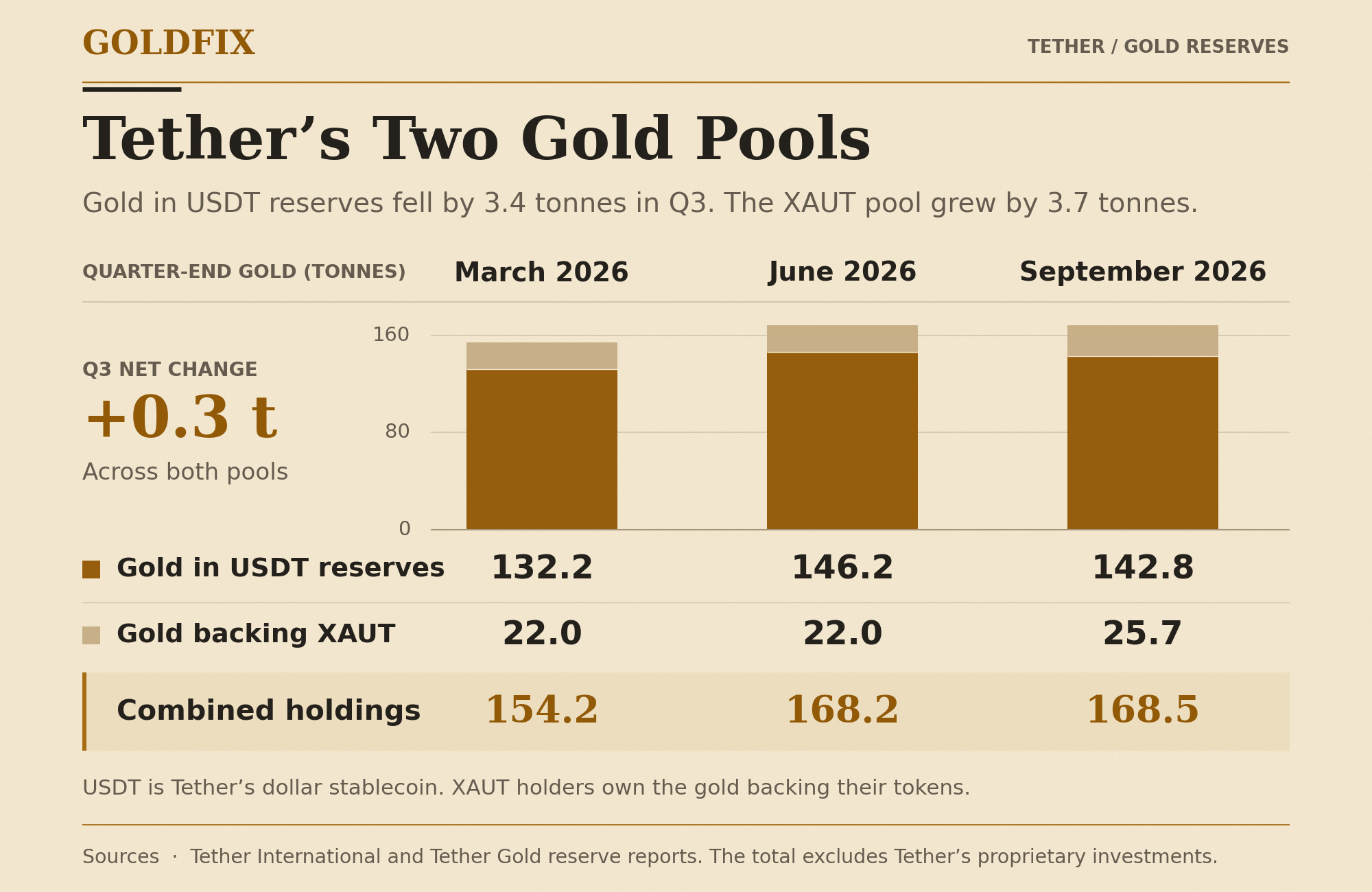
There is evidence behind the Tether rumor. The bullion reserve backing its dollar stablecoin, USDT, held 3.4 fewer tonnes in September than in June. Over the same quarter, the vault backing its gold token, XAUT, added 3.7 tonnes. Combined holdings edged up from 168.2 to 168.5 tonnes. We count the XAUT vault to measure physical demand across both programs. The bars backing customers’ gold tokens belong to those holders. Tether keeps its USDT reserves separately, and its proprietary investments sit outside both figures.
Tether’s filings imply a $4.21 billion second-quarter loss including changes in asset values. CEO Paolo Ardoino described what the company did during that losing quarter.
Continues here