





10 Unexpected Consequences Of An Economic Crisis Nobody Is Talking About
Authored by John Walter via Substack,
I need to be honest with you before we begin. I don't have all the answers. Anyone who claims to understand exactly how economic systems collapse, or precisely when, is either lying or selling something. What I have done is spend years reading, observing, and talking to people who lived through crises that most of us only read about in history books.
My grandmother kept cash sewn into the lining of her coat because she remembered 1929. My grandfather refused to invest in the stock market his entire life because he watched his father's bakery fail during a banking panic in 1931. They taught me that stability is a story we tell ourselves, not a permanent condition. That lesson took decades to sink in.
What follows is based on verified data and historical patterns. I have tried to avoid the confident predictions that make for good television but bad analysis. Instead, I have focused on mechanisms - how things break, why they break, and what happens to ordinary people when the assumptions they built their lives upon suddenly shift.
Some of this will disturb you. It should. But my goal is not to frighten you into buying gold or moving to a bunker. My goal is to help you see the patterns that emerge when economic stress moves from the financial pages into daily life. These patterns repeat across centuries because human psychology and institutional behavior follow predictable paths when pressured.
I have made mistakes in my analysis before. I underestimated the resilience of certain systems and overestimated the fragility of others. I have learned that timing is nearly impossible to predict, but direction is often visible years in advance. What I offer here is not prophecy. It is observation, carefully sourced, about what happens when the machinery we depend on begins to grind rather than hum.
Read this with skepticism. Verify the data. Check my sources. But do not dismiss the underlying reality because you find it uncomfortable. My grandparents taught me that the people who survive crises are not necessarily the ones who saw them coming first. They are the ones who took the warning signs seriously enough to prepare while others continued assuming tomorrow would look like yesterday.
That preparation begins with understanding.
The most dangerous economic crises rarely arrive with the fanfare we expect. There are no burning buildings on the first day. No immediate shortages. No government announcements that the old order has ended.
Instead, the transformation begins through decisions that appear rational when viewed individually. A company reduces its workforce to protect quarterly earnings. A government delays infrastructure maintenance because budgets are constrained. A family postpones major purchases because the future feels uncertain. Each decision makes sense in isolation.
The danger emerges when millions of similar decisions begin happening simultaneously, creating feedback loops that institutions struggle to control and individuals struggle to recognize until they are already caught in the current.
Throughout history, economic systems have appeared strongest precisely when underlying weaknesses accumulated most dangerously. Periods of prosperity create institutional expansion, debt accumulation, and consumer confidence that gradually forgets stability is never guaranteed. The prosperity itself generates the conditions that later make adjustment more painful. Businesses optimize for efficiency until redundancy disappears. Governments become comfortable with increasing obligations. Households adapt to living standards that depend on economic conditions which cannot continue indefinitely.
What concerns me is not the dramatic collapse that captures headlines. It is the quiet erosion of capacity that precedes visible breakdown - the gradual subtraction of options that masquerades as continuity until the day arrives when systems can no longer absorb stress.
Consider these developments:
1. Financial markets have become increasingly disconnected from underlying economic productivity, with asset prices rising while real wages stagnate and infrastructure deteriorates.
2. Global supply chains, optimized for maximum efficiency and minimal inventory, lack the redundancy to absorb shocks that would have been manageable decades ago when businesses maintained larger reserves.
What follows examines ten consequences that receive insufficient attention in mainstream discussions of economic crisis. These are not speculative fantasies. They are patterns observed in historical crises, visible in current data, and likely to manifest in ways that reshape daily life for billions of people.
1. Universities Face Reckoning as the Degree-to-Debt Equation Collapses
Higher education has operated for decades on a simple promise: borrow money now, earn more later. This equation worked reasonably well when tuition costs remained proportionate to expected earnings. It has broken down as costs exploded while graduate earnings stagnated in real terms.
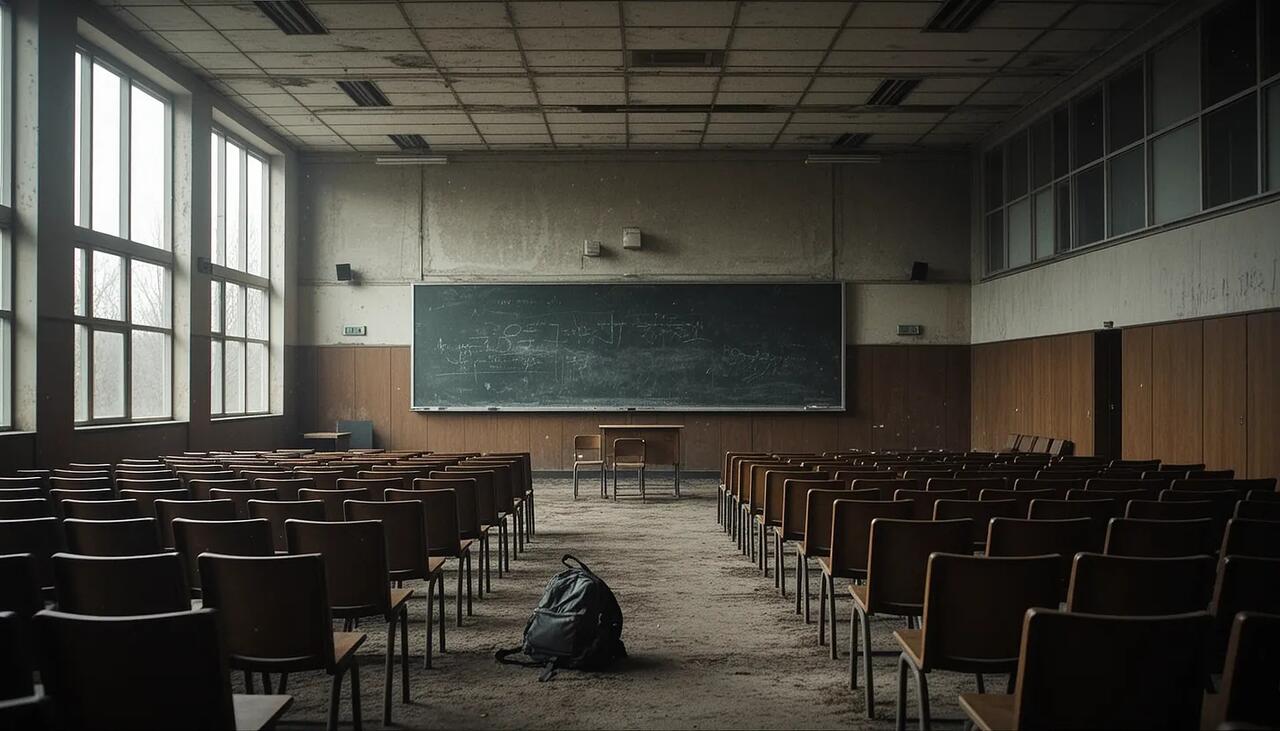
One statistic surprised me more than I expected: American student debt now exceeds $1.7 trillion, larger than credit card debt and auto loans combined. The average bachelor's degree recipient in 2023 graduated with approximately $37,000 in debt, though this figure masks enormous variation - medical and law students often carry $200,000 or more, while dropouts carry debt without degrees. Default rates have risen steadily, particularly at for-profit institutions where outcomes prove worst.
During an economic crisis, this pressure intensifies from both directions simultaneously. Families facing declining purchasing power become less willing or able to commit to expensive degrees. Employers facing their own financial challenges reconsider whether traditional qualifications provide sufficient value compared with practical experience, professional certifications, or technology-based training. Meanwhile, universities still carry costs accumulated during years of expansion - administrative staff, facilities, debt service, pension obligations - that cannot be reduced quickly.
Institutions begin showing stress through program consolidations, delayed investments, and fundamental questioning of models that seemed permanent. Small private colleges close at accelerating rates - over 100 since 2016, with dozens more on accreditation probation. Large public universities face state funding cuts precisely when demand for retraining increases. Graduate programs in humanities shrink while coding bootcamps expand, not because Shakespeare became less valuable, but because employment markets no longer subsidize the study of literature with guaranteed middle-class incomes.
Artificial intelligence accelerates this disruption. For centuries, universities held near-monopolies over access to advanced knowledge. Students traveled to campuses because expertise concentrated physically. That relationship is changing rapidly. AI systems, digital platforms, and specialized online training allow individuals to acquire valuable skills without following traditional academic pathways. A teenager in Lagos can now access lectures from MIT, programming courses from Google, and AI tools that would have required university laboratories a decade ago.
This does not mean universities disappear. Research institutions with laboratories, scientific contributions, and intellectual networks remain valuable. The disruption affects the assumption that every institution, every degree, and every traditional educational path carries equivalent economic value. A crisis forces society to confront a question avoided for decades: what happens when an institution built around the promise of future opportunity must operate in a world where that promise is no longer guaranteed?
Historical parallels exist. During the Great Depression, university enrollment initially dropped as families could not afford tuition. Enrollment then rose as unemployed workers sought retraining and young people delayed entering weak job markets. But the institutions that survived were those that adapted - offering night classes, developing vocational programs, cutting costs. Those that maintained business-as-usual approaches often failed.
The demographic cliff approaching American higher education makes this particularly urgent. The number of 18-year-olds peaks in 2025 then declines through 2030 due to low birth rates during the 2008 crisis. Universities have built infrastructure and staffing for growing populations that will not materialize. Competition for students intensifies just as family ability to pay decreases. Something has to give.
Over time, we see not the death of higher education but its transformation into something more differentiated - research universities for the elite, vocational training for the majority, and a vast middle ground of institutions struggling to justify costs against outcomes. The crisis accelerates a sorting that prosperity had delayed.
2. Agricultural Efficiency Reveals Hidden Fragility
Modern agriculture represents one of humanity's greatest achievements and one of its most dangerous vulnerabilities. We have built systems capable of feeding 8 billion people through technological sophistication that would astonish previous generations. We have also created dependencies so complex that few understand them and fewer could rebuild them if they faltered.
The cost structure tells the story. Consider the inputs required for high-yield farming. Nitrogen fertilizer, produced through the Haber-Bosch process, consumes 1-2 percent of global energy supply - primarily natural gas. Without continuous application, yields on modern farmland drop 40-60 percent. Phosphate reserves concentrate in Morocco, Western Sahara, China, and Russia - nations not always aligned with Western interests. Potassium comes largely from Belarus, Russia, and Canada. These are not commodities that can be easily substituted or quickly replaced.
A prolonged economic crisis places pressure on farmers operating under increasingly narrow margins. Every season requires significant investment before any income arrives. Fuel must be purchased, equipment maintained, seeds secured, loans repaid regardless of harvest outcomes. During stable periods, these challenges are absorbed. Credit remains available, supply chains function, producers plan years ahead.
The situation changes when multiple pressures arrive simultaneously. Higher borrowing costs increase debt service. Rising energy prices affect fuel, fertilizer, and processing. Trade disruptions block export markets or input supplies. Declining consumer purchasing power reduces demand for premium products. Farmers face impossible choices: reduce fertilizer use and accept lower yields, or maintain inputs and risk bankruptcy if prices drop.
The delayed nature of agricultural decisions makes this particularly dangerous. Choices made today reveal consequences months or years later. A farmer who reduces fertilizer in spring faces lower yields in fall. A nation that fails to maintain irrigation infrastructure faces drought vulnerability years later. By the time consumers notice significant changes in availability or prices, underlying problems have developed for multiple seasons.
Historical food crises rarely stem from single causes. The 2007-2008 price spike resulted from drought in Australia, biofuel mandates in the United States, export bans in India and Vietnam, financial speculation, and energy price increases interacting unpredictably. Prices doubled in six months. Riots erupted in 30 countries. Governments fell in Haiti and Madagascar. The system appeared robust until it wasn't.
Modern agriculture faces additional pressures previous generations did not. Soil degradation affects 40 percent of global farmland according to FAO estimates. Aquifers deplete - India's Punjab, America's Ogallala, China's North China Plain. Climate change shifts growing zones and increases extreme weather. Four companies control 60 percent of global seed sales. Three companies control 70 percent of phosphate fertilizer. Five trading houses handle 90 percent of grain exports. Concentration creates efficiency and fragility simultaneously.
When Ukraine's grain exports faced blockade in 2022 - 9 percent of global wheat, 13 percent of barley, 15 percent of maize - prices spiked immediately. Alternative suppliers could not quickly scale production. Importing nations imposed export bans. The fragility of just-in-time systems, optimized for efficiency rather than resilience, became visible.
A deeper crisis would test these systems more severely. If multiple breadbaskets face simultaneous stress - drought in North America, floods in Europe, heat in India, export restrictions in Russia - the global food system lacks reserves to absorb shocks. Strategic grain reserves have declined globally as just-in-time logistics replaced storage. The buffer is gone.
The political implications extend beyond economics. Food insecurity has triggered revolutions throughout history. The French Revolution followed wheat shortages. The Arab Spring followed price spikes in 2011. When people cannot feed their families, political stability becomes impossible regardless of other factors. Governments understand this. China's obsession with food security, India's export bans, Saudi Arabia's purchases of foreign farmland - all reflect recognition that agricultural dependence creates strategic vulnerability.
In practice, we see not necessarily famine in wealthy nations, though that remains possible. More likely is persistent food price inflation that consumes household budgets, forces dietary changes, and creates political pressure for interventionist policies that further disrupt markets.
3. Social Cohesion Dissolves as Economic Confidence Evaporates
Economic crises damage more than balance sheets. They erode the psychological foundations of social order - the shared assumptions that allow strangers to cooperate, institutions to function, and political disagreement to remain bounded.
How do individuals respond to prolonged uncertainty? Temporary recessions can be endured because people assume recovery approaches. They continue making plans, accepting short-term sacrifice for long-term gain. The psychology changes when uncertainty becomes permanent - when an entire generation enters adulthood during stagnation, when parents watch children face worse prospects than they enjoyed, when the future promised by education and effort fails to materialize year after year.
Millions of individual decisions aggregate into broader social changes. Families delay major purchases. Businesses postpone expansion. Workers accept precarious employment rather than hold out for stability. Young professionals view traditional pathways to success with skepticism. Over time, these adaptations create a society operating on different assumptions than the one that preceded the crisis.
The fictional scenario of social dissolution is not necessarily dramatic. It does not require civil war or revolution, though those remain possible. More commonly, it manifests as gradual withdrawal from collective institutions and increased reliance on personal networks. Trust in government, media, science, and expertise declines. People seek information that confirms existing beliefs rather than challenges them. Conspiracy theories flourish because they offer explanations when official narratives fail to match lived experience.
History suggests examples. Weimar Germany's hyperinflation did not directly cause Nazism, but it destroyed the middle-class savings that had supported democratic institutions. The psychological cost of watching lifetime accumulation evaporate created receptivity to radical alternatives. Argentina's repeated crises transformed a wealthy nation into one where institutional trust disappeared and personal networks became the only reliable form of security.
The danger emerges when economic hardship transforms political disagreement into permanent distrust. Healthy societies contain competing ideas. The risk is that crisis makes those disagreements existential - each side convinced the other threatens survival itself. Social media accelerates this by creating echo chambers where opposing views become not merely wrong but evil.
Institutional legitimacy becomes a scarce resource. Governments struggle to communicate effectively when populations no longer believe official statements. Traditional media faces skepticism that alternative narratives exploit. Experts find themselves competing with influencers who offer simpler explanations and more emotionally satisfying villains.
This is not irrational. If institutions failed to predict the crisis, failed to prevent it, and appear unable to resolve it, why should citizens continue trusting them? The loss of confidence becomes self-fulfilling - institutions that lack public support cannot implement solutions that require sacrifice, so problems worsen, so confidence falls further.
What replaces institutional trust varies. Sometimes local organizations gain importance - churches, neighborhood associations, mutual aid networks. Sometimes ethnic or tribal identities strengthen as broader national identity weakens. Sometimes criminal organizations provide services that legitimate institutions cannot, buying loyalty through protection and employment. The specific form matters less than the underlying shift from formal to informal structures of authority.
The emotional cost falls heaviest on those who remember stability. Young people who never experienced prosperity adapt more easily; they have no reference point for loss. Older workers who built careers during growth face despair as skills become obsolete and savings dwindle. The generation gap widens not just economically but culturally, as different experiences create incompatible worldviews.
Mental health deteriorates under sustained stress. Substance abuse increases. Family violence rises. These are not separate issues from economic policy - they are direct consequences of insecurity that create additional costs for healthcare, criminal justice, and social services precisely when those systems face budget pressures.
The social fabric does not tear all at once. It frays gradually, in small ways that accumulate until suddenly the center cannot hold. By then, the habits of cooperation have atrophied and rebuilding becomes vastly more difficult than maintaining would have been.
4. Healthcare Systems Strain Under Compound Pressures
Modern healthcare is simultaneously one of civilization's greatest achievements and one of its most fragile systems. Hospitals appear permanent, their existence so essential that questioning their reliability seems absurd. Yet they operate within the same financial constraints as every other institution, and those constraints tighten dangerously during economic crisis.
I kept coming back to one uncomfortable question: how does a system already consuming $4.3 trillion annually - over $12,900 per person, nearly double the OECD average - face crisis when budgets contract? The answer is that American healthcare is optimized for revenue generation rather than health outcomes, creating perverse incentives that resist reform.
During crisis, pressure arrives from multiple directions simultaneously. Rising operational costs affect everything - energy for facilities, pharmaceutical supplies, equipment maintenance, staffing. Shortages of medical personnel intensify as burnout drives experienced workers from the profession. Aging populations increase demand precisely when resources contract. Financial difficulties affect both public programs facing budget cuts and private providers facing declining insured populations.
The first consequences are subtle. Hospitals delay modernization projects. Maintenance schedules slip. Smaller facilities close or merge. Medical professionals experience increasing workloads as institutions attempt to operate with limited resources. None of these developments creates immediate catastrophe, but together they reduce flexibility - the margin that healthcare systems need during periods of extraordinary demand.
A severe economic crisis changes the equation because it affects both supply and demand simultaneously. Institutions have fewer resources for expansion, staffing, and technology. Meanwhile, economic hardship contributes to declining public health as people delay medical appointments, reduce preventive care, or experience stress-related conditions. Unemployment often means loss of insurance coverage in American-style systems, creating a population that needs care but cannot afford it.
The pandemic provided a preview. COVID-19 killed an estimated 20 million people globally despite modern medicine. It revealed supply chain vulnerabilities - personal protective equipment, ventilators, basic pharmaceuticals - that had accumulated during years of just-in-time optimization. Hospitals faced impossible triage decisions. Elective procedures were delayed, creating backlogs that persist years later. Healthcare workers experienced trauma that drove many from the profession.
A prolonged economic crisis would compound these pressures without the temporary emergency mobilization that pandemics trigger. Instead of unity and sacrifice, institutional responses would face political resistance and budget constraints. Hard choices about rationing care, limiting services, or denying expensive treatments would become routine rather than exceptional.
The technological dimension adds complexity. AI and automation promise efficiency gains - diagnostic algorithms, robotic surgery, predictive analytics. They also require investment that cash-strapped systems cannot afford. They create new vulnerabilities when software fails or networks are compromised. They potentially reduce employment for medical professionals at a time when human connection becomes more valuable precisely because it is scarce.
Mental health demands special attention. Economic crises increase depression, anxiety, substance abuse, and suicide. These conditions require treatment that strained systems struggle to provide. The combination of increased need and decreased capacity creates human suffering that statistics capture poorly but society feels acutely.
Historical precedents suggest healthcare systems adapt slowly to crisis. The Soviet Union maintained universal healthcare formally while actual provision deteriorated dramatically during the 1990s. Venezuela's health system collapsed alongside its economy, with preventable diseases returning and infant mortality rising. These are extreme cases, but they demonstrate that healthcare is not immune to institutional failure.
Over time, we see likely tiered care - excellent service for those with resources, declining access for the middle class, and crisis conditions for the poor. This violates ethical principles that healthcare systems claim to uphold, but economic constraints force uncomfortable choices. Rationing by price replaces rationing by need. The social contract frays.
The long-term consequences extend beyond immediate health outcomes. Populations in poor health are less productive, creating feedback loops that worsen economic conditions. Children who miss developmental milestones due to inadequate care face lifetime disadvantages. The costs of short-term savings become long-term burdens that compound across generations.
5. Mobility Becomes a Luxury as Transportation Networks Decay
For generations, mobility has defined modernity itself. The ability to travel across cities, countries, and continents became a birthright of developed world citizenship. Cheap fuel, global aviation, extensive road networks, and international shipping transformed how people worked, migrated, vacationed, and imagined their possibilities.
This mobility depended on conditions that are not permanent: abundant energy, stable trade relationships, public investment in infrastructure, and consumer purchasing power sufficient to justify travel costs. When these conditions shift, mobility contracts in ways that reshape daily life and economic geography.
The transformation does not begin with closed borders or empty airports. It begins with rising costs and declining reliability. Fuel prices increase as extraction becomes more difficult and geopolitical instability disrupts supply chains. Transportation companies reduce operations as margins compress. Insurance becomes more expensive as climate risks intensify. Infrastructure maintenance is delayed because governments face competing priorities.
The first people affected are not the wealthy. They can afford private aviation and premium services. The impact falls on ordinary workers, families, and small businesses that depend on affordable transportation. A delivery company struggling with diesel prices raises prices or reduces service areas. A rural community with reduced bus service becomes more isolated. A worker who accepted employment far from home faces impossible commuting costs. A family postpones the vacation that would have supported jobs in a tourist destination.
Economic activity depends heavily on movement. Goods must be transported, employees must reach workplaces, tourists must spend money, businesses must maintain supplier relationships. When mobility becomes expensive or unreliable, economic activity slows in ways that statistics capture only partially. The qualitative change - loss of opportunity, narrowing of horizons, contraction of possibility - is felt but hard to measure.
The psychological shift is equally significant. Globalization was not merely an economic system; it was a cultural expectation. People built identities around cosmopolitanism, international experience, global networks. They assumed distance mattered less than it had for any previous generation. A prolonged crisis challenges that assumption.
Travel decisions that once involved only cost and convenience begin involving concerns about uncertainty, disruption, and reliability. Businesses reduce unnecessary travel, discovering that video conferencing can substitute for many purposes. Families postpone vacations, discovering that local recreation can substitute for distant destinations. Communities become more focused on local resources and relationships.
This is not necessarily negative. Some argue societies became excessively dependent on global networks and ignored local resilience. The reduction in aviation emissions addresses climate concerns. The rediscovery of local community addresses isolation. But the transition is painful for those whose livelihoods and identities depended on mobility.
Geographic mobility - migration for opportunity - also contracts. Young people who might have moved to distant cities for employment find those cities no more promising than home. International migration faces political resistance as destination countries face their own economic pressures. The result is increased geographic stratification, with some regions experiencing decline while others maintain prosperity, and reduced social mobility as birth location increasingly determines life outcomes.
The 1970s oil shocks provide historical precedent. Prices quadrupled. Economies entered recession. Inflation soared. Car-free Sundays in Europe. Gas lines in America. The crisis eventually passed, but it transformed energy policy, automotive design, and geopolitical strategy. Current challenges involve more complex energy systems and more constrained alternatives.
The infrastructure dimension deserves attention. American roads, bridges, and transit systems face maintenance backlogs measured in trillions of dollars. Airports designed for growth face congestion and delay. The assumption that infrastructure automatically expands to meet demand proves false when budgets constrain and priorities shift. What exists is maintained poorly; what is needed is not built.
Over time, we see a more geographically rooted society, for better and worse. Local economies strengthen as global connections weaken. Community ties deepen as cosmopolitan networks fray. Opportunities narrow but belonging intensifies. The world becomes larger again, distance mattering more than it had in an era of cheap jet fuel and container shipping.
6. Technology Accelerates Disruption While Promising Solutions
Economic crises rarely affect only financial systems. They become catalysts for broader transformations because they force reconsideration of methods that prosperity made unquestionable. Technology moves from innovation to necessity when resources become scarce and survival demands efficiency.
Artificial intelligence, automation, digital platforms, and data analytics promise solutions to problems that crises intensify. AI improves medical diagnosis, optimizes supply chains, increases manufacturing productivity, and allows individuals to access services remotely. Automation reduces labor costs when labor becomes expensive. Digital platforms create new economic opportunities when traditional employment contracts.
The same technologies raise difficult questions about employment, inequality, and power. When technological systems become capable of performing tasks that previously required large workforces, societies must redefine the role of human labor. The issue is not simply whether machines replace people - historically, technology has created more employment than it destroyed - but whether institutions can adapt quickly enough to ensure that productivity gains benefit broad populations rather than concentrating among technology owners.
During crisis, this dynamic intensifies. Companies facing revenue decline and cost pressure adopt automation rapidly. Workers displaced by technology cannot easily retrain when education systems are themselves in crisis. The result is structural unemployment that persists even when economic conditions improve, creating a class of technologically displaced workers whose skills no longer match market demands.
The financial technology dimension is equally significant. Cryptocurrencies, decentralized finance, and digital payment systems offer alternatives when traditional banking proves unreliable or exclusive. They also create new vulnerabilities - fraud, collapse, regulatory arbitrage - that affect people least equipped to evaluate risks. The 2022 FTX implosion demonstrated how quickly digital financial systems can fail, destroying savings of ordinary investors who believed they were participating in the future of finance.
Surveillance capabilities expand during crisis as governments seek to monitor populations, enforce regulations, and maintain order. Digital payment systems create records of every transaction. Facial recognition tracks movement. Social media monitoring identifies dissent. These capabilities can improve governance and security. They can also enable authoritarian control that persists after the crisis that justified it.
Historical precedents suggest technological transformation accelerates during crisis. The Great Depression drove adoption of radio, cinema, and electrical appliances that changed domestic life. The 2008 crisis accelerated digital transformation - cloud computing, mobile platforms, gig economy work - that reshaped employment. Crises force adoption of efficiency measures that prosperity delays.
What differs today is the scale and speed of technological change, and the concentration of control. Previous technological revolutions distributed power more broadly - mechanization affected agriculture, electrification affected manufacturing, automobiles affected geography. Current technologies concentrate power in platforms and algorithms that few understand and fewer control. The benefits are real but unevenly distributed. The costs are borne by those who lack voice in how technologies are deployed.
People feel this most acutely in the pressure to constantly adapt. Populations already stressed by economic uncertainty face additional burden to learn new systems, new interfaces, new requirements. Digital literacy becomes essential for basic functioning - banking, healthcare, employment, education - yet many lack access or ability. The elderly, the poor, the rural face exclusion that compounds other disadvantages.
Over time, we see likely a bifurcated society: technologically adept populations enjoying new capabilities, and technologically excluded populations struggling with systems that no longer accommodate human interaction. The divide is not merely economic but existential - affecting identity, community, and meaning.
7. Housing Markets Transform from Wealth Engine to Burden
Housing has become the primary store of wealth for middle-class families in developed nations, and simultaneously the primary source of financial stress. This contradiction creates fragility that economic crises expose brutally.
The numbers tell a stark story. American home prices rose 47 percent between 2019 and 2023, while wages stagnated. The median home now costs over $400,000, requiring incomes that most families do not earn. Renting has become equally unaffordable - the average rent for a two-bedroom apartment exceeds $1,300 monthly, consuming over 30 percent of median income in most cities. Homelessness has increased in virtually every major American city.
This situation resulted from policy choices over decades: zoning restrictions that limit supply, tax advantages that subsidize ownership, financialization that treats housing as investment rather than shelter, and NIMBY politics that prioritize existing homeowner property values over accessibility for newcomers. The result is a system that generates wealth for those who bought decades ago while excluding younger generations and lower incomes.
Economic crisis transforms housing from asset to liability rapidly. Homeowners with mortgages face unemployment that makes payments impossible. Values drop, leaving underwater mortgages where debt exceeds worth. Foreclosures increase, destroying credit and displacing families. Renters face eviction when income disappears, creating homelessness that strains social services.
The 2008 crisis provided a preview. American home values dropped 30 percent nationally, more in some markets. Foreclosures exceeded 3 million annually at the peak. Construction employment collapsed. The psychological impact extended beyond economics - homeownership, the cornerstone of middle-class identity, proved fragile. Communities hollowed out as residents departed.
A deeper crisis would compound these effects with additional pressures. Rising interest rates make mortgages unaffordable even for employed buyers. Construction costs increase as materials and labor become scarce. Climate risks make some areas uninsurable, destroying property values regardless of location desirability. Remote work, normalized during COVID, allows geographic dispersion that reduces demand for expensive urban housing while increasing it elsewhere.
The generational dimension is stark. Baby boomers who bought homes when prices were low and mortgages deductible now own assets worth fortunes. Millennials and Gen Z face prices that require dual incomes, family support, or extreme sacrifice. Homeownership rates for young adults have declined to levels not seen since before World War II. The wealth transfer from young to old through housing markets creates resentment that political systems struggle to address.
International comparisons reveal alternatives. Germany maintains robust rental markets with tenant protections that make renting secure and desirable. Singapore builds public housing that maintains quality and accessibility. Vienna's social housing houses over 60 percent of residents in well-maintained, community-oriented developments. These models require political will that American systems lack, but they demonstrate that alternatives exist.
Over time, we see likely a housing market transformed by necessity. Remote work enables geographic arbitrage - workers moving to cheaper locations while maintaining employment. Tiny homes, accessory dwelling units, and co-living arrangements proliferate as conventional housing becomes inaccessible. Some cities experience decline as demand shifts, creating opportunities for reinvention but also blight and abandonment.
The social implications extend beyond economics. Housing instability creates stress that affects health, education, and family stability. Children who change schools frequently fall behind. Adults who commute long hours sacrifice time for relationships and community. Communities without stable populations cannot build social capital. The housing crisis is a social crisis masquerading as a market problem.
Historical precedents suggest housing transformation is slow but profound. The shift from rural to urban living in the 19th century, the suburbanization of the mid-20th century, the gentrification of recent decades - all took decades but fundamentally reshaped society. Current pressures may accelerate similar transformation, with technology and climate adding new dimensions to traditional economic forces.
8. Energy Systems Face Simultaneous Supply and Demand Pressures
Energy is the foundation of modern civilization. Not metaphorically - literally. Every aspect of contemporary life depends on abundant, affordable energy: food production, transportation, heating, cooling, manufacturing, communication, healthcare. When energy systems stress, everything stresses.
This is where the numbers stopped feeling abstract. Global energy consumption continues rising despite efficiency gains. We burn approximately 100 million barrels of oil daily, plus coal, natural gas, and growing but still modest renewable contributions. The energy return on energy invested (EROEI) for petroleum has fallen from 100:1 in early fields to roughly 15:1 today. We work harder for less net energy, a trend that cannot continue indefinitely.
Renewable energy expands rapidly but faces constraints. Solar and wind provide intermittent power requiring storage or backup generation. Battery production depends on lithium, cobalt, and nickel concentrated in specific locations - Chile, Australia, Democratic Republic of Congo, Indonesia. Processing these materials requires fossil fuel energy. Manufacturing solar panels consumes energy and creates waste. None of this means renewables cannot scale, but they scale within limits imposed by physics, geology, and existing infrastructure.
Germany's Energiewende demonstrates these limits. After investing hundreds of billions in renewable energy, Germany still relies on coal for grid stability. Electricity prices rank among Europe's highest. Emissions reductions have been modest. The transition proves more difficult than advocates assumed, requiring compromises that environmental principles resist.
Infrastructure aging compounds supply challenges. American transmission lines average 40 years of service. Transformers require 18-36 month lead times for replacement because domestic manufacturing capacity has declined. The grid experiences more outages than any other developed nation's. Meanwhile, demand grows from data centers - Amazon, Google, Microsoft, and Meta now consume more electricity than many nations - air conditioning in warming climates, and vehicle electrification.
A prolonged economic crisis creates impossible choices. Investment in new capacity requires capital that strained budgets cannot provide. Maintenance of existing infrastructure is deferred, increasing failure risk. Transition to renewable sources accelerates in some regions while stalling in others as costs and reliability concerns dominate. Geopolitical instability disrupts fuel supplies precisely when alternatives are not yet scaled.
The 1970s oil shocks provide historical precedent. Prices quadrupled. Economies entered recession. Inflation soared. Car-free Sundays in Europe. Gas lines in America. The crisis eventually passed, but it transformed energy policy, automotive design, and geopolitical strategy. Current challenges involve more complex energy systems and more constrained alternatives.
Climate change adds urgency that economic crisis complicates. The transition away from fossil fuels is necessary for long-term survival but expensive in the short term. When budgets are constrained, long-term investments are deferred for immediate needs. The result is continued dependence on fossil fuels that worsen the climate conditions that make energy transition more urgent - a trap that resists easy escape.
Over time, we see likely an energy system more differentiated by region and wealth. Wealthy areas maintain reliable supply through premium pricing and advanced technology. Poor areas face rationing, outages, and high costs. Some regions accelerate renewable transition out of necessity; others double down on fossil fuels. The global energy market fragments as security concerns override efficiency optimization.
The social implications are profound. Energy poverty - defined as spending more than 10 percent of income on energy - affects millions in wealthy nations and billions globally. Cold homes in winter. Hot homes in summer. Limited cooking options. Restricted transportation. These conditions affect health, education, and economic opportunity. Energy is not a luxury; it is a prerequisite for modern life.
Historical energy transitions - wood to coal, coal to oil, oil to electricity - took decades and created social disruption. Current transition must happen faster while affecting more people. The friction is inevitable. The question is whether institutions can manage it without catastrophic failure.
9. Financial Complexity Creates Hidden Systemic Risks
Modern finance has become extraordinarily complex - so complex that few participants understand the systems they depend upon, and regulators struggle to monitor risks that emerge from interactions between instruments designed by different institutions for different purposes.
The scale is difficult to grasp. Global derivatives notional exposure exceeds $600 trillion, many times world GDP. These instruments - options, futures, swaps, structured products - serve legitimate purposes: hedging risk, price discovery, liquidity provision. They also create interdependencies that can propagate failure rapidly. The 2008 crisis demonstrated how problems in subprime mortgages - a relatively small market - could trigger global financial collapse through derivative exposures that amplified and transmitted risk.
Shadow banking - non-bank financial intermediaries - operates outside traditional regulatory visibility. Money market funds, private equity, hedge funds, special purpose vehicles handle credit that once flowed through regulated banks. This shadow system provides liquidity and investment that fuel economic activity. It also creates vulnerabilities that regulators understand imperfectly and that can freeze suddenly when confidence evaporates.
Algorithmic trading now accounts for 70 percent of equity market volume. Computers execute trades in milliseconds based on patterns human traders cannot perceive. This creates efficiency and liquidity under normal conditions. It also creates instability - flash crashes in 2010, 2015, and 2020 demonstrated how algorithms can amplify volatility and create liquidity evaporation precisely when needed most.
Cryptocurrency markets add new dimensions. Bitcoin, Ethereum, and thousands of other digital assets created parallel financial systems operating outside traditional regulation. Some see these as liberation from government control and inflation. Others see them as speculative bubbles vulnerable to fraud, manipulation, and collapse. The 2022 FTX implosion - $8 billion in customer funds disappearing overnight - demonstrated that cryptocurrency markets replicate traditional finance's vulnerabilities while adding new ones.
A prolonged economic crisis tests these systems in ways that normal conditions do not. Correlations that models assume remain stable suddenly spike. Liquidity that appears abundant evaporates. Counterparties that seemed reliable default. The complexity that created efficiency under growth becomes fragility under stress.
Historical financial crises follow patterns. Credit expands during growth, creating asset bubbles. Recognition of overvaluation triggers contraction. Leverage amplifies losses. Contagion spreads through interconnected institutions. Panic causes liquidity freezes that force fire sales, worsening declines. Government intervention eventually stabilizes systems but at enormous cost and with lasting political consequences.
What differs today is scale and speed. Global integration means problems propagate instantly. Computer trading means crashes happen in milliseconds rather than days. Derivative exposures mean small problems can become large through leverage. The system is robust until it isn't, and the transition can be sudden.
The political implications are significant. Financial crises destroy trust in institutions that appeared permanent. They create demands for regulation that powerful interests resist. They generate populist movements that blame elites, globalization, or minorities for problems that are systemic. The aftermath of 2008 - Occupy movements, Brexit, Trump, European populism - demonstrated how financial crisis becomes political crisis.
Wealth concentration exacerbates instability. The richest 1 percent own 45 percent of global wealth; the bottom 50 percent own less than 1 percent. This concentration creates demand deficiency - rich people save more - and political instability. Populist movements emerge on left and right, attacking elites, globalization, and institutions. The shared reality required for collective action fragments.
Over time, we see likely reregulation - attempts to constrain the complexity that created fragility. But regulatory capture means rules are written by those regulated. Innovation finds ways around constraints. The cycle of crisis, regulation, relaxation, and renewed crisis continues. Financial instability is not a bug of modern capitalism but a feature - creative destruction that allocates resources but destroys lives and communities in the process.
10. Institutional Legitimacy Erodes as Solutions Fail
The final consequence may prove most consequential because it affects everything else. When economic crises persist, institutions lose legitimacy. Governments, corporations, media, experts, international organizations - all face skepticism that becomes self-fulfilling as failed predictions and ineffective responses accumulate.
What do institutions require to function? They need resources, certainly - tax revenue, profits, investment. But they also need something less tangible: trust that they serve legitimate purposes, that leaders act in good faith, that following rules produces fair outcomes. This trust is earned slowly and lost quickly.
Economic crisis destroys trust in specific ways. Institutions that failed to predict crisis lose credibility as prognosticators. Institutions that failed to prevent crisis lose credibility as protectors. Institutions that fail to resolve crisis lose credibility as competent managers. Each failure compounds, creating narrative of institutional incapacity that becomes difficult to reverse.
The psychological mechanism is rational. If experts misunderstood the economy, why trust their advice on other matters? If governments cannot manage finances, why obey their regulations? If corporations destroy value while enriching executives, why participate in their systems? The loss of confidence is not irrational conspiracy thinking. It is reasonable response to demonstrated failure.
Historical examples are numerous. Weimar Germany's hyperinflation destroyed faith in democratic institutions that were then replaced by authoritarian alternatives. The Soviet Union's collapse revealed that communist planning could not deliver promised prosperity, discrediting the entire ideological framework. The 2008 crisis destroyed trust in financial regulation, central banking, and economic expertise that has not recovered.
What replaces institutional trust varies by context. Sometimes local organizations gain importance - churches, neighborhood associations, mutual aid networks. Sometimes ethnic or tribal identities strengthen as broader national identity weakens. Sometimes criminal organizations provide services that legitimate institutions cannot, buying loyalty through protection and employment. The specific form matters less than the underlying shift from formal to informal authority.
The information environment accelerates this erosion. Social media allows alternative narratives to spread rapidly, bypassing traditional gatekeepers. Conspiracy theories flourish because they offer explanations when official narratives fail to match lived experience. Filter bubbles create parallel realities where different populations cannot agree on basic facts, making collective action impossible.
The danger is not chaos immediately. It is the gradual replacement of legitimate authority by authority that serves narrower interests - corporate, ethnic, criminal, foreign. The state does not disappear; it becomes a shell manipulated by those with resources to capture its functions. Public goods become private goods. Rule of law becomes rule of power. Corruption becomes systemic rather than exceptional.
Democratic institutions face particular challenges during crisis. They require patience, compromise, and acceptance of procedural legitimacy even when outcomes disappoint. Economic stress makes these requirements harder to meet. Populations demand immediate solutions that democratic processes cannot deliver quickly. Authoritarian alternatives promise decisive action that democracy's deliberation prevents.
Over time, we see not necessarily dictatorship, though that remains possible. More commonly, it is democratic decay - formal institutions maintained but emptied of meaning, elections held but choices constrained, rights respected in theory but violated in practice. The appearance of democracy persists while substance erodes.
Reversing this erosion is extraordinarily difficult. Trust, once lost, cannot be commanded back. It must be earned through demonstrated competence and integrity over years. Institutions that have failed must reform genuinely, not cosmetically. Leaders must acknowledge mistakes rather than deflect blame. These requirements are rare during crisis when defensiveness dominates.
The long-term consequences extend for generations. Children raised during institutional failure learn skepticism that persists into adulthood. Social capital - the trust and cooperation that make collective action possible - depletes and rebuilds slowly. The habits of democracy atrophy. The skills of authoritarianism - obedience, hierarchy, suppression of dissent - develop.
What Remains
I have tried to avoid the confident predictions that make for dramatic reading but poor analysis. I do not know when these developments will manifest, or in what order, or with what severity. Timing is nearly impossible to predict because it depends on decisions not yet made, shocks not yet arrived, and interactions that cannot be modeled in advance.
What I do know, from history and from the data I have examined, is that complex systems often appear strongest precisely when they are most fragile. That prosperity creates the conditions for its own disruption. That institutions adapt slowly to changes that arrive rapidly. That human psychology is poorly suited to recognizing gradual threats that require collective response.
My grandparents survived the Great Depression not because they predicted it precisely but because they maintained habits of caution that prosperity made seem unnecessary. They saved, they diversified, they maintained skills, they valued community. These habits served them when crisis arrived.
What I offer here is not a roadmap to doom but a map of vulnerabilities. The systems we depend upon are more fragile than advertised. The assumptions we make about continuity are less reliable than we pretend. The future will likely bring challenges that current institutions are poorly prepared to meet.
How individuals and societies respond to these challenges will determine what emerges. History offers examples of resilience and collapse, adaptation and failure. The outcome is not predetermined. But it is shaped by recognition - by seeing patterns early enough to prepare, by taking warning signs seriously enough to act while others continue assuming tomorrow will resemble yesterday.
The countdown is not to a specific date but to a series of thresholds that will determine which futures remain possible. We are closer to some of those thresholds than comfortable acknowledgment allows.
Recognition comes first. Preparation is what gives that recognition value.
My grandmother's coat, with cash sewn into the lining, used to seem excessive. Now it feels like a reminder.
The structures still stand. The question is whether we will maintain them before they require rebuilding from foundations that may no longer exist.