





Texas Governor Declares Disaster Over Soaring Diesel Prices
Texas ranchers and truckers could start seeing some relief at the fuel pump starting this week after Gov. Greg Abbott proclaimed a statewide disaster on Sept. 28 to ease diesel shortages.
"Texas agriculture and freight run on diesel," Abbott said in a statement.
"Record prices put both industries at risk and raise costs for every Texas family."
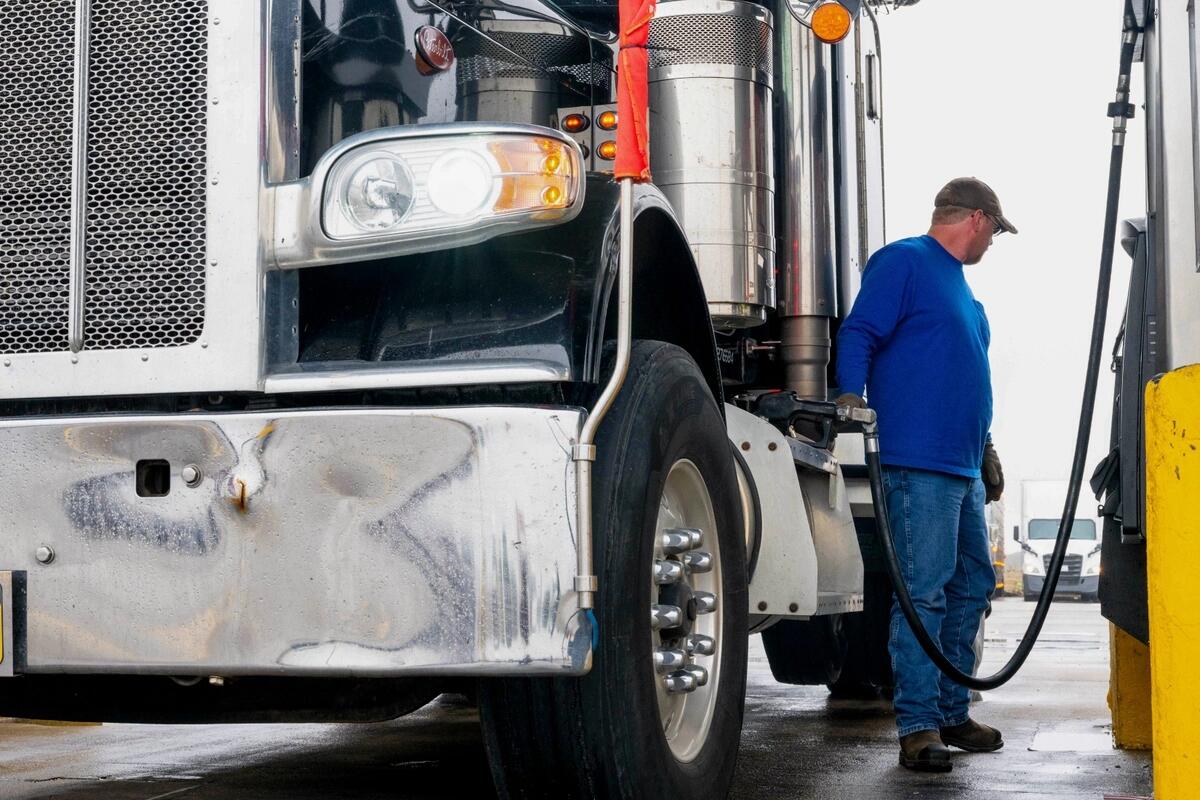
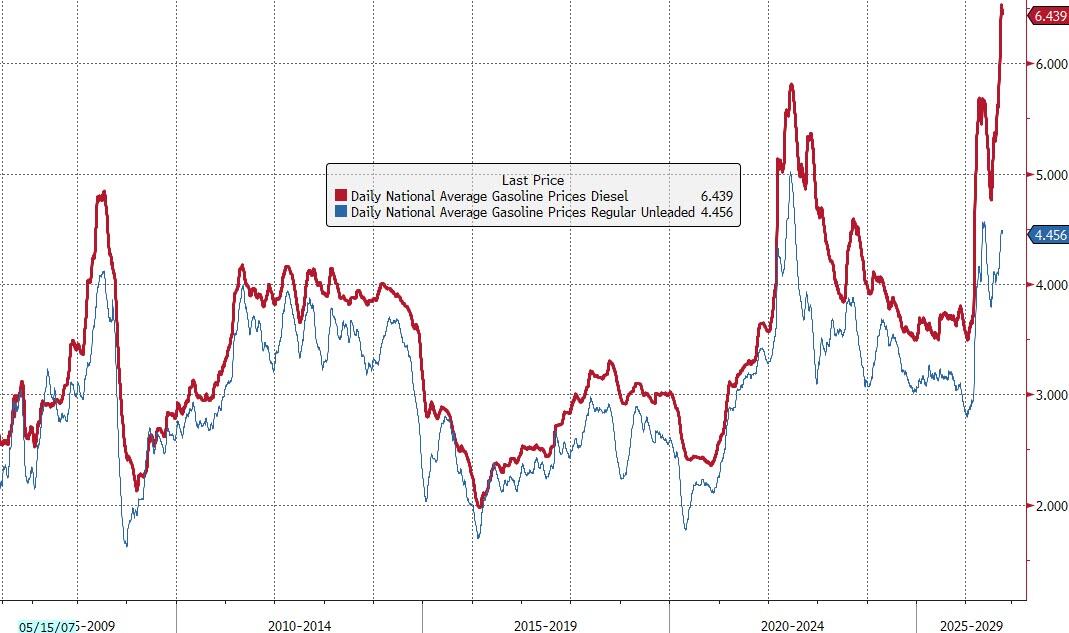
Record-high diesel prices in the Lone Star State have increased in the past few weeks, hovering at an average of $5.90 per gallon on Sept. 28, about 10 cents less than a week ago on average, but $2.70 more than a year ago, according to the American Automobile Association (AAA).
The national average reached $6.44 per gallon on Sept. 28, about 2 cents less than the day before but $2.77 more than last year, AAA reported.
As Jill McLaughlin further report for The Epoch Times, Abbott's declaration allows for the expanded use of dyed diesel on Texas roads and raises the allowable weight for fuel, agricultural, and timber loads.
The proclamation also suspends the state's low emission diesel rules to a level authorized by federal environmental standards. This is expected to increase diesel supplies and ease the record-high fuel prices.
Abbott also asked the U.S. Environmental Protection Agency to waive federal ultra-low sulfur diesel requirements.
Dyed diesel is off-road fuel marked with solvent red 164 dye and is typically only used in agricultural operations. The fuel is sold without a motor fuel tax, which is why the state usually prohibits its use on public roadways.
Using red-dyed diesel doesn't compromise fuel quality or engine performance, but it can stain tanks, hoses, and skin, according to Senergy Petroleum.
"From a performance standpoint, clear diesel and dyed diesel are virtually identical," the company stated.
The Texas governor sent a letter to Environmental Protection Agency Administrator Lee Zelden on Sept. 28, asking for a temporary Clean Air Act waiver of federal ultra-low sulfur diesel rules and the Texas low emission diesel rules that apply in 110 counties.
The rules limit which diesel can be sold, and a waiver would let the state allow more fuel to reach Texas pumps, Abbott said.
The Texas Forestry Association applauded Abbott's diesel declaration.
"A BIG WIN FOR LOGGING & TEXAS FORESTRY!" the association posted on X.
"Gov. Abbott's new disaster proclamation expands dyed-diesel use on Texas roads and allows fuel, agricultural, and timber loads up to 95,000 pounds."
Oil prices surged on Sept. 28 after President Donald Trump turned down Iran's conditional seven-day proposal to reopen the Strait of Hormuz. He told reporters over the weekend that he had rejected it and declined to rule out restarting strikes on Iran ahead of the midterms.
The rejection dashed hopes of diplomacy seen last week at the U.N. General Assembly, said oil expert Patrick De Haan in a social media post. Early trading sent oil prices slightly higher for domestic and international crude.
Prices for diesel fuel nationwide have rocketed to record levels this month after a combination of events reduced supplies and caused uncertainties in the global oil market.
Conflicts in the Middle East and between Russia and Ukraine have slowed delivery of supplies reaching the United States.
Diesel supplies are expected to remain tight and below average through much of next year, according to an analysis by the U.S. Energy Information Administration (EIA), the federal statistical and analytical agency for energy data.
"We assume global production of distillate fuel will remain below last year's levels in the coming months, contributing to low U.S. diesel inventories and high diesel prices," the EIA reported on Sept. 9.
However, oil prices are expected to start falling at the start of next year, as production in the Middle East rises in the coming months with more traffic coming through the Strait of Hormuz and alternative routes out of the region, the EIA reported.
U.S. natural gas inventories are on track to be above the five-year average at the start of winter, due to rising production in the U.S. Permian Basin and Haynesville Shale regions, according to the EIA.