


Bloomberg Drops $80 Million On Democrats' Midterm Push: $24 Million To Everytown, $16 Million To House Majority PAC
Michael Bloomberg has sent about $80 million to Democratic causes in September and October, with at least $50 million aimed at House races and roughly $10 million more on the way, according to figures his team gave The New York Times. The filings that would confirm the gifts are not yet public: they are due this week, and some of the giving was still under way when the Times reported it Tuesday.
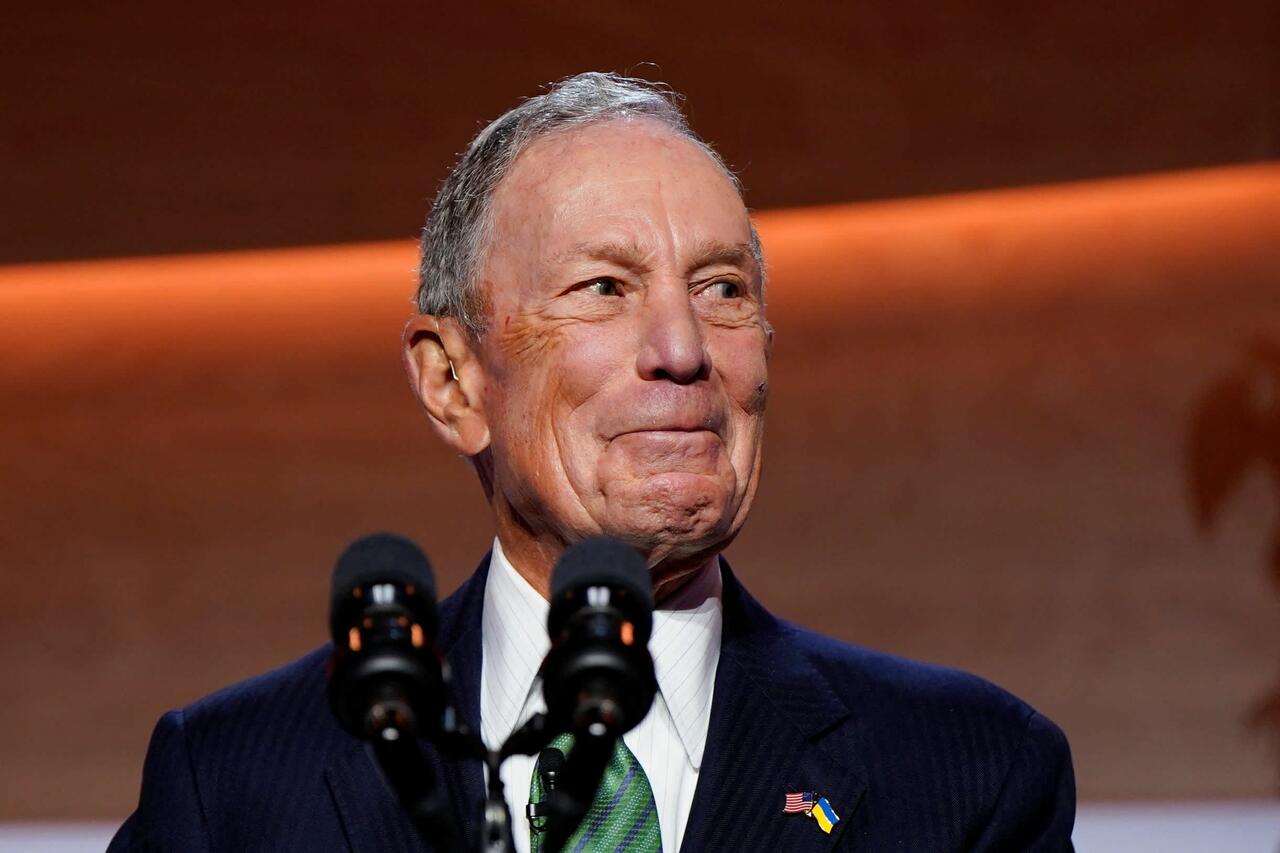
The biggest House checks went to two groups: $24 million to Everytown for Gun Safety, which he co-founded, and $16 million to House Majority PAC, the super PAC aligned with House Minority Leader Hakeem Jeffries. Bloomberg is now the largest disclosed donor to both groups. His Everytown money also freed up House Majority PAC funds for a roughly $10 million joint ad campaign for eight women House Democrats who have worked on gun safety.
The rest, as itemized: $5 million to the super PAC allied with the League of Conservation Voters, $3.5 million to a group electing Democratic scientists and doctors, $2.5 million to a super PAC backing Texas Senate nominee James Talarico, $8 million across about six battleground governor's races, and $2.5 million to a super PAC backing New York Gov. Kathy Hochul. Those seven gifts add up to $61.5 million, so about $18.5 million of the $80 million is not broken out by recipient, and one donation backing Pennsylvania Gov. Josh Shapiro, a possible 2028 candidate, carries no amount.
Howard Wolfson, Bloomberg's political adviser, said the donor "believes in participation in our democracy," that "resources matter in campaigns," and that he "expects a result." "The difference between 221 and 230, in terms of the House majority, really matters," Wolfson said. Jeffries said Bloomberg "played an incredibly instrumental role" in the 2018 midterms and that his support "will once again help Democrats flip the House."
Bloomberg, 84, is concentrating on the House because Democrats are favored to win it, while the Senate is seen as a toss-up and other big donors are shifting money there. Wolfson described him as a centrist who is worried about the party's leftward drift, particularly on Israel, and said he is not funding candidates backed by the Democratic Socialists of America. He has not picked a 2028 candidate but would likely back one with a similar outlook.
The money lands against a Republican spending wave. Trump told reporters he plans to steer $400 million to $500 million to Republicans in the midterms, Reuters reported in September. The Trump-affiliated No Going Back PAC had reserved more than $74 million of ad time across 15 House races and Senate races in six states, MAGA Inc. put $10 million into the Texas Senate race, and Musk's America PAC has spent more than $7 million on digital ads, texts, calls and mailers. The Times describes Democrats as watching nervously while Musk and Trump's super PAC spend hundreds of millions, a question we took up earlier this month in asking whether Musk can rescue Republicans.
The party committees are lopsided. The Republican National Committee started September with about $126 million and was down to $76 million by Oct. 14, after sending more than $44 million to the National Republican Congressional Committee and the National Republican Senatorial Committee, according to a Times report. The Democratic National Committee, by contrast, has reported negative cash on hand, counting debt, for nearly the entire 2025-26 cycle.
Bloomberg's fall budget resembles his 2018 midterm spending, which his team regards as his most effective campaign. That year he pledged at least $80 million in June and CBS News reported his total reached $110 million by late October, when Democrats took the House. Since then he has spent more than $1 billion on a failed 2020 presidential run and, this spring, $11 million to help Assembly member Micah Lasher win the Democratic primary for Jerrold Nadler's seat.