


Elon Musk Reveals Shocking Details About Migrant Austin Shooter
Authored by Steve Watson via Modernity.news,
Elon Musk has confirmed that Ndiaga Diagne, the 53-year-old Senegal-born naturalized citizen who opened fire outside a downtown Austin bar in March and killed three people, was a former Tesla employee at the company's Gigafactory Texas.
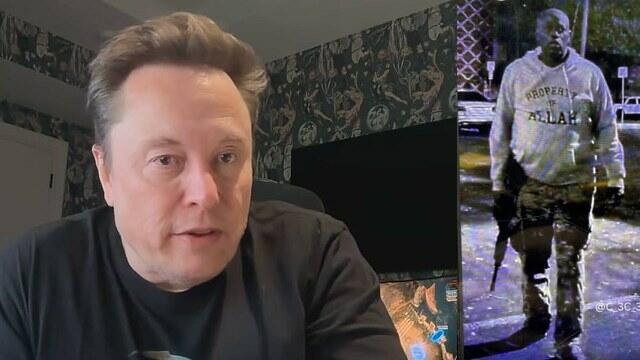
Diagne was fired after he violently assaulted a female coworker who accidentally stepped on his prayer rug during a company-sanctioned break.
Months later he carried out the attack while wearing a "Property of Allah" hoodie and an Iranian-flag shirt.
HOLY SH*T Elon Musk reveals that Ndiaga Diagne, the Muslim man who k*lled 3 people in Austin, was an ex-Tesla employee whom he fired. Diagne was fired after he assaulted a woman for stepping on his prayer rug. Months later, he carried out the shooting. https://t.co/cvqU6KyEly
— Libs of TikTok (@libsoftiktok) October 20, 2026
On March 1, 2026, shortly before 2 a.m., Diagne drove a black Cadillac SUV past Buford's Backyard Beer Garden on West Sixth Street, a popular nightlife strip near the University of Texas. He activated his hazard lights, rolled down the window, and fired a handgun into the patio and sidewalk crowd.
He then parked, exited with an AR-style rifle, and continued shooting along the street before Austin police arrived within roughly a minute and fatally shot him.
Three people were killed: 19-year-old former Texas Tech student Ryder Harrington, 21-year-old University of Texas student Savitha Shanmugasundaram, and 30-year-old Jorge Pederson. Roughly 15 others were wounded.
Diagne, a Pflugerville resident, entered the United States in 2000 on a tourist visa, obtained a green card in 2006 after marrying a U.S. citizen, and was naturalized in 2013.
He had a prior criminal record that included a 2022 hit-and-run reduced to a misdemeanor and later dismissed after probation, as well as domestic violence allegations.
He legally purchased the firearms used in the attack in San Antonio in 2017. A Quran was found in his SUV. The FBI later determined he acted alone with no evidence of direction, funding, or support from a foreign terrorist organization, though investigators noted indicators potentially tied to the conflict involving Iran and Diagne's admiration for Iran's former leadership. He had not previously been on the FBI's radar.
It was this guy. Then the Legacy Media wanted to hide this photo and his motive. https://t.co/PJG6HowzJt
— C3 (@C_3C_3) October 20, 2026
In a recent interview with biographer Walter Isaacson on The Builders, Musk recounted the earlier incident at the factory. "We had someone who was working at the Tesla factory in Austin until December of last year. He was fired because he assaulted a woman who stepped on his prayer rug in the factory," Musk said.
He continued, "She wasn't expecting anyone to be praying in the factory, and he was praying in the factory. She accidentally stepped on his prayer rug, and he assaulted her, violently assaulted her. So he was fired for that. And then a few months later, he went and killed three students in the bar in downtown Austin."
After a long pause, Musk urged "Now, I think we shouldn't let people like that into the country."
Full interview:
A civil lawsuit filed by 65-year-old Tesla employee Lillian Brady in Travis County alleges that on December 4, 2025, Diagne grabbed her and threw her to the ground without provocation while he was praying on a walking path in a common area.
Brady reported the assault to Tesla and local authorities but says the company withheld Diagne's identity, preventing her from pursuing charges. She only connected him to the shooting when she recognized his face in news coverage.
Her attorney, Bob Hilliard, stated: "We already know the shooter violently assaulted a Tesla employee months before the Sixth Street shooting and Tesla had the shooter's name and information about that earlier attack - why they chose not to act or warn law enforcement raises very serious questions the public deserves an answer to."
Brady herself said Tesla's handling was "unethical" and that identifying him earlier "maybe all this could have been avoided."
Tesla has not publicly confirmed the employment details, and some aspects of the assault claim remain allegations in civil court. The company later obtained arbitration for the suit, avoiding a public trial. Austin Police Chief Lisa Davis said her department had no prior contact with Diagne.
The case illustrates the gap between private employers spotting clear warning signs of violence tied to religious intolerance and an immigration system that naturalized Diagne years earlier with no subsequent removal pathway.
Musk's point is straightforward: screening for individuals who respond to accidental contact with a prayer rug by violently assaulting a coworker is not bigotry; it is basic risk assessment.
The same man later killed three Americans on a night out. Legacy coverage initially emphasized mental health or the broader Iran conflict while downplaying the "Property of Allah" clothing and the prior workplace assault. The photo of Diagne in the hoodie circulated widely on social media once available.
Diagne's history of family violence allegations, the hit-and-run, and the factory incident were not secret. Yet he remained in the country, obtained firearms legally, and was able to work at a major American manufacturer until the prayer-rug assault forced his termination.
The FBI's conclusion that he acted alone does not erase the pattern or the preventable nature of the earlier violence. Screening for ideological incompatibility with the rule of law and equal treatment of women is not optional when the alternative is more dead Americans on Sixth Street.