





Treasury Targets Money Services Businesses In Crackdown On Cartel Money Flows
Authored by Tom Ozimek via The Epoch Times (emphasis ours),
The Treasury Department has announced a wide-scale enforcement operation targeting more than 100 money services businesses operating along the U.S.–Mexico border, as part of the Trump administration’s campaign to disrupt cartel money laundering through America’s financial system.
The operation, announced on Dec. 22 by the Treasury Department’s Financial Crimes Enforcement Network (FinCEN), focuses on examining money services businesses, or MSBs, operating along the southwest border for potential noncompliance with rules meant to detect money laundering and disrupt illicit finance.
It’s part of the Trump administration’s ongoing efforts to combat cartels and other transnational criminal networks whose actions harm U.S. communities and threaten national security.
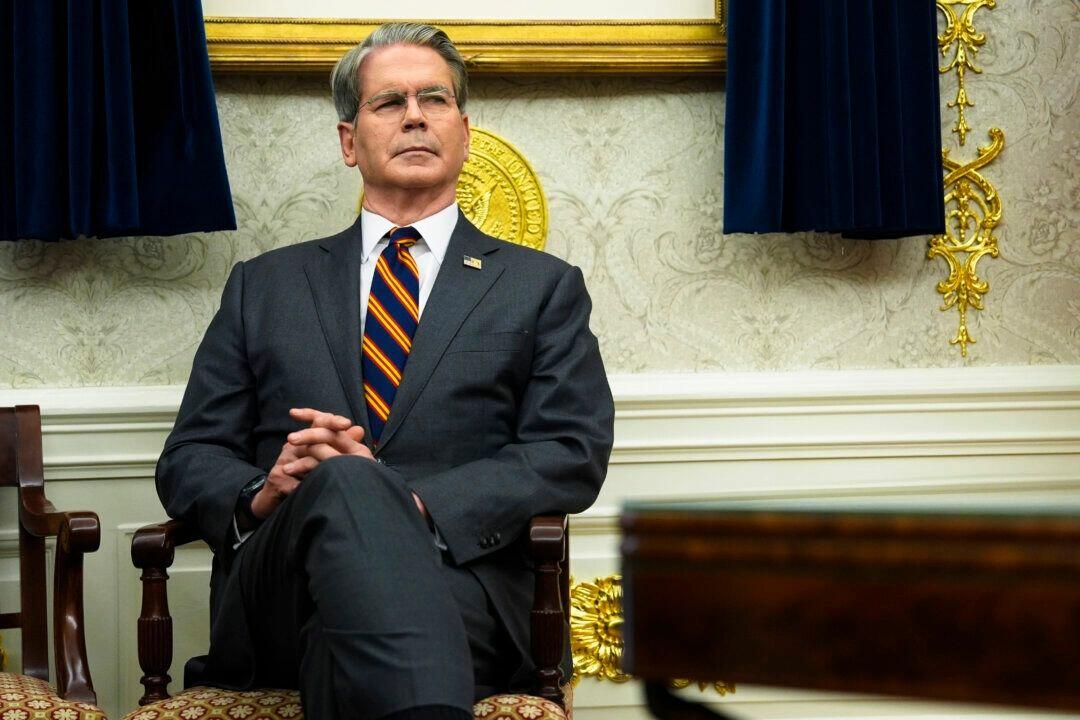
“At President Trump’s direction, the Treasury Department is utilizing all tools to stop terrorist cartels, drug traffickers, and human smugglers,” Treasury Secretary Scott Bessent said in a statement.
“This sweeping operation will help root out potential cartel-related money laundering from the U.S. financial system.”
Money services businesses include non-bank financial providers such as currency exchanges, check-cashing firms, and money transmitters.
Treasury officials say those businesses face heightened exposure to illicit finance in border regions, where drug traffickers and smuggling networks seek to move proceeds in small, structured transactions designed to avoid detection.
The new data-driven operation—described by FinCEN as the “first-of-its kind”—was made possible by Treasury’s modernization efforts, including the use of advanced technology to transform fragmented financial information into investigative leads to fight financial crimes more effectively.
The agency said the operation is based on the analysis of more than 1 million currency transaction reports and roughly 87,000 suspicious activity reports submitted by financial institutions.
Using high-performance data processing, the agency is identifying potential compliance failures under the Bank Secrecy Act that could warrant civil penalties, injunctive actions, warning letters, or criminal referrals, it said.
The operation has already produced six notices of investigation, dozens of examination referrals to the IRS, and more than 50 compliance outreach letters, according to the agency.
The move marks an escalation in targeted enforcement of rules meant to combat financial crime, with FinCEN saying that advanced analytics are able generate “reliable decision-grade leads at scale” for regulators and law enforcement to act on.
The Trump administration has increasingly tied financial enforcement to national security, following President Donald Trump’s decision earlier this year to designate several major Mexico-based drug cartels as foreign terrorist organizations. That designation expanded the government’s authority to freeze assets and pursue sanctions linked to cartel financing.
Enforcement Follows Contested Border Reporting Rules
The latest enforcement sweep builds on a series of geographic targeting orders (GTO) issued earlier this year that lowered cash-transaction reporting thresholds for money service businesses in certain border areas.
In March, FinCEN imposed a temporary order requiring money service businesses in 30 ZIP codes in California and Texas to report cash transactions as small as $200, down from the long-standing $10,000 threshold under the Bank Secrecy Act. That move triggered lawsuits from border-area businesses, which argued the requirement was arbitrary, burdensome, and harmful to legitimate commerce.
In June, a federal judge in Texas granted a temporary restraining order shielding two El Paso-area businesses from enforcement, citing the rule’s geographic design and disproportionate compliance burden.
“The administrative record reflects that the government either failed to consider or offered an unsubstantiated conclusion on at least two important aspects of the problem: (1) there are simple measures that cartel members can take to render the Border GTO completely toothless, and (2) innocent businesses can be profoundly disadvantaged if they are located on the ‘wrong’ side of an El Paso street,” U.S. District Judge Leon Schydlower wrote in a June 24 ruling granting an injunction, which applied only to the plaintiffs and did not halt the policy nationwide.
The Trump administration later allowed the $200 threshold order to expire and replaced it with a modified GTO that raised the reporting floor to $1,000, expanded coverage to parts of Arizona, and extended filing deadlines to ease compliance pressures. That revised order remains in effect through March 2026.
“FinCEN is now issuing a new GTO to target illicit transactions, while mitigating burden on legitimate businesses,” the agency said on Sept. 8, adding that the reissued GTO “will continue to ensure law enforcement can deny individuals and entities associated with these groups access to the U.S. financial system.”
Some civil-liberties advocates and free-market groups have taken a dim view of what they describe as expanded warrantless financial surveillance introduced by the new rules.
“This takes a financial surveillance system that is already enormous and intrusive and burdensome, and it expands that system enormously,” Rob Johnson, senior attorney at the Institute for Justice, told The Epoch Times in an earlier interview.
Nicholas Anthony, a policy analyst at the Cato Institute’s Center for Monetary and Financial Alternatives, said in a note that the $10,000 threshold for currency transaction reports is long overdue for reform. But he argued that it should be raised—not lowered—to account for inflation.
“Yet, instead, we are seeing a drastic increase in financial surveillance, making the problem even worse,” Anthony wrote.
“Whether it’s the mob or the cartel, organized crime is not an easy thing to deal with.
“However, this challenge does not mean Americans should have their rights stripped away in the pursuit of justice.”
The Treasury did not respond to an earlier request for comment on criticism of the GTO and its lowered reporting threshold. However, in response to one of the lawsuits, government attorneys argued that business-compliance-burden claims were “exaggerated” and that the rule is justified because money service businesses along the southwest border are “particularly vulnerable” to cartel-linked money-laundering abuses.
Kevin Stocklin contributed to this report.