





"Worst Is Yet To Come": Global Smartphone Shipments Crash 22% As Memory Crisis Squeezes Consumers
Technology research firm IDC's latest report confirms our warning earlier this week of "more pain to come," with global smartphone shipments plunging in the third quarter as rising memory chip costs squeeze margins, boost handset prices, and make these devices more expensive than ever.
Preliminary data from the advisory firm show worldwide smartphone shipments plunged 22% year over year to 255.3 million units in the third quarter, as the AI-related memory chip shortage sent component costs soaring, forcing manufacturers to raise prices beyond consumers' comfort zones.
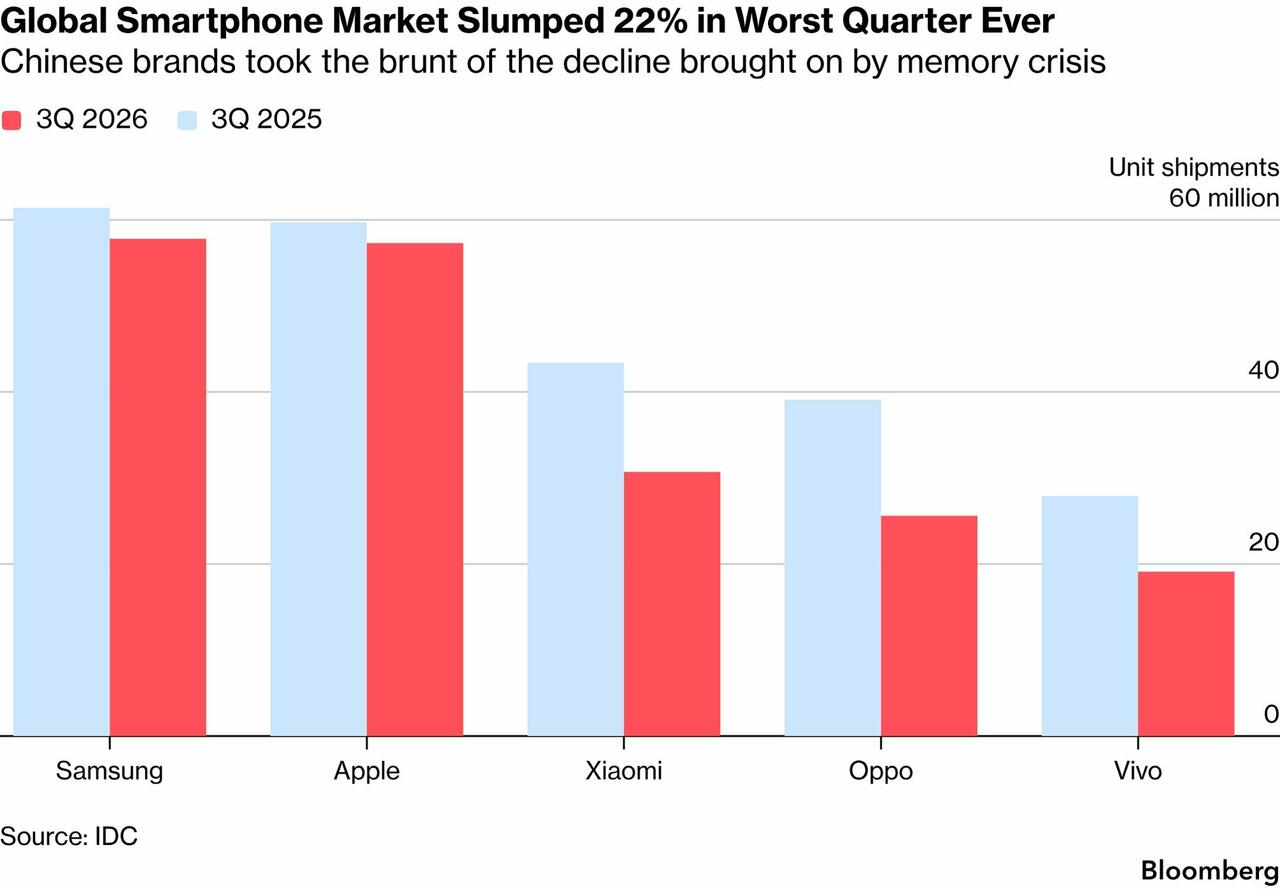
"The sharp downturn the industry has been bracing for finally materialized in the third quarter this year, with shipments declining a record 22% YoY. However, the worst is yet to come," senior IDC research director Nabila Popal wrote in the report released earlier this morning.
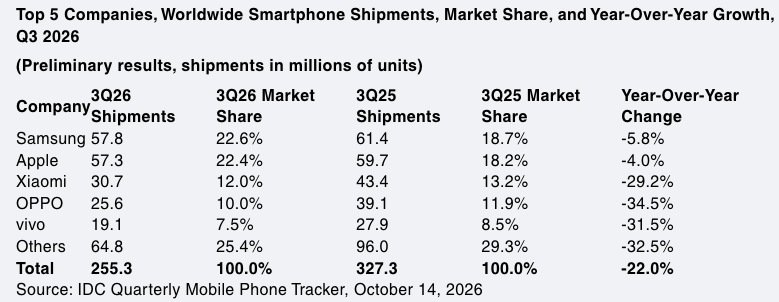
Popal said, "Memory costs have surged approximately 350% since last year and are still rising, creating substantial pressure on vendor margins and shipments. While memory inflation is beginning to slow down, with a low double-digit sequential increase in Q3 compared to roughly 50%-100% sequential growth in prior quarters, costs remain elevated across other critical components as well, compounding the crunch."
IDC expects handset shipment growth to remain under pressure through 2027, with any recovery pushed to 2028 at the earliest. Manufacturers increasingly view the cost shock as a permanent change in the industry's economics.
This cost shock has hit Chinese brands hardest, which are highly exposed to budget markets, as soaring chip costs have squeezed margins and price increases now risk driving customers away. Conversely, Apple and Samsung are gaining market share, as their premium handset portfolios and supply advantages help shield them from the downturn.
IDC vice president Francisco Jeronimo wrote in the report, "The third quarter shows the full impact and damage of the memory crisis," adding, "The pressure is now moving from vendors to consumers. As higher prices reach the shelf, many buyers are keeping their current devices longer. Chinese brands face a particularly difficult moment, as their exposure to low-end smartphones forces them to choose between protecting margins and defending volume just as demand weakens. Volumes will stay under pressure in the coming quarters, while vendors with scale, secure supply and a premium mix keep gaining share in a smaller market."
IDC's report was in line with Loop Capital analyst John Donovan's report earlier this week, which said global smartphone shipments tumbled 22% in the third quarter. Like IDC, Donovan warned that there is a lot "more pain to come.