Everyone Is Dumping AI. That's Where Things Get Interesting
The AI reckoning
The AI trade is facing a critical test. Nvidia is flirting with a massive trendline, NDX has been rejected at the 200-day, and systematic funds are dumping billions.
Yet semiconductor valuations are pricing in an earnings disaster, bearish positioning is reaching extremes, and the ingredients for a violent squeeze are falling into place.
Meanwhile, the dollar marches on, AI is reshaping global capital flows, and Europe is emerging as the ultimate AI diversification trade.
Is this the beginning of a lasting AI regime shift, or the setup for one spectacular squeeze?
Flying too close to the sun
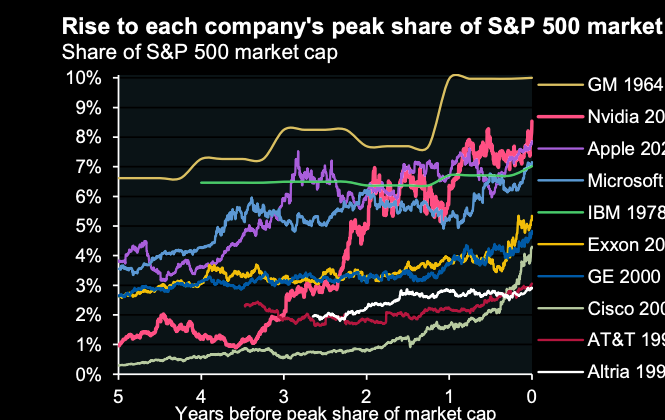
Nvidia's rise was unlike anything we have seen before. In December 2022, the stock accounted for just 1% of the S&P 500. By May this year, that figure had exploded to 8.5%.
Cembalest compares Nvidia's extraordinary ascent with previous market kings, including GM, IBM, GE and Cisco. Most eventually surrendered their dominance, often with brutal consequences for shareholders. Microsoft and Apple managed to break that pattern.
The question now is whether Nvidia can join those exceptions, or whether the Icarus effect is finally catching up. More here.
Source: JPM
The big trendline test
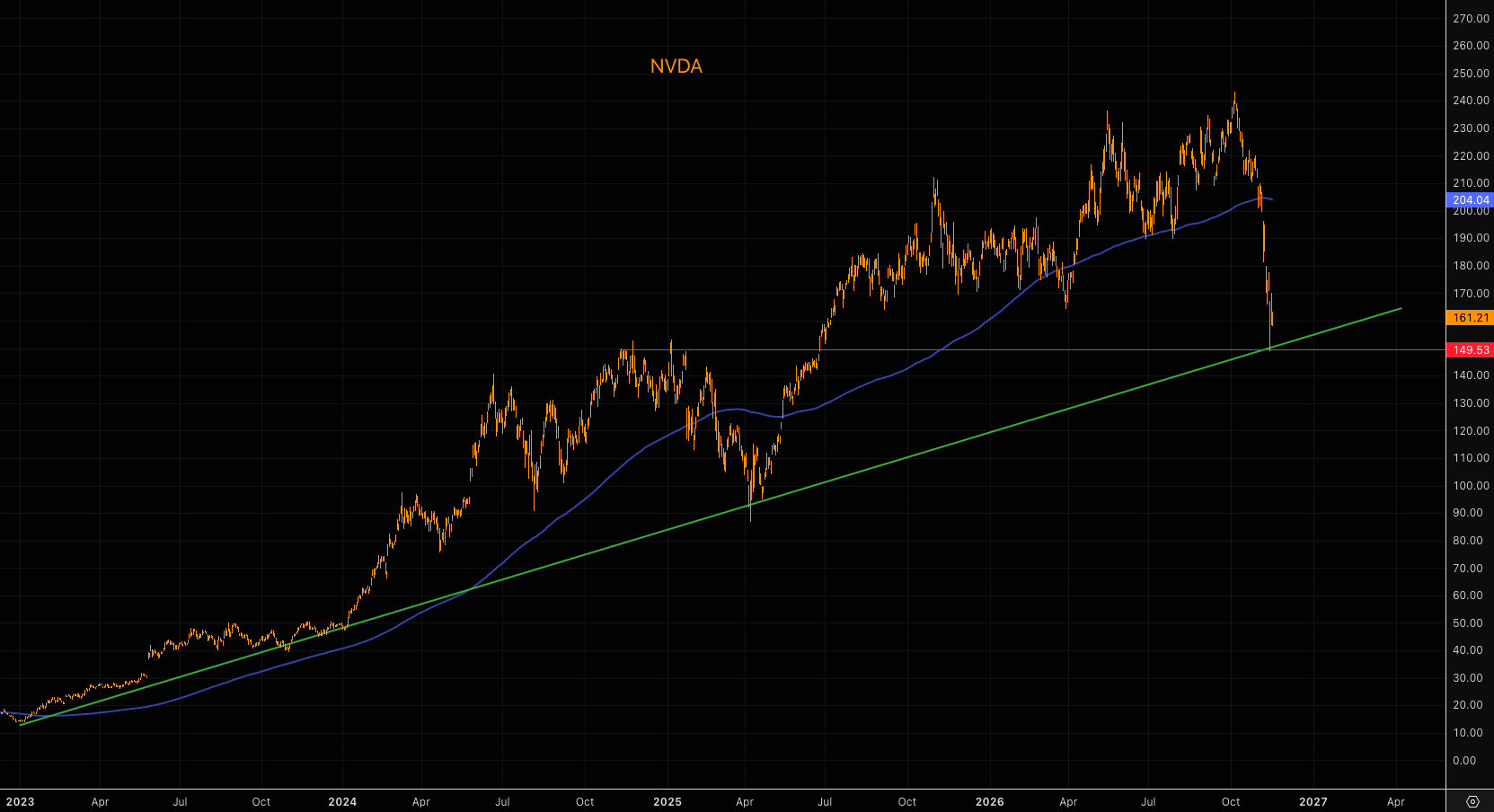
NVDA touched the massive trendline at Thursday's lows. The stock has bounced since the panic open, but the recovery has been far from impressive. NVDA is still trading 22% below its 200-day moving average. For perspective, the stock traded some 30% below the same average at the Liberation Day lows. Full note here.
Source: LSEG Workspace
Cheap for a reason?
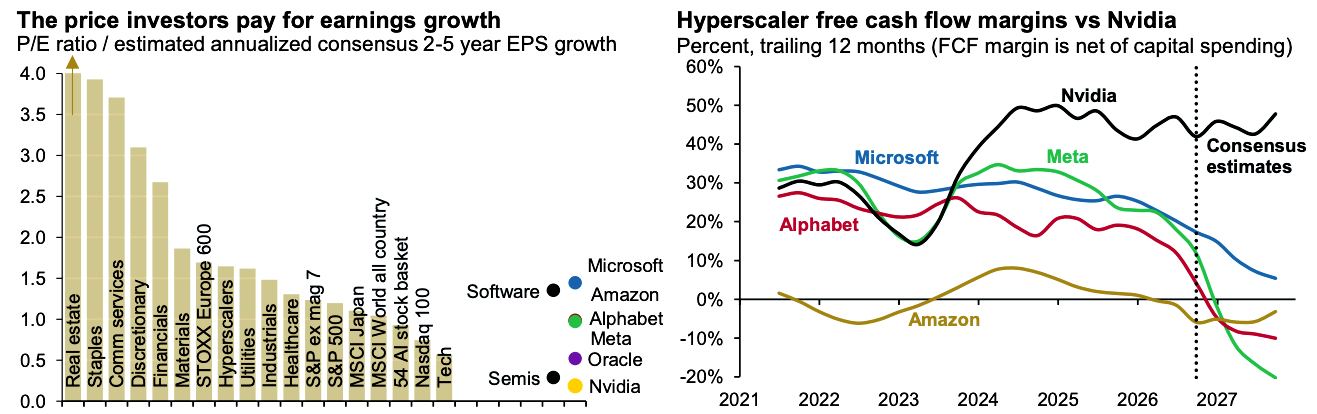
Nvidia has been crushed, but the underlying business is still extraordinarily profitable. JPM estimates the company captured 83% of AI chip revenues between 2023 and 2025, with gross margins of 75% and operating margins of 66%.
Meanwhile, the valuation reset has been enormous. Nvidia now trades at a PEG ratio of just 0.2x, making it by far the cheapest of the major AI names on this measure.
And unlike the hyperscalers, which are burning through cash to finance the AI buildout, Nvidia continues to generate remarkable free cash flow margins.
The market has gone from paying almost anything for Nvidia's growth to questioning how long that growth can last. At some point, that pendulum may have swung too far.
Source: JPM
Pricing in an earnings collapse?
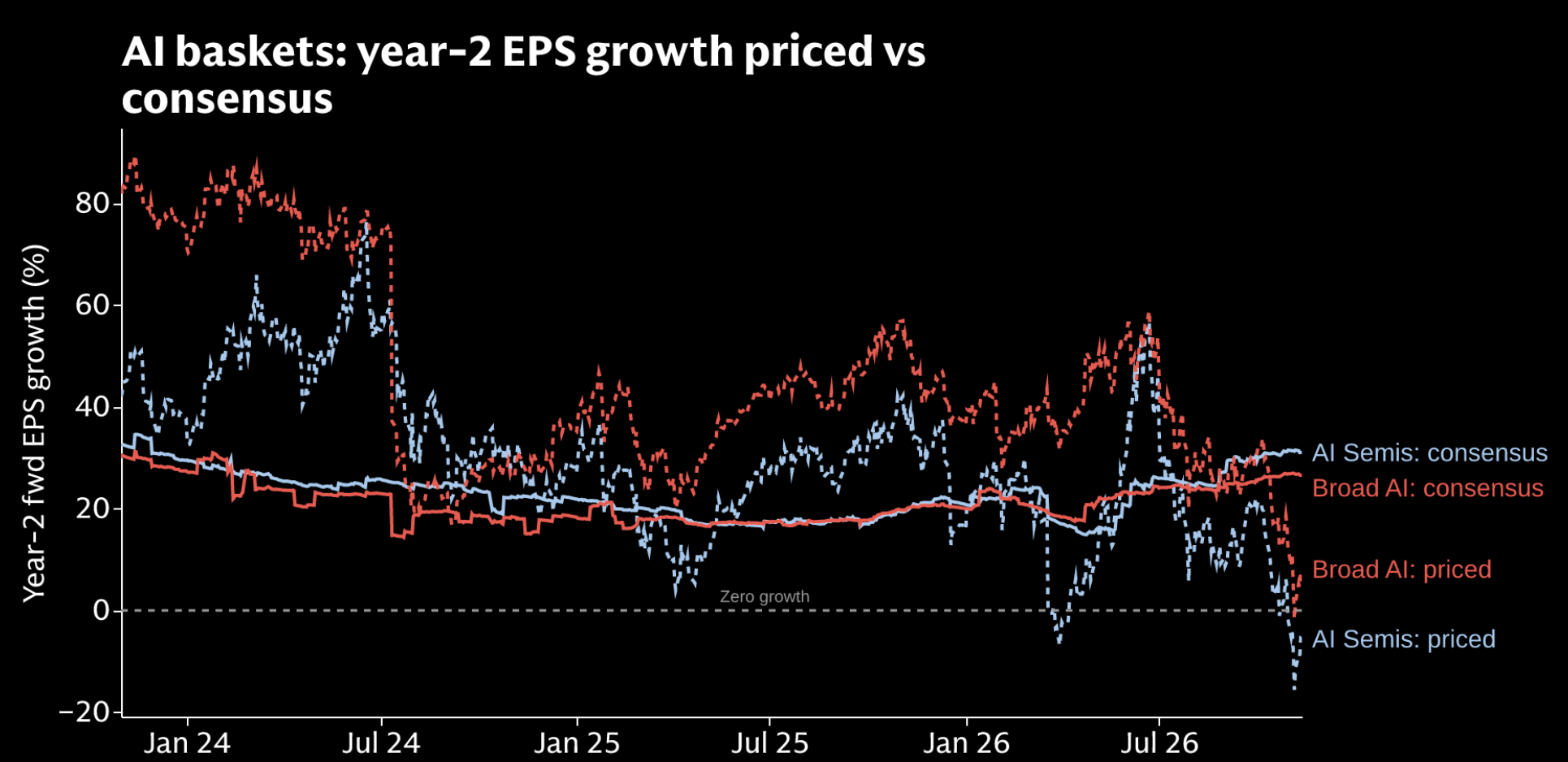
Semiconductors have underperformed the S&P 500 by more than 30 percentage points since June, the sharpest relative drawdown since 2002. Goldman's AI semiconductor basket now trades at just 11x 2028 earnings versus nearly 16x for the S&P 500, despite consensus forecasting 31% earnings growth in 2028. At the broader market's multiple, current prices would imply earnings declining approximately 6%. Either earnings estimates are about to collapse, or the market has become excessively pessimistic about AI.
Source: GS
Rejected again
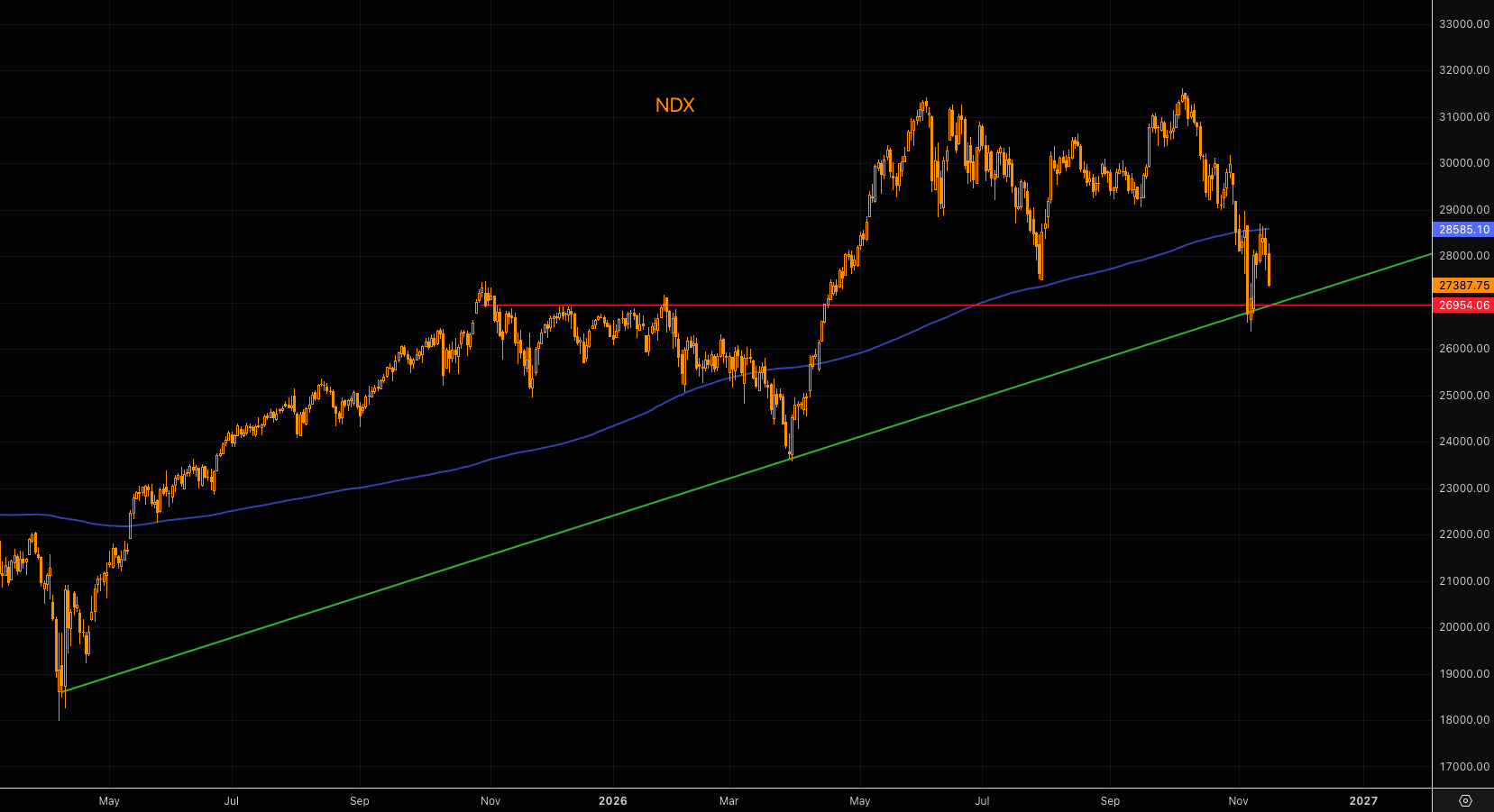
NDX was rejected right at the 200-day moving average. We are still above the latest panic lows, but momentum is far from impressive. The big make-or-break level is 27k in NDX futures. This was a key pivot last autumn and is also where the massive long-term trendline comes into play.
Source: LSEG Workspace
Stress running high
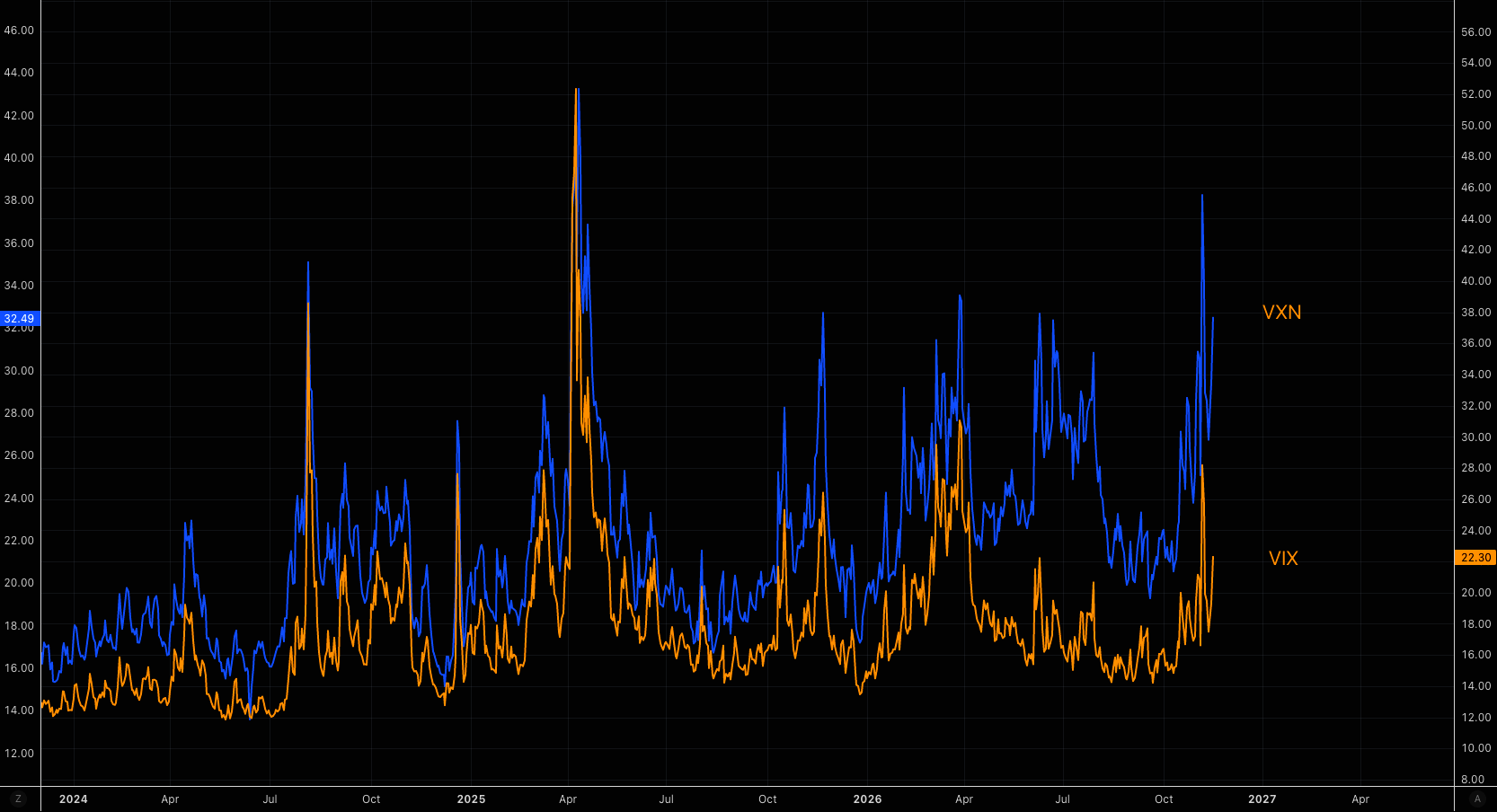
Equity vols are spiking again, with the VXN/VIX gap remaining stubbornly wide.
Source: LSEG Workspace
The tech sell
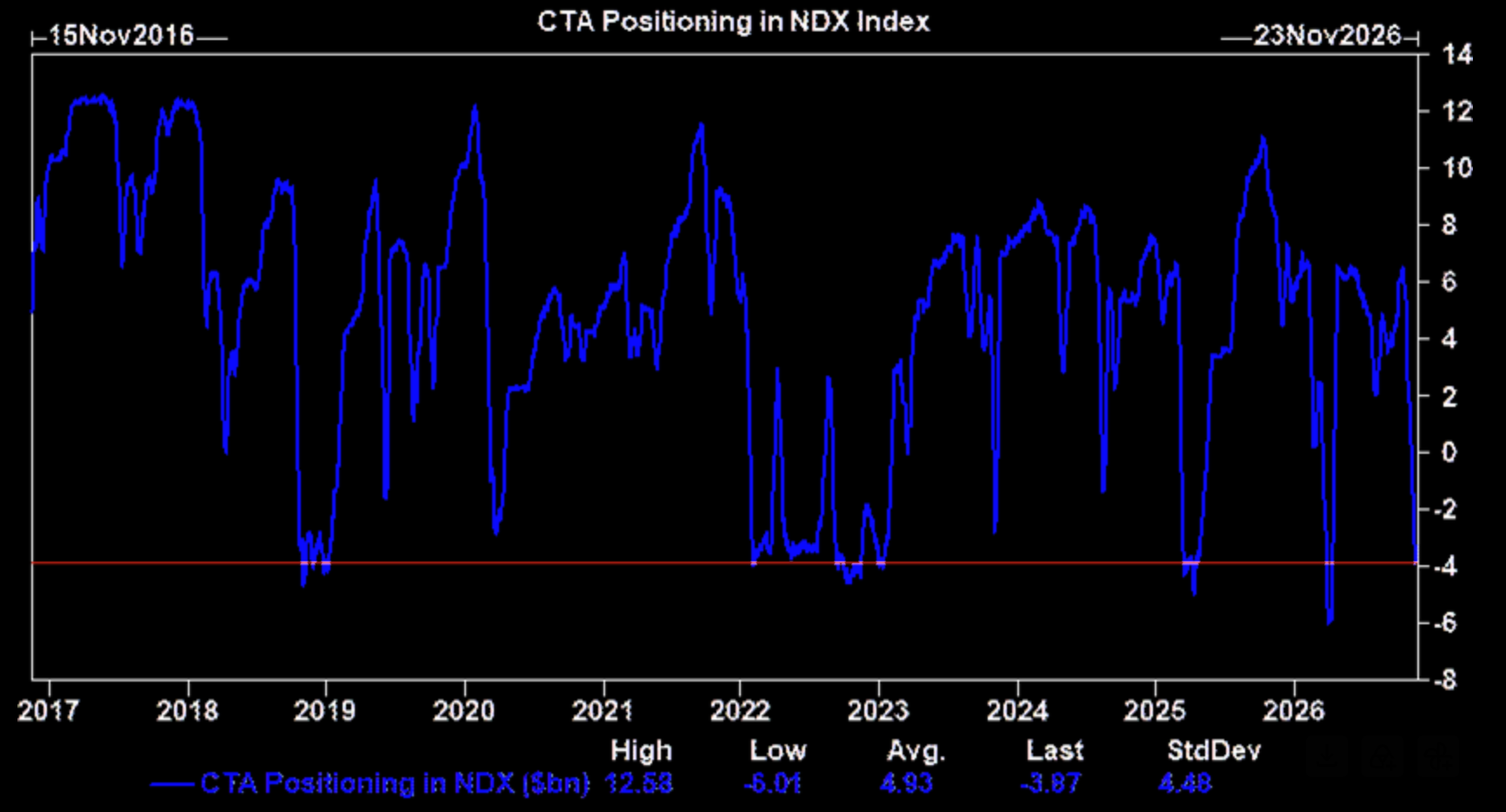
Momentum players are running close to maximum shorts in NDX. The selling pressure is real, but positioning is becoming increasingly vulnerable to a sharp reversal. More here.
Source: GS
Systematic sellers
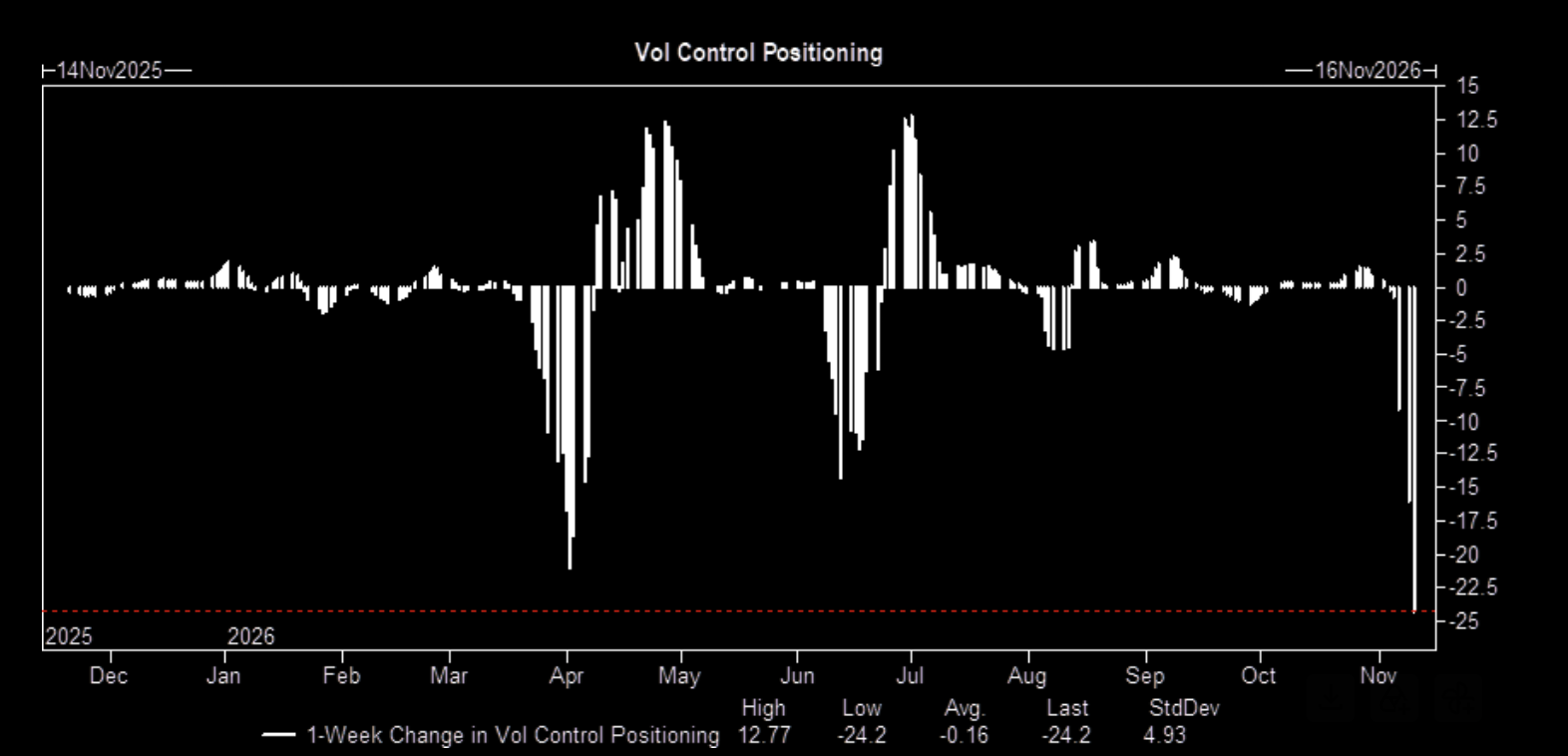
Elevated realized volatility is forcing systematic funds to cut risk. Vol control and risk parity strategies are estimated to have sold more than $30bn combined over the past week.
The more interesting setup is in vol control. As Goldman points out, these same funds could become meaningful buyers in December/January if volatility settles down. Today's forced sellers could become tomorrow's mechanical bid.
Source: GS
Refuses to die
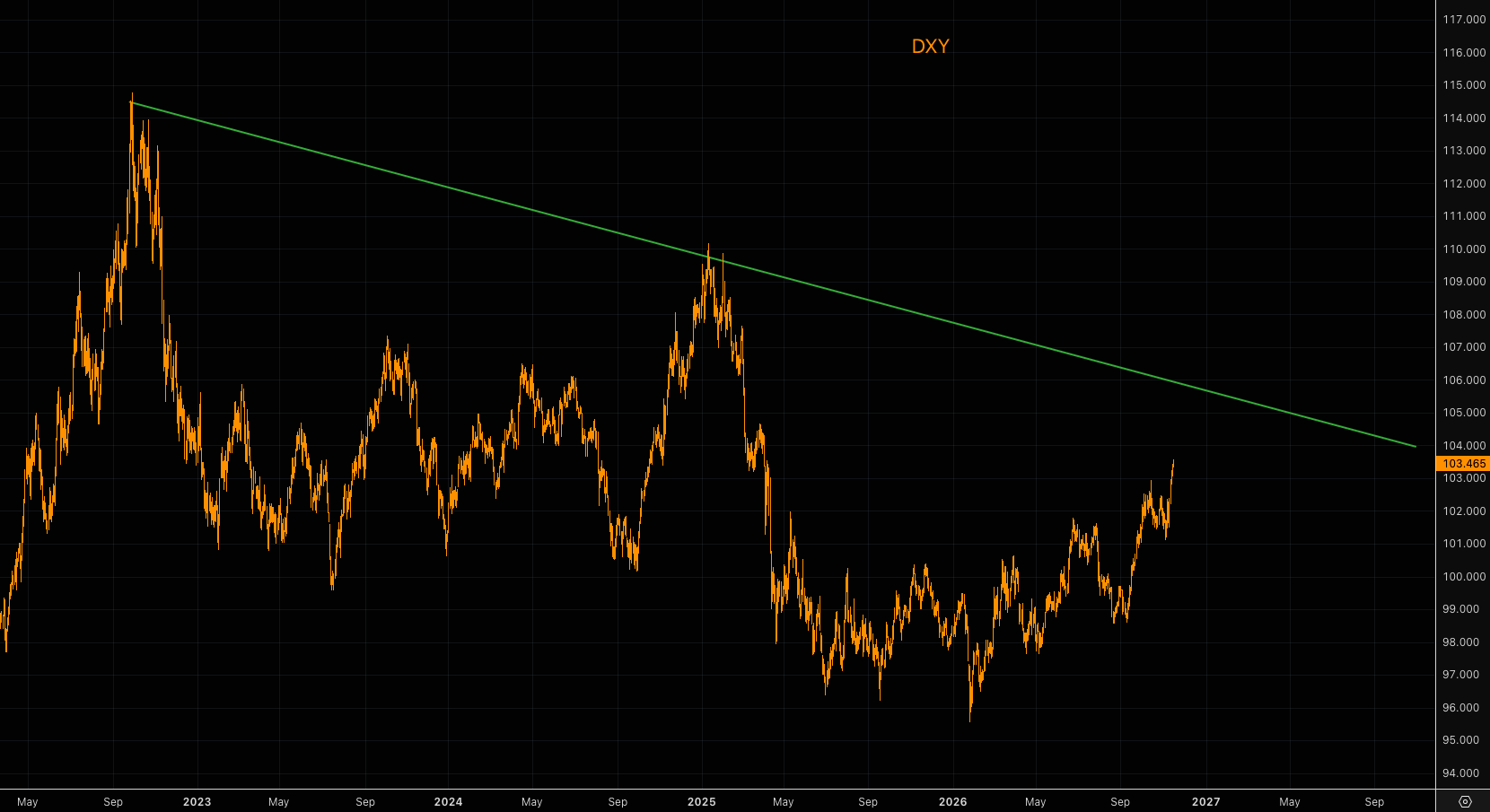
Despite all the bearish narratives, the dollar refuses to roll over. The latest squeeze has caught plenty of bears off guard, with little meaningful resistance until the big 105 level.
And there is more to this than just price action. US yields are moving in the dollar's favor, the Fed is turning increasingly hawkish, and the AI boom is quietly reshaping global capital flows. The dollar has plenty going for it, but its growing dependence on the AI trade is creating a new set of risks.
Source: LSEG Workspace
The rise of the chipdollar
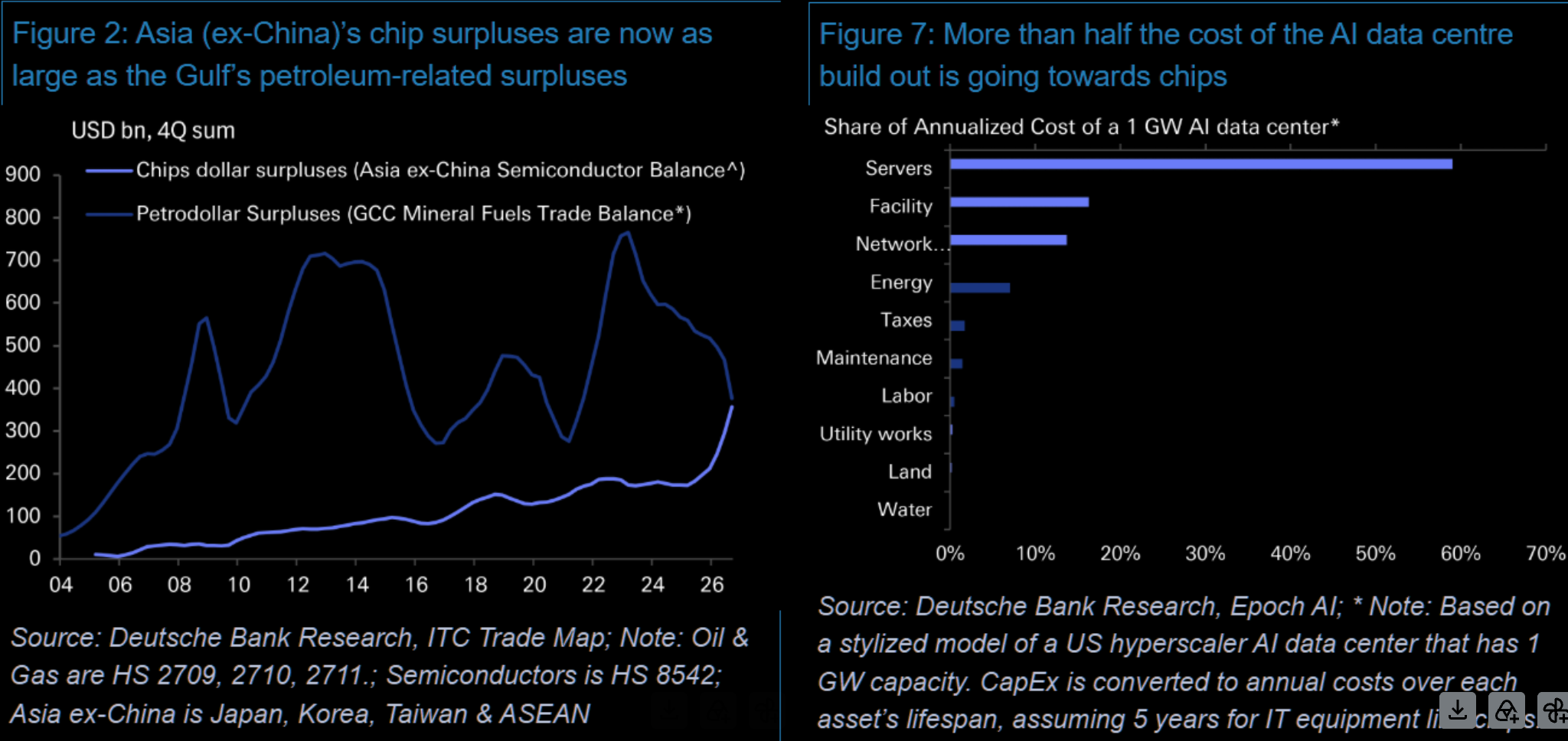
Deutsche Bank's Mallika Sachdeva highlights a major shift in global capital flows. Asia's booming chip trade is generating enormous surpluses, but unlike the petrodollar era, these dollars are increasingly being recycled into US equities rather than Treasuries.
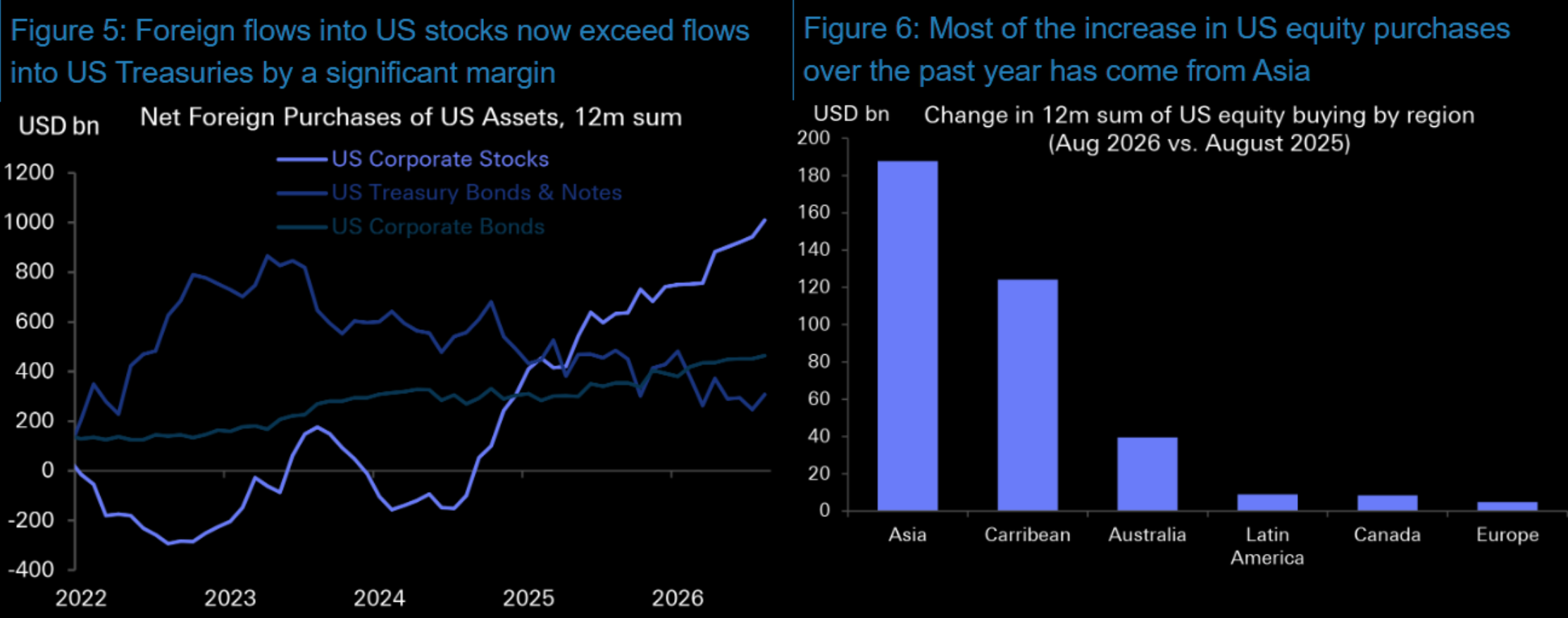
Foreign equity inflows have surpassed $1 trillion annually. The AI boom is becoming an increasingly important source of financing for the US.
Source: DB
The AI-dollar feedback loop
But there is a catch. As Deutsche Bank points out, these equity inflows are supporting the dollar while financing the very AI companies driving the boom.
Unlike the old petrodollar system, this recycling mechanism is tied to much more volatile assets. US equities are three times as volatile as Treasuries, and tech stocks can be up to ten times as volatile.
The irony: The dollar is becoming increasingly dependent on the very AI boom that could eventually destabilize it. More here.
Source: DB
Europe's biggest advantage? No AI
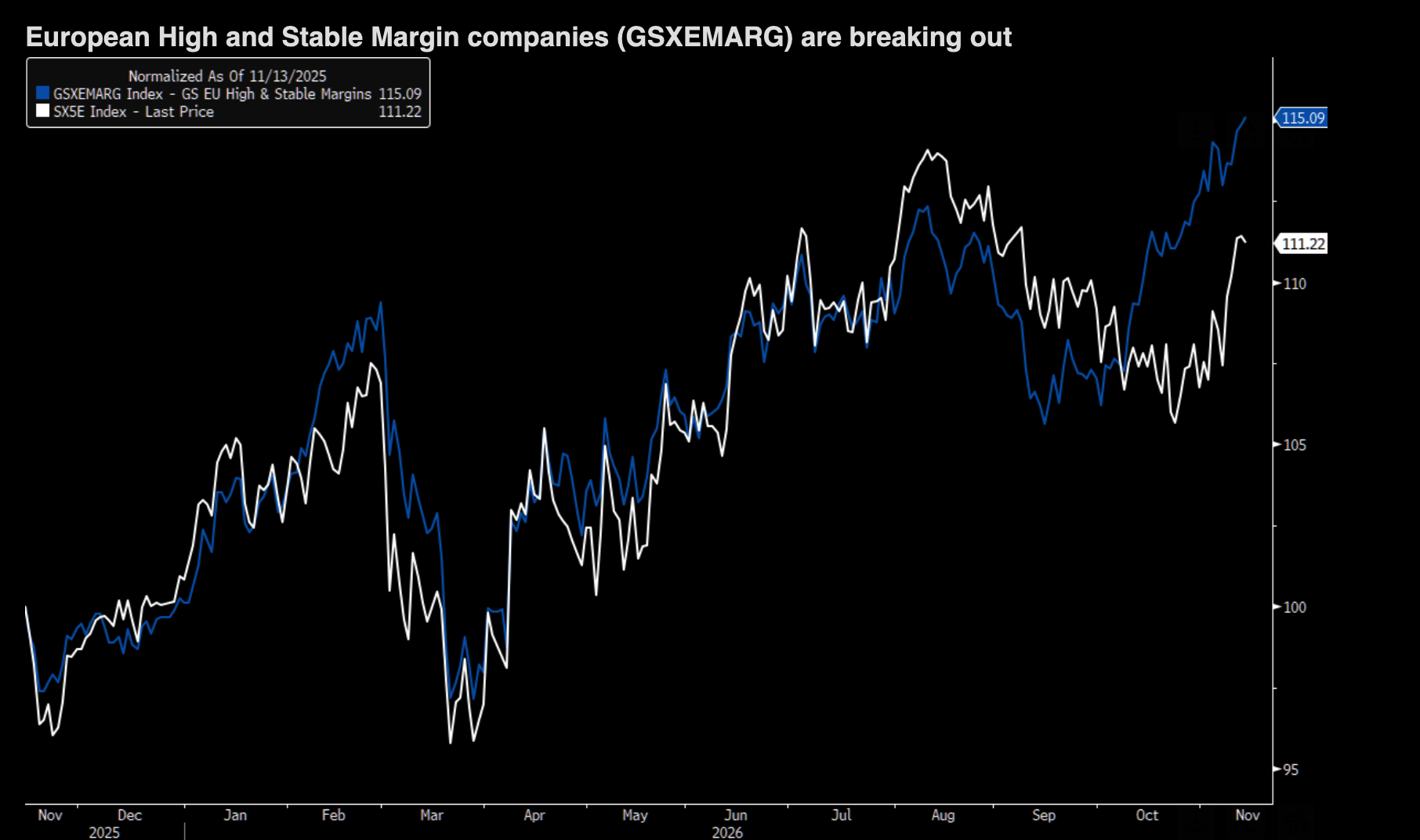
Europe's lack of AI exposure is suddenly looking like a feature rather than a bug. Goldman calculates that the STOXX Europe 600 has a two-year daily beta of less than 0.05 to its US AI basket. After years of being overlooked by global investors, European equities could increasingly attract capital seeking diversification away from the AI complex. European companies with high and stable margins are already starting to break out. The AI diversification trade may be turning into a European allocation trade. More here.