Tech: From Terrific To Terrified
From terrific to terrified
Tech has gone from terrific to terrified in less than a month. Volatility is exploding, AI fragility is reaching historical extremes and hyperscaler cash flow is collapsing. Taiwan is cracking as the semiconductor selloff spreads, while India is emerging as the unexpected winner of the great AI rotation. Meanwhile, Treasury yields have plunged, but systematic bond shorts remain sizeable. Markets are moving fast, positioning is getting shaken out and the next surprise could be a violent move higher. Don't forget the upside.
Terrified tech
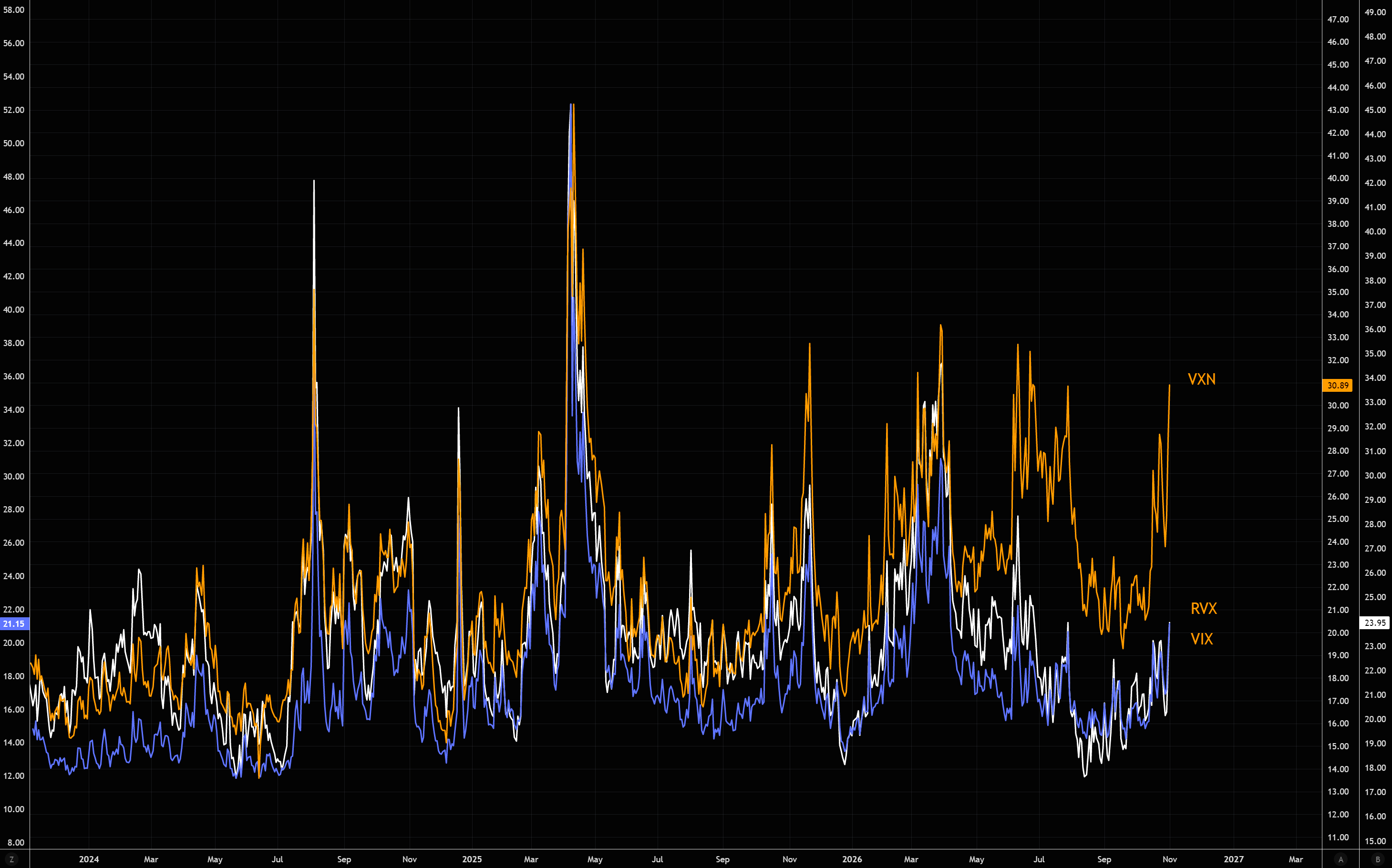
All equity vols have moved higher lately, but the explosion in tech volatility stands out. The speed of the repricing has been extraordinary, with tech going from all-time highs to outright panic in less than a month. More here.
Source: LSEG Workspace
The great AI fragility
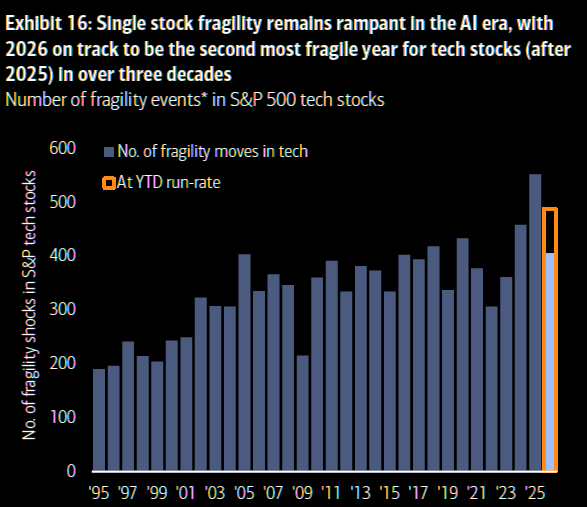
BofA highlights an extraordinary development beneath the surface. US tech is on track for its second most fragile year in over three decades, surpassed only by 2025. Earnings reactions are becoming increasingly violent, despite fundamentals not deteriorating at the same pace. The problem is no longer just earnings. It is collapsing conviction, AI uncertainty and reflexive positioning. Investors are reacting more aggressively to the same information.
Source: BofA
The cash flow collapse
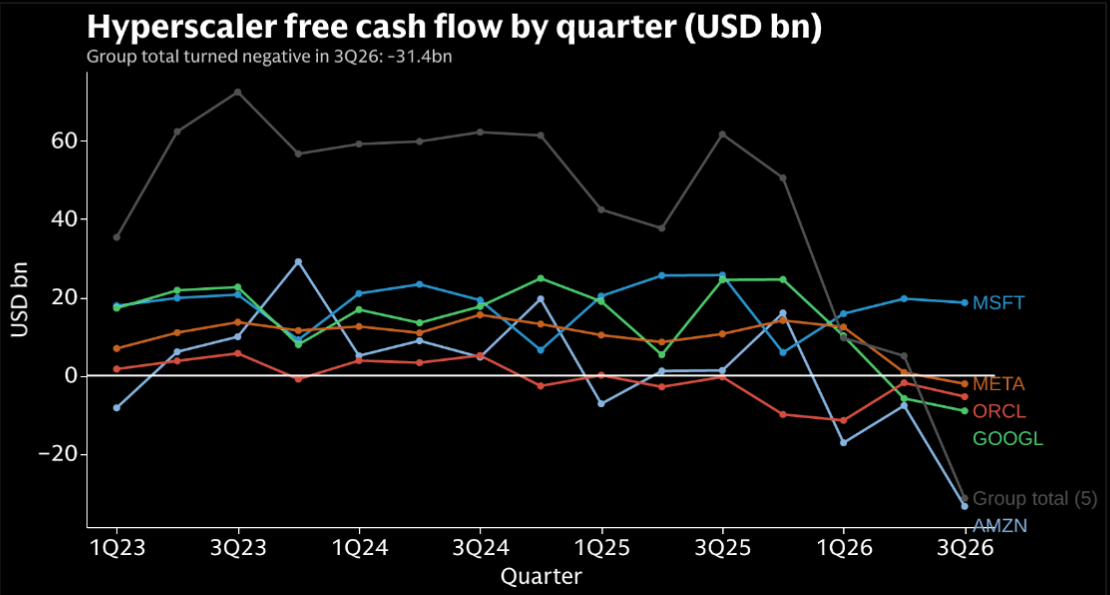
Goldman's Brad Shelofsky highlights a dramatic deterioration in hyperscaler cash generation. Combined quarterly free cash flow has collapsed to negative $31.4 billion, with Microsoft now the only major hyperscaler still generating positive FCF. As Bobby Molavi points out, these companies are transitioning from cash-printing machines into cash-spending machines. AI demand isn't the problem. The cost of delivering it is. More here.
Source: GS
Trembling Taiwan
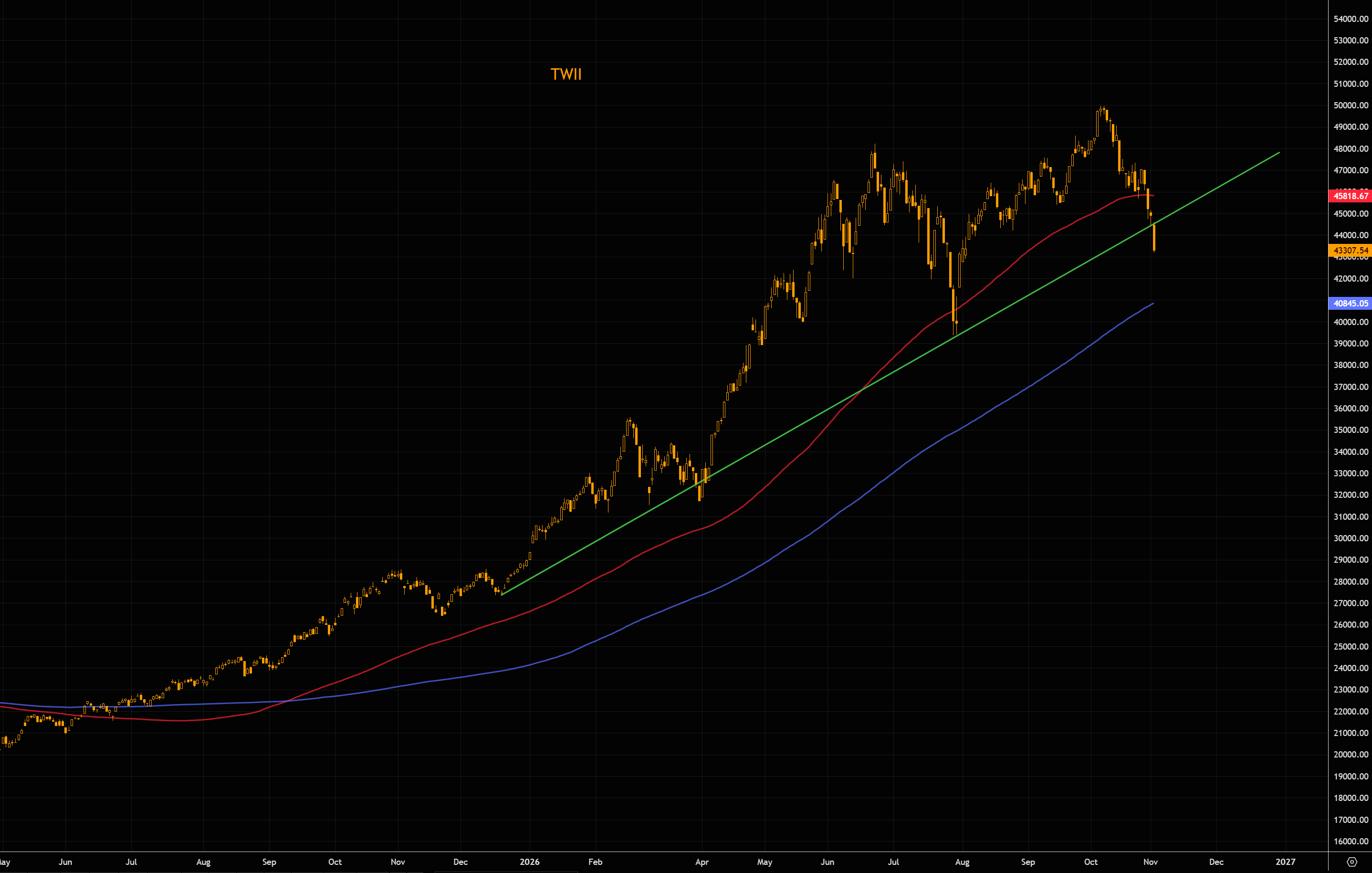
We outlined our bear Taiwan logic a week ago in The next AI domino. Since then the index has fallen around 8%, with the TWII breaking the trend line overnight, closing well below the 100 day MA. There is little real support until the 200 day MA.
Source: LSEG Workspace
When semis sneeze, Taiwan catches a cold
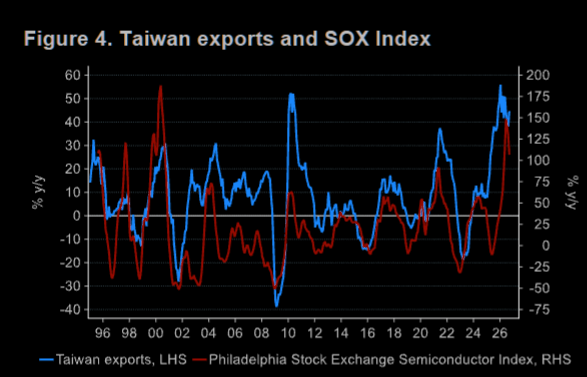
ANZ highlights the close relationship between Taiwan's exports and the SOX. With semis under pressure, the risk is that equity weakness eventually spills into the real economy. Taiwan's extraordinary macro strength could become vulnerable if the chip cycle loses momentum. Full note here.
Source: ANZ
Be anti-AI
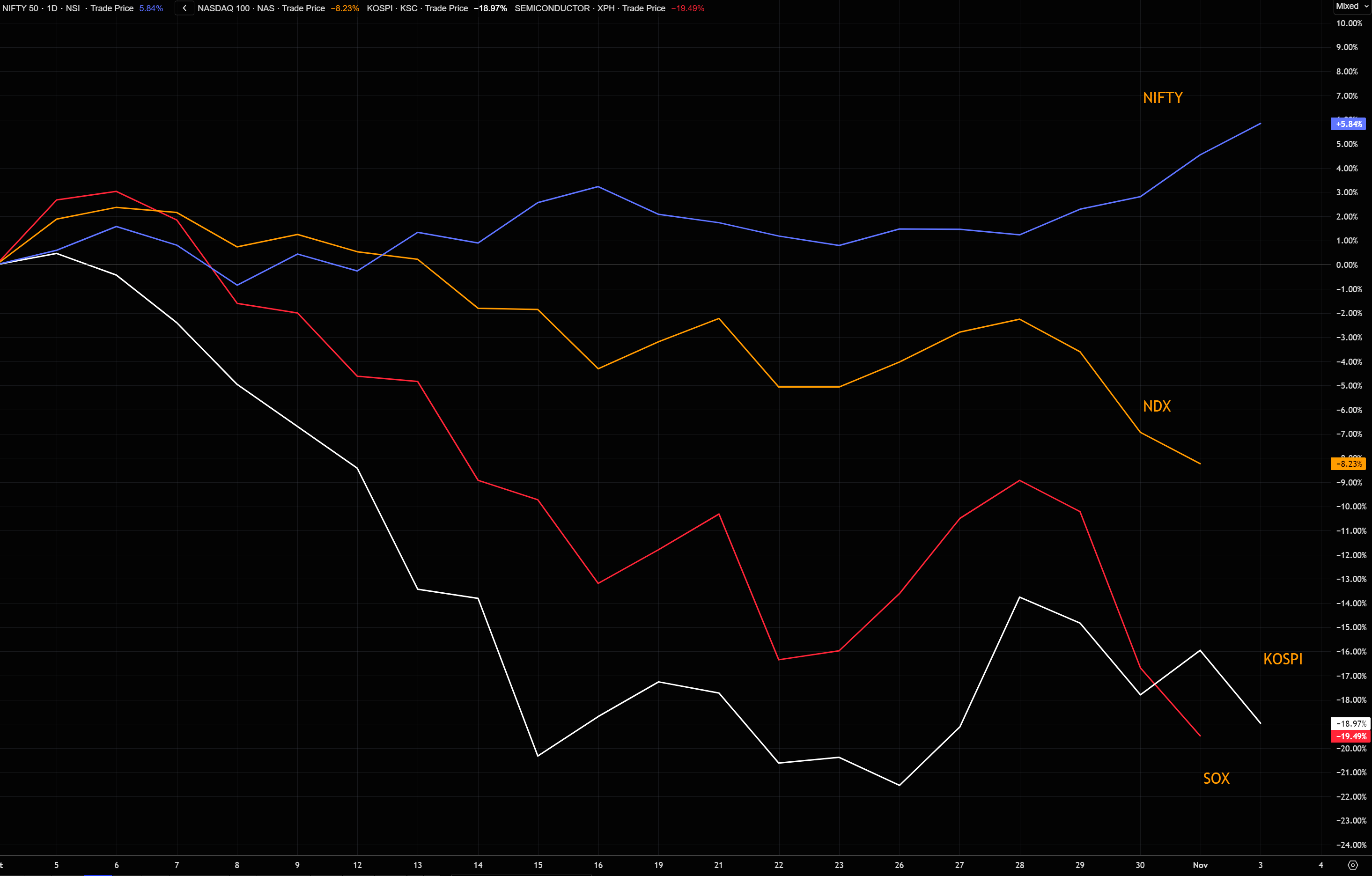
India has crushed NDX, SOX and KOSPI over the past month. We are not calling for the next great India bull market, but as we wrote back in mid-October: "As investors dump AI-linked Asian technology exposure, Indian IT has become an unlikely beneficiary of the rotation." That trade is now firmly in the money. More here.
Source: LSEG Workspace
India's relative explosion
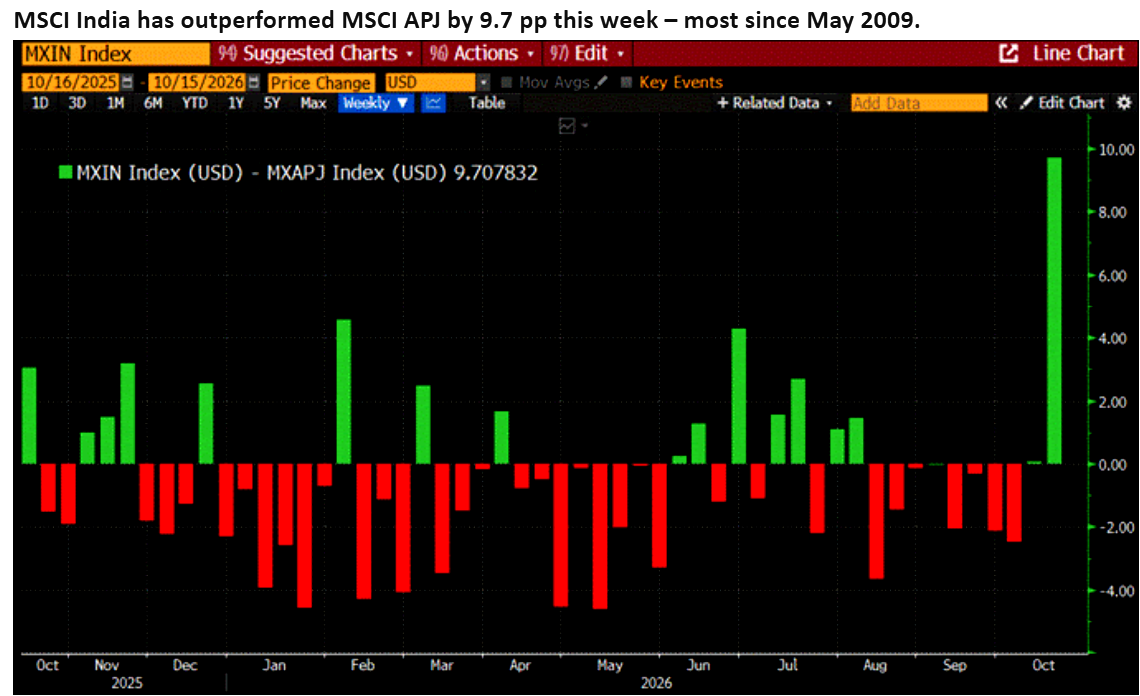
MSCI India has outperformed MSCI Asia Pacific ex-Japan by 9.7 percentage points this week, the biggest weekly relative move since May 2009. The great Asian AI rotation is accelerating.
Source: GS/Bloomberg
The 10 year
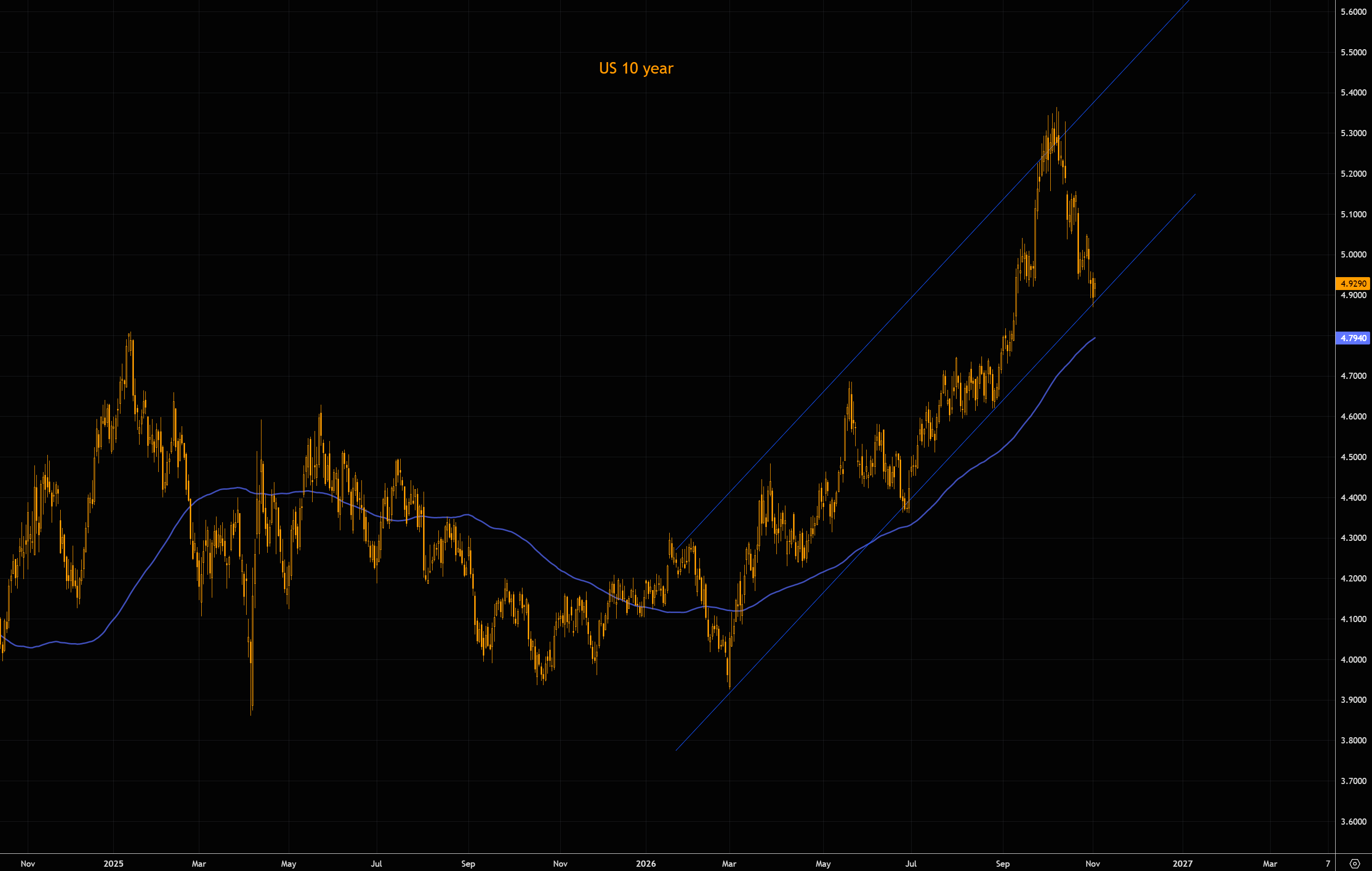
Back on October 8, with the US 10-year pushing 5.30–5.35%, we pointed out that everybody was expecting yields to move higher. That was precisely the problem. Fast forward to today, and the 10-year has moved from the top of its trend channel around 5.3% all the way down to channel support near 4.9%. The 100-day moving average sits slightly lower, around 4.8%.
If you played this move, time to say thank you and move on.
Source: LSEG Workspace
Still shorty
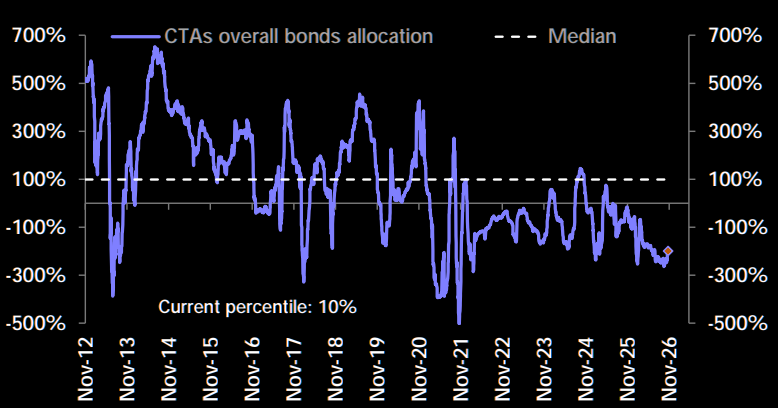
According to DB, CTAs have covered only a fraction of their bond shorts despite the sharp rally in Treasuries. The positioning unwind may be far from over. More on bonds here.
Source: DB
Don't forget the upside
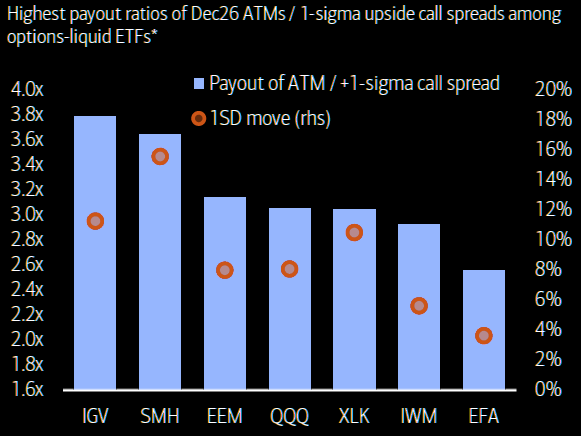
Tech is getting slaughtered, but upside convexity is becoming interesting. BofA highlights IGV and SMH December call spreads as offering some of the most attractive upside payout ratios among liquid ETFs. The interesting asymmetry is that a clearing event around the midterms could trigger a violent recovery, while defined-risk call spreads limit losses to the premium paid. Don't confuse a bearish tape with an absence of upside opportunities.