





Huawei Pulls Its Nvidia-Killer Forward To Q1 - But There's A Catch
Huawei is bringing forward the launch of its next flagship artificial intelligence chip to the first quarter of 2027, accelerating its push to displace Nvidia in China and establish a Chinese alternative in the global AI computing market.
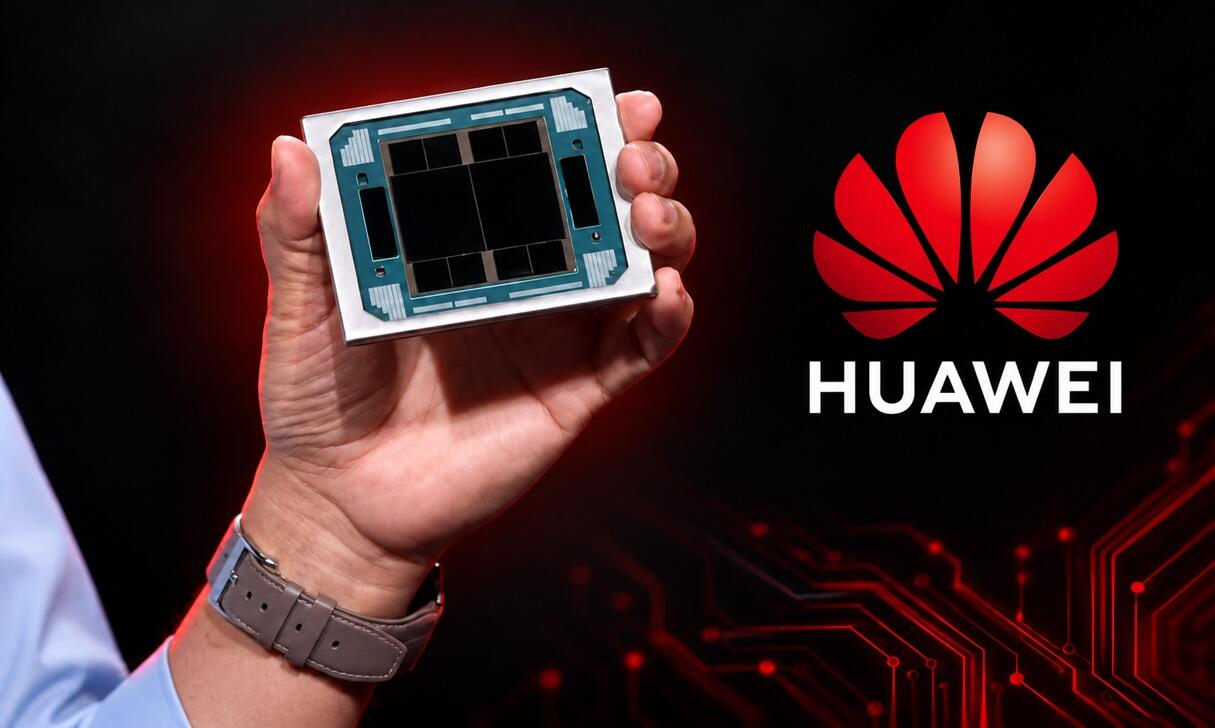
The Ascend 960DT, previously scheduled for commercial availability in late 2027, will now arrive in the first quarter, rotating chairman David Wang said Thursday at Huawei's annual conference in Shanghai, according to Bloomberg. A second variant, the Ascend 960PR, is due in the third quarter.
The accelerated schedule brings the 960DT forward by three quarters, according to Nikkei Asia. Wang said the chip would deliver twice the performance of its predecessor, with new generations following annually: Ascend 970 in 2028 and Ascend 980 in 2029. That is Huawei's performance claim, rather than an independently verified comparison with Nvidia's competing products.
"We aim to build a solid computing foundation for China and offer a new option for the world," Wang said, according to Nikkei.

As the WSJ notes, Morgan Stanley projects China's AI chip market to grow to $67 billion by 2030 - with domestic companies accounting for 86% of this, compared with less than half in 2025.
Huawei introduced 11 chips covering AI processing, general-purpose computing, storage and high-speed connectivity as it builds out the components needed to operate entire AI data centers.
That broader approach is central to its challenge to Nvidia. Huawei is using its networking technology to connect large numbers of processors into systems called SuperPoDs and larger clusters, seeking to compensate for weaker individual chips by improving how they work together. Its UnifiedBus technology handles the high-speed connections, while new optical components are intended to accelerate data transmission.
Huawei says it has already overtaken Nvidia in China's AI chip market, although the claim comes from company executives and the reports provide no independently verified market-share figures. Executives also said the software gap is narrowing, a necessary step toward getting more Chinese developers to train and run models on Ascend hardware.

But the company's global ambitions face an immediate obstacle: it cannot produce enough chips for customers at home.
Deputy chairman Eric Xu told reporters that Huawei is prioritizing Chinese demand and has no current plan for a broad international expansion. Overseas activity remains limited to testing and supplying customers with a particularly urgent need for alternative hardware.
"We are doing some testing ... providing some supply to those countries, but the volume is quite limited," Xu said, according to Nikkei.
Huawei is proposing that its Ascend 980 chip will continue to build upon the foundation of its predecessors, boosting the compute capabilities to 7.2 PFLOPs in FP8 and 28 PFLOPs in FP4. The chip will feature 384 GB of HBM memory operating at 38.4 TB/s of bandwidth, and 8 TB/s of interconnect bandwidth. Huawei does mention that these are preliminary specs for the 980 chip, which can change close to launch. -WCCFTECH

Bloomberg has reported that Huawei is exploring opportunities in Malaysia and Egypt. Those efforts could give it an overseas foothold, but they do not yet amount to a worldwide rollout capable of replacing Nvidia.
The pressure on production is already visible. DeepSeek plans to deploy at least 160,000 Ascend 950DT chips at a data center in Inner Mongolia, Bloomberg reported, but Huawei cannot yet fulfill an order of that size. The company also raised prices for the 950DT by 60% over the summer, citing tight component supplies, according to Bloomberg.

Xu said shortages extend across optical components, storage and memory. He estimated that global supply and demand could reach balance around 2029, with China taking until roughly 2030.
Nvidia retains a technological advantage. Bloomberg reported that leading Chinese AI laboratories still largely rely on its processors to train their models, even as they increasingly use domestic chips to run them afterward. An earlier Huawei launch does not by itself establish equivalent performance, software maturity or manufacturing scale.
But let's also keep in mind that these chips don't need to match Nvidia's performance when open-weight Chinese AI models perform nearly on par with frontier labs at ~10% of the cost - a trend that continues.
Huawei is building a domestic customer base and a broader computing ecosystem while Nvidia's most advanced products remain restricted.

"China is a country with a very strong sense of crisis. We cannot let our fate be determined by others' willingness to sell chips to China or not," Xu said, according to Nikkei.
Huawei has shipped more than 1,000 SuperPoDs to more than 370 customers, Wang said, according to Reuters, without naming the customers or giving a breakdown of shipments.