





Beyond The SPR: Stifel Spots Another Depleted Strategic Stockpile In Urgent Need Of Rebuilding
Stifel's "own the bottlenecks" theme favors producers that can supply Western markets with conflict-free critical materials today. China's tightening export controls will collide with a looming multiyear rearmament cycle and reinforce the urgency of finding stable production outside China.
The Trump administration's big push to rebuild the US defense industrial base is creating a multiyear investment opportunity in critical materials supply chains as sourcing shifts from China to allied countries.
Stifel aerospace and defense analyst Jonathan Siegmann wrote in the note titled "National Security Critical Materials & Supply Chain: Own the Bottlenecks" that clients should look beyond big defense giants to producing miners that control scarce supplies of tungsten, magnets, microdisplays, lasers, and drone components.
"Stock playbook: own the choke point, don't chase the press release," Siegmann said.
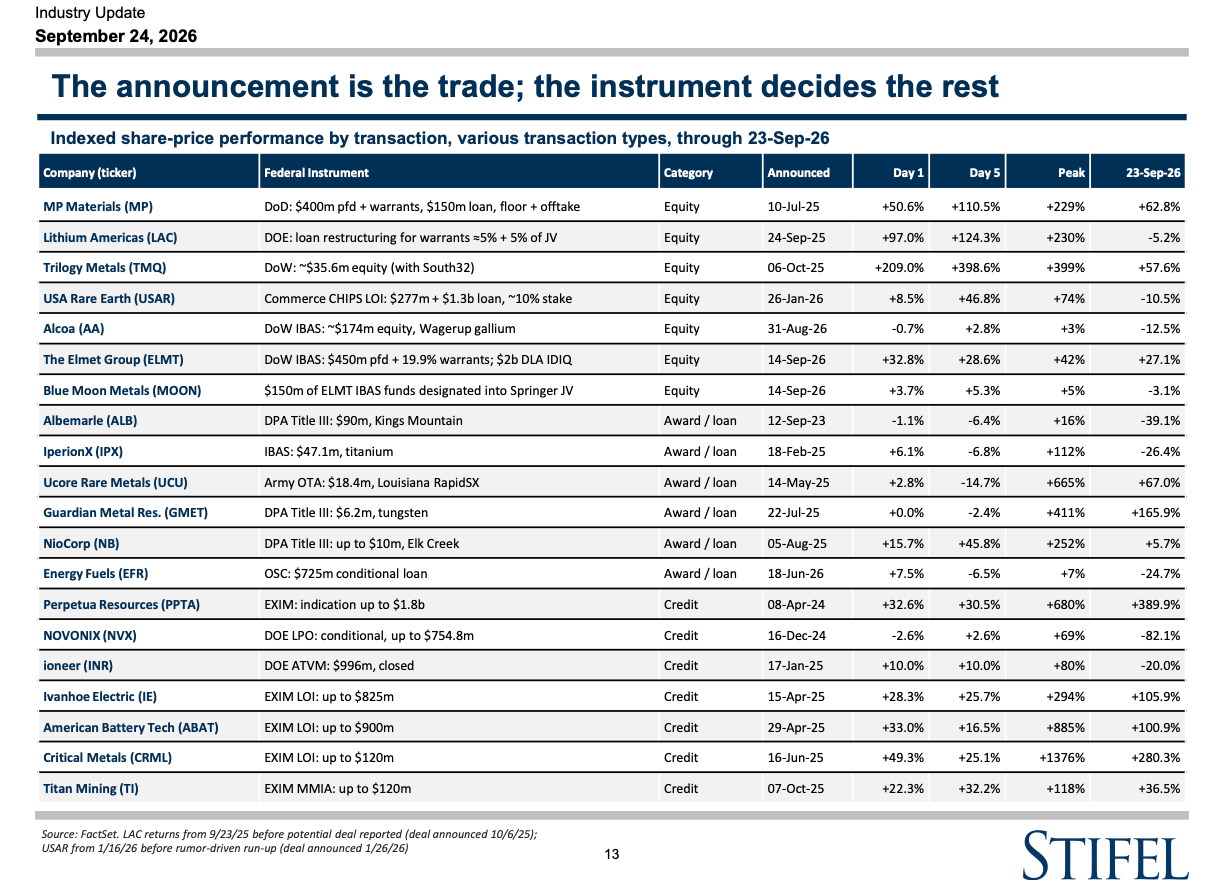
He continued, "Front-running announced federal support has paid impressively, but outperformance is usually short-lived, and the strategy is hard to repeat. We prefer investing in stocks already positioned as bottleneck solutions, where active government support is additive rather than a requirement. A strong defense cycle plus a committed, supportive US customer will structurally improve growth and returns, in our view."
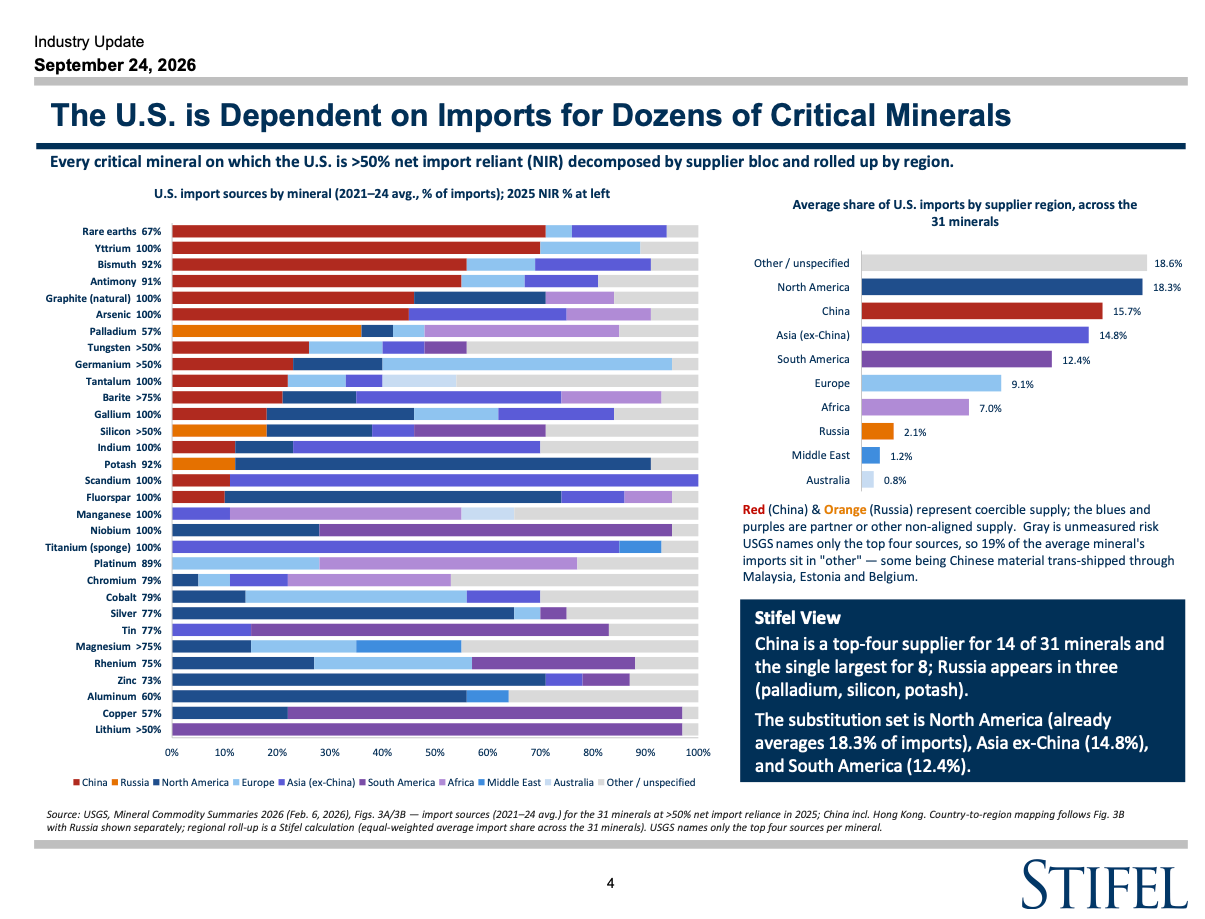
China is a top-four supplier for 14 of 31 minerals and the single largest for eight; Russia appears among the top suppliers for three: palladium, silicon, and potash.
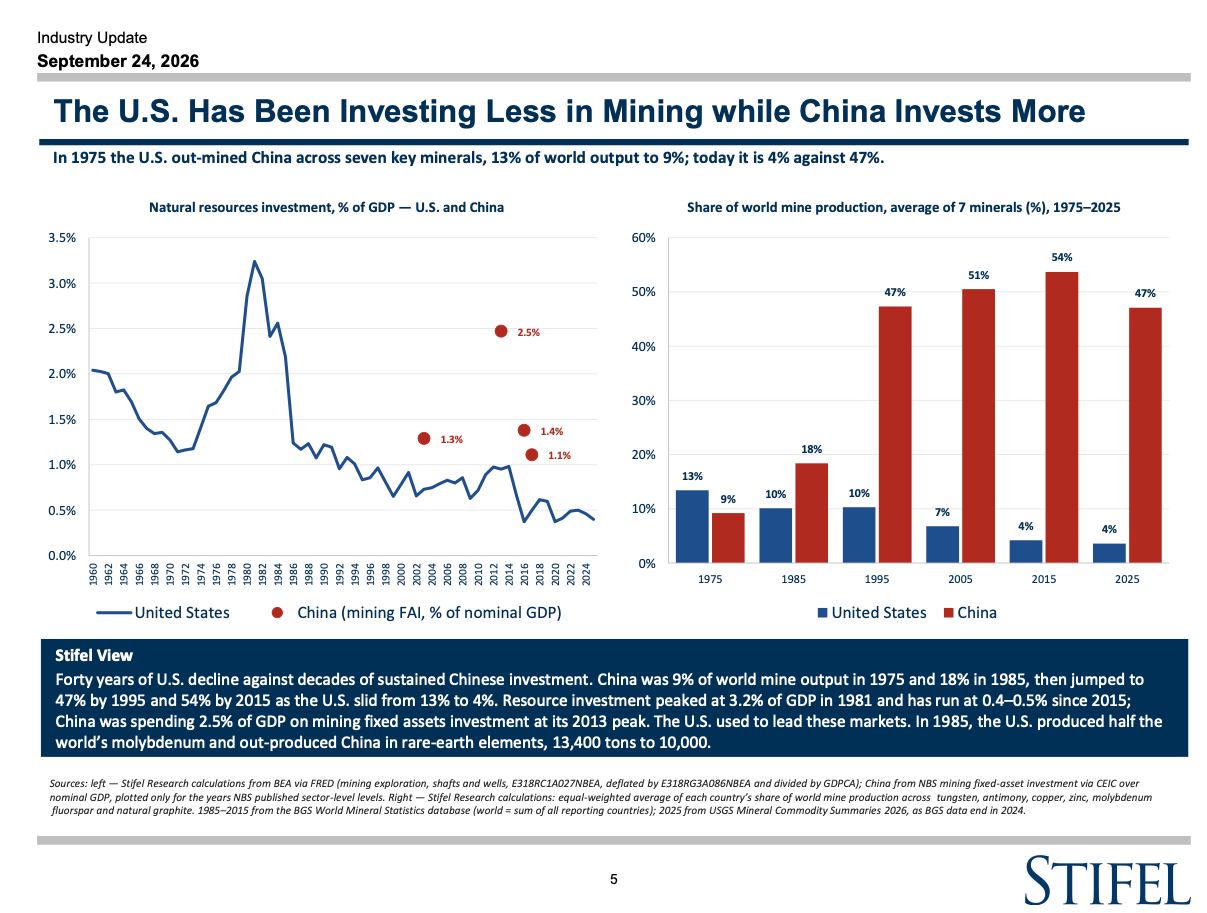
Siegmann shows that China has been an investment powerhouse in mining and refining since the mid-1990s, while US investment has lagged. Now the Trump administration is playing catch-up.
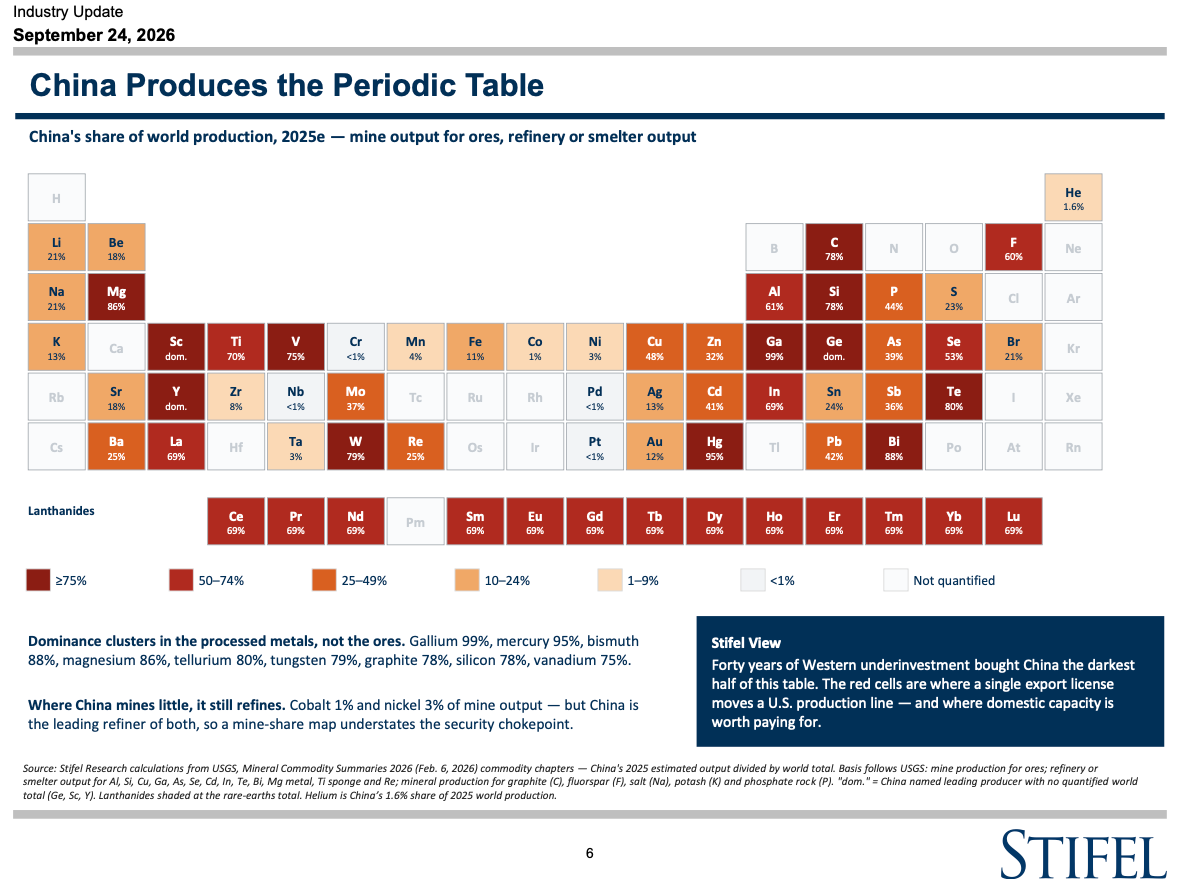
China Produces the Periodic Table
Siegmann outlines China's weaponization of critical materials exports against the US and its Western allies.
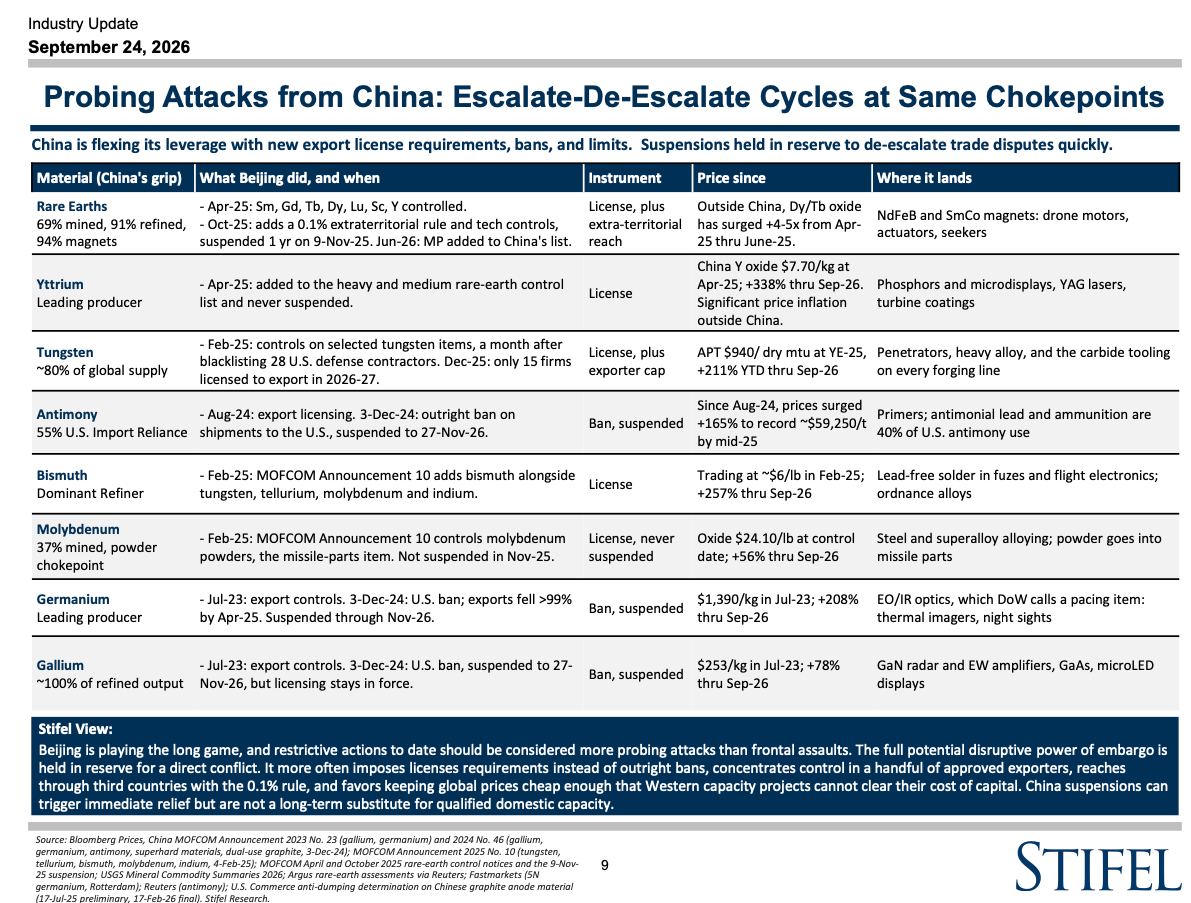
Why the Critical Materials Shortage Is a National Security Problem
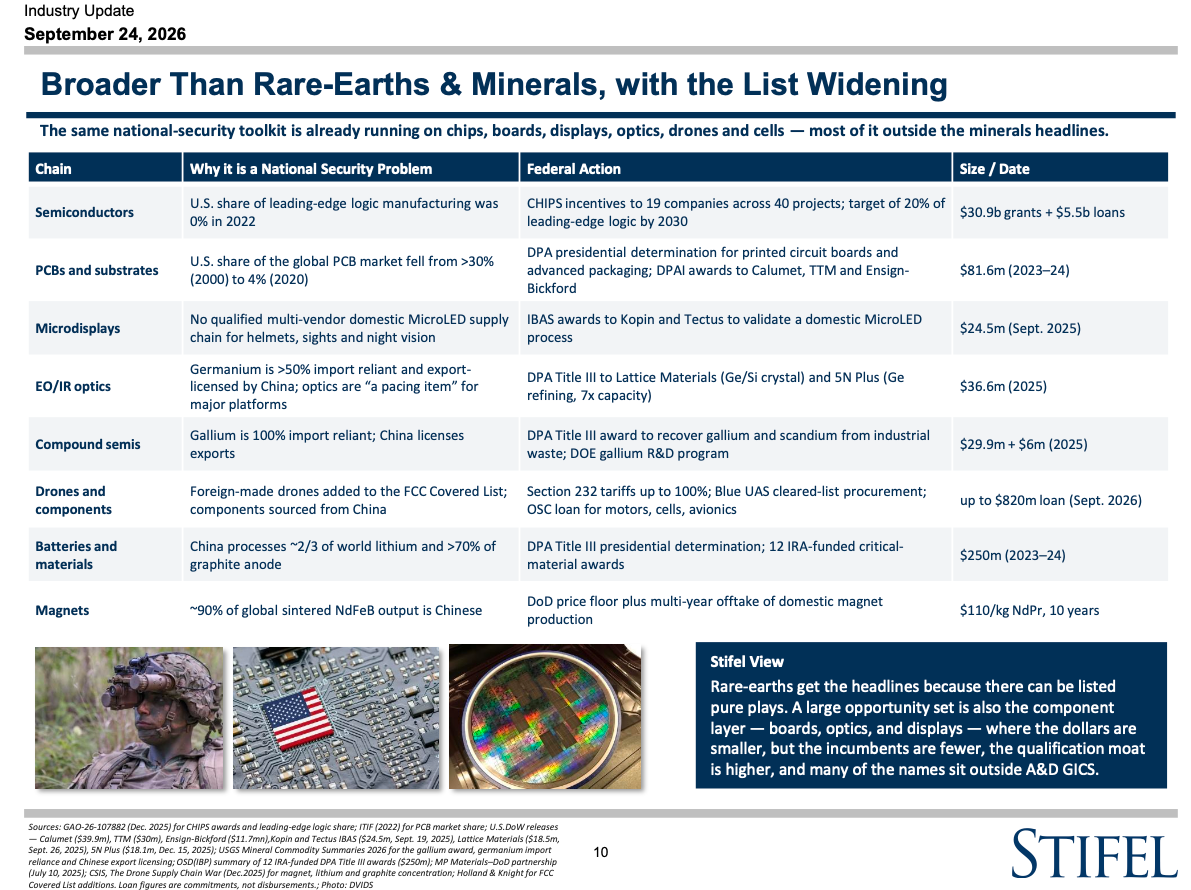
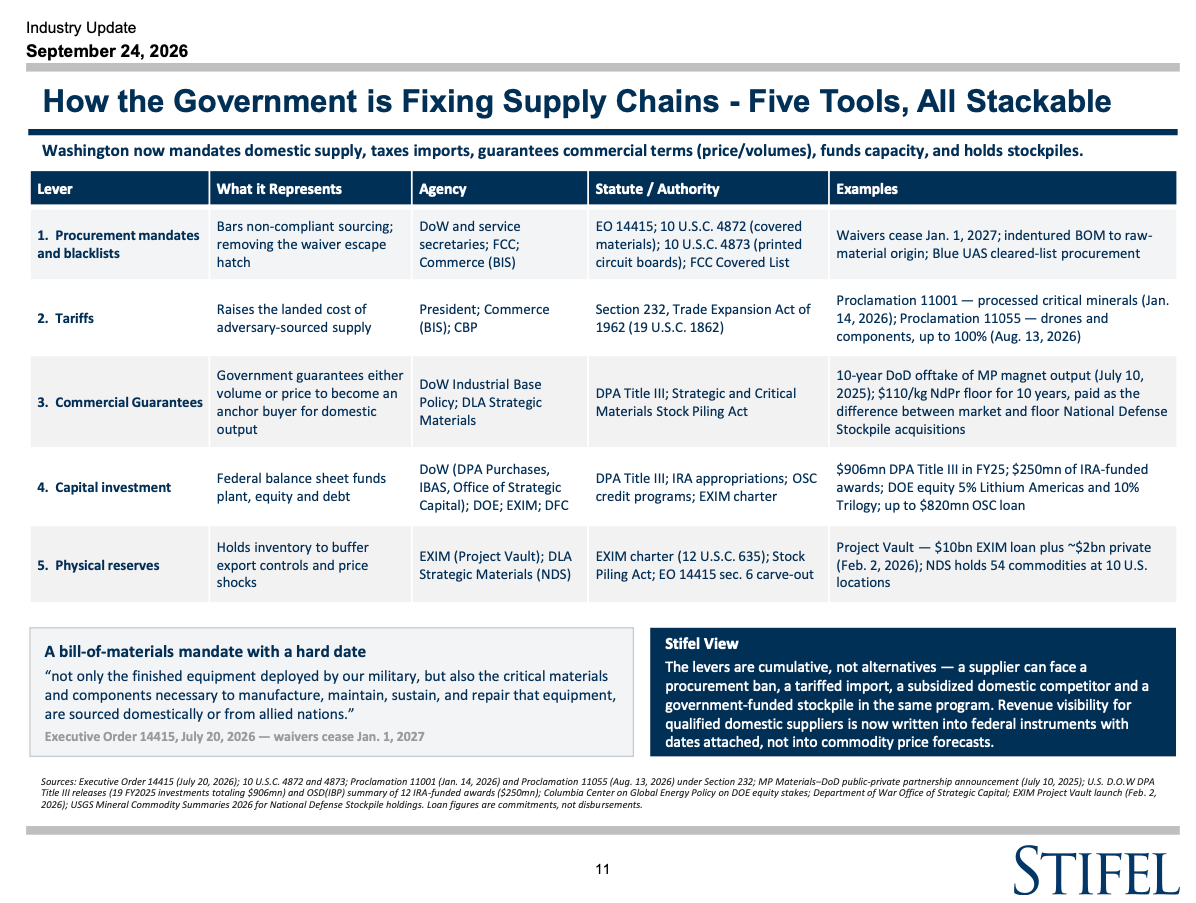
The federal government is attempting to rebuild its critical materials supply chains outside China.
Here's what happens to mining stocks after the US government announces a strategic stake or partnership deal.
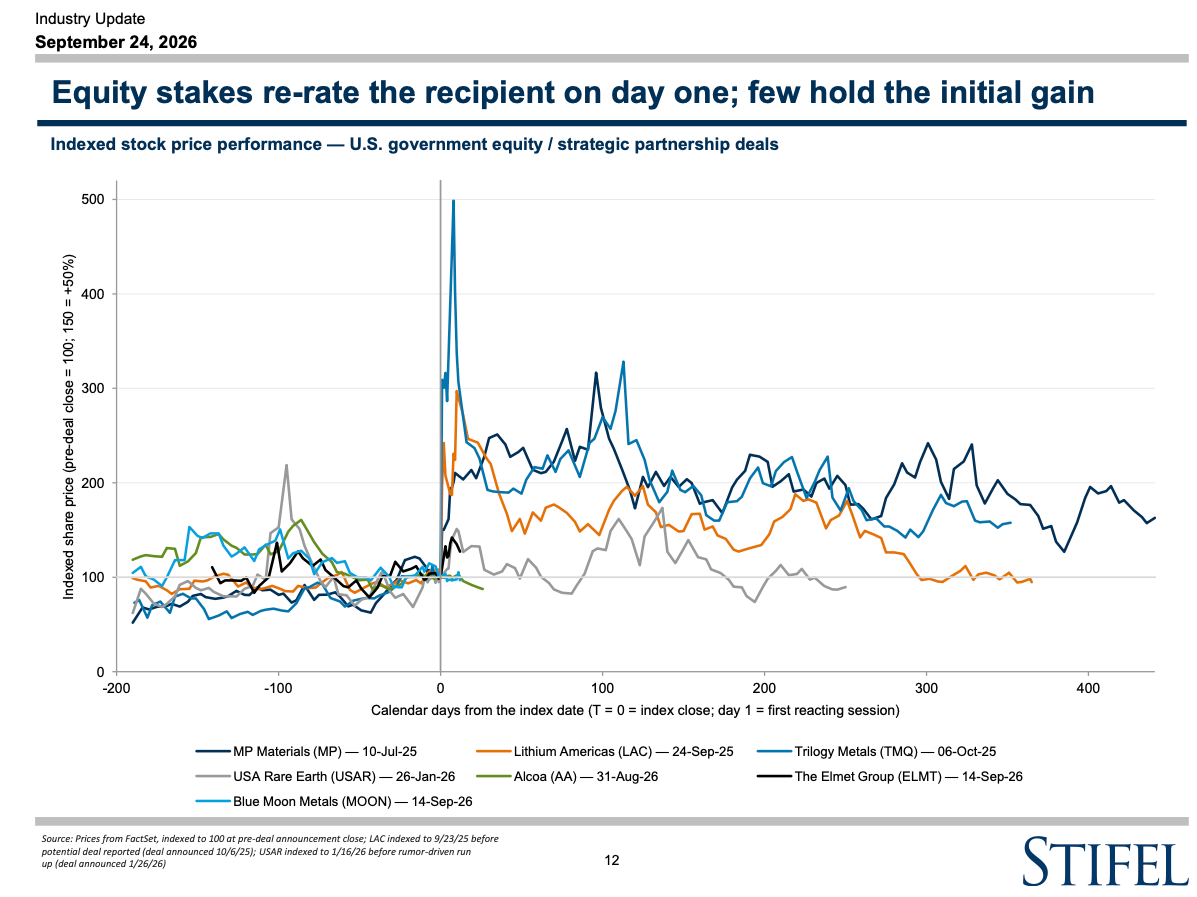
All the deals so far.
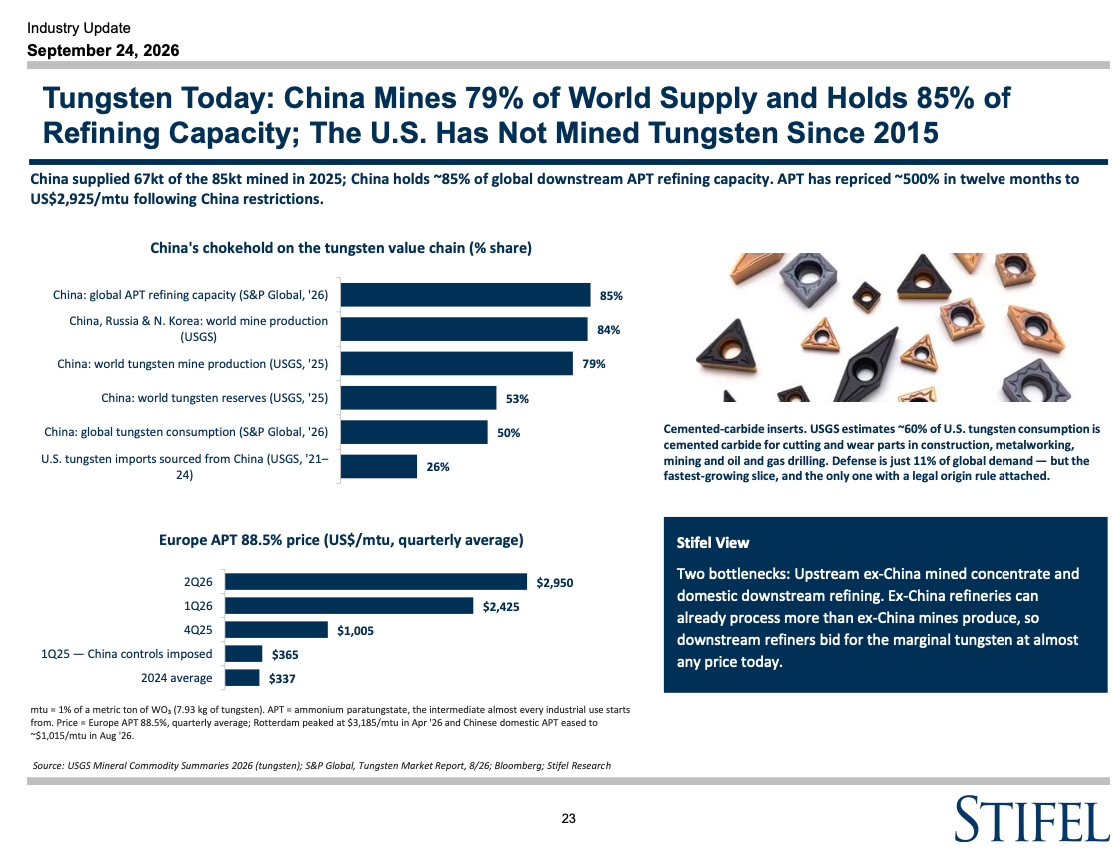
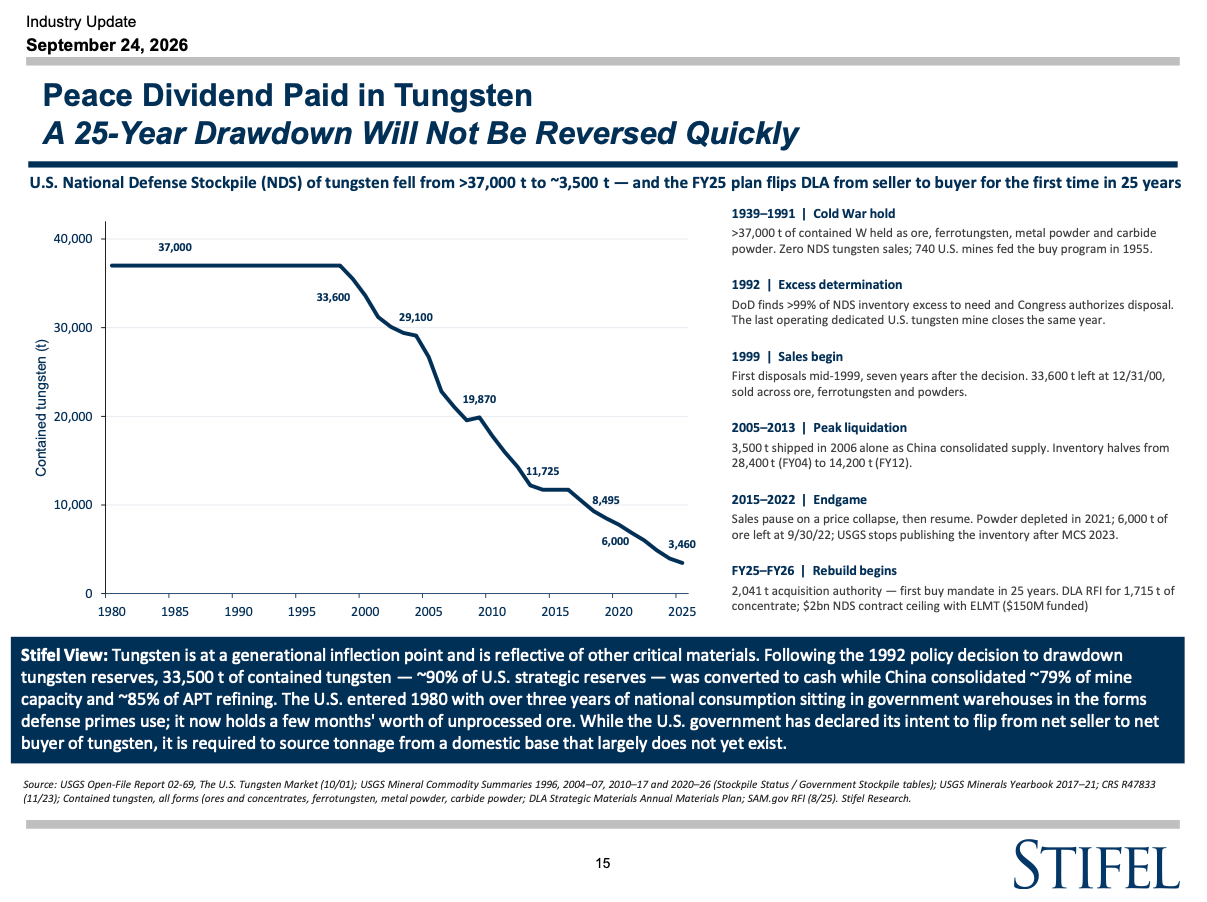
One of the most stunning charts Siegmann created for clients shows the 25-year drawdown of the US government's massive tungsten stockpile, which it will have to reverse for national security reasons.
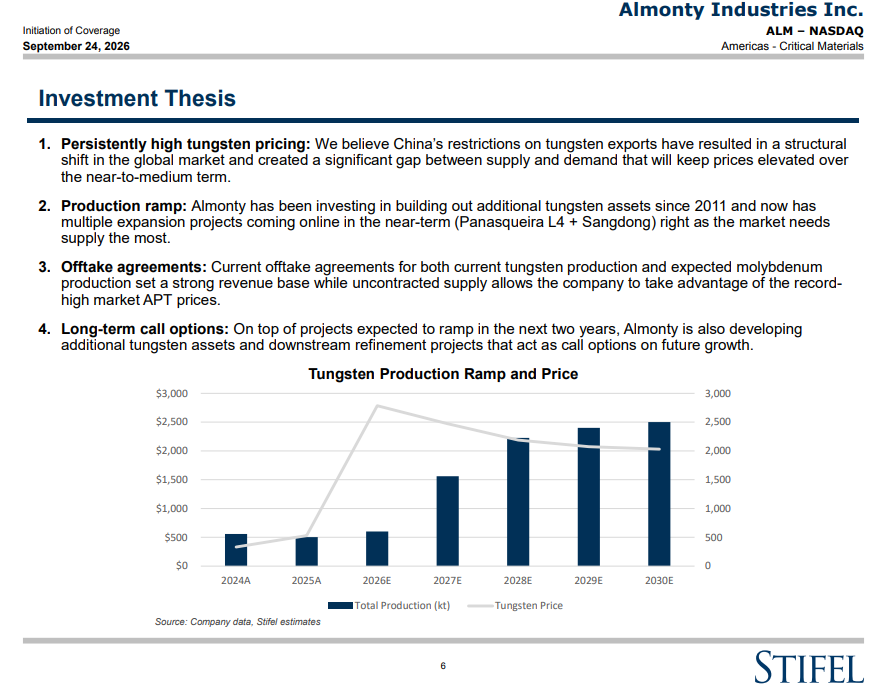
Against that backdrop, Stifel critical materials analyst Brock Cannon initiated coverage on Almonty Industries, believing the Nasdaq-listed miner is set to be a major beneficiary of Western efforts to reduce dependence on Chinese tungsten.
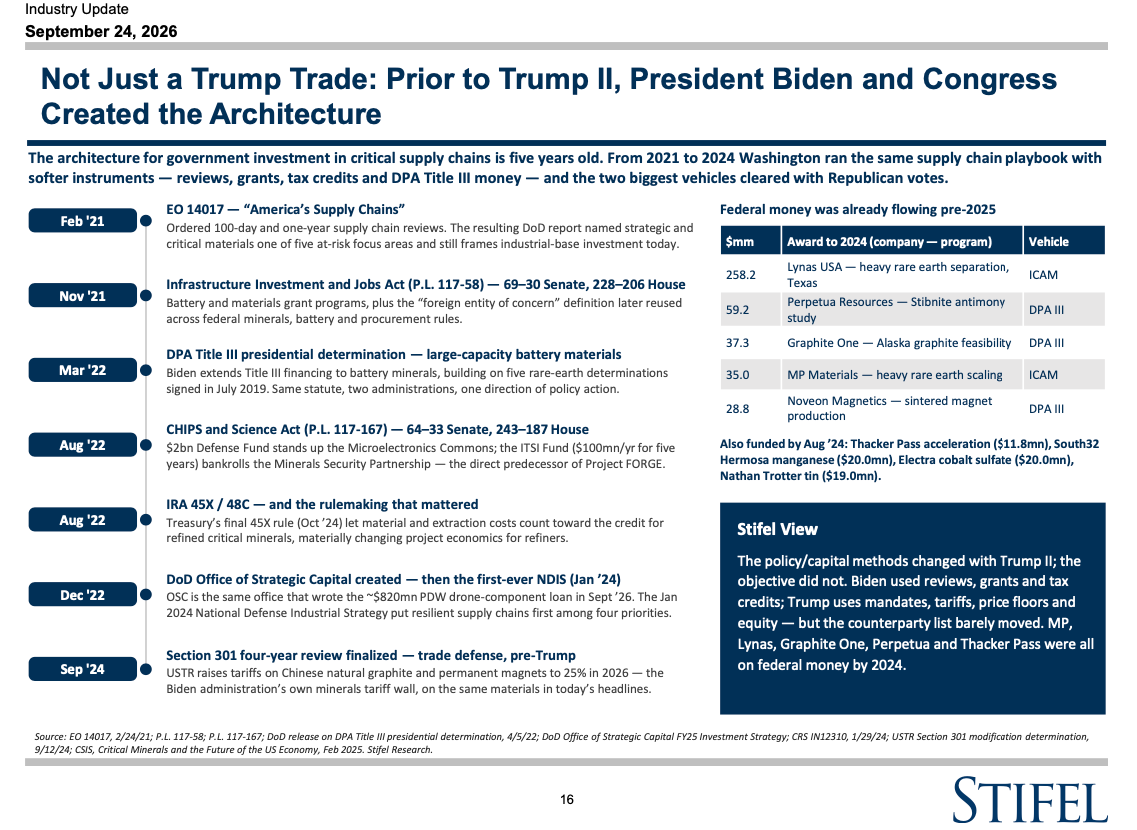
Siegmann said that building critical materials supply chains outside China has been a national priority and is "not just a Trump trade," a point politicians on both sides of the aisle agree on.
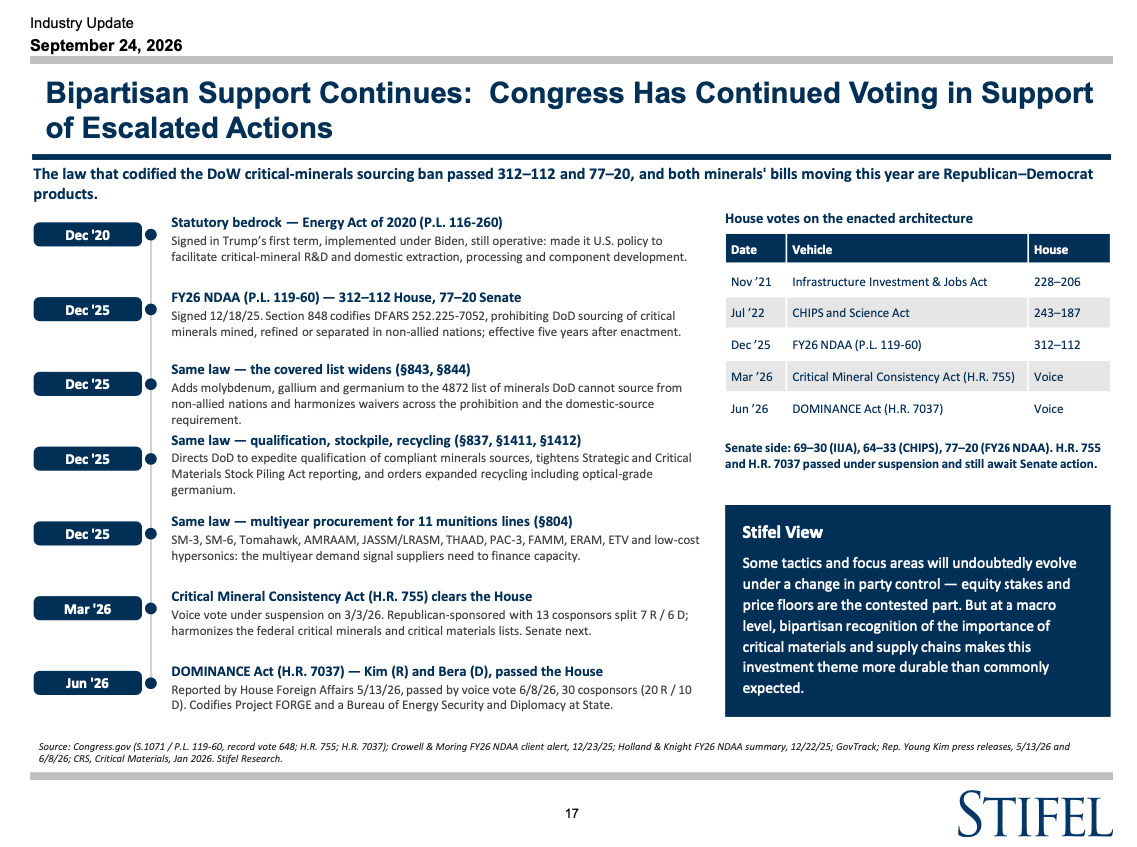
Siegmann prefers exposure to miners already in production that can deliver conflict-free supplies to the West today. Washington has the money and the urgency. These critical materials are the building blocks for the rearmament cycle, AI, reindustrialization, powering up America, and many other themes shaping the modern economy. That makes this a long-lasting investment theme in which early movers stand to be rewarded.