





Satellite Images Reveal Aftermath Of Drone Attack On Saudi Arabia's Biggest Refinery
Update (1453ET):
New GEOINT from spatial intelligence firm Vantor shows high-resolution satellite imagery of the aftermath of a reported Iranian drone strike early Monday on Saudi Aramco's Ras Tanura complex. This attack has taken Saudi Arabia's largest oil refinery offline.
Vantor's satellite imagery shows visible damage across multiple refinery structures, though the full extent of the disruption and physical destruction remains unclear.


Meanwhile, Tehran's deputy foreign minister, Majid Takht-Revanchi, denied claims that Iran attacked the Ras Tanura complex following earlier reports.
* * *
A drone strike forced Saudi Aramco to suspend operations at its Ras Tanura complex while damage assessments are underway on Monday, reviving a 2024 warning we issued that any successful Iranian or Iran-backed militia strike on critical Saudi refining infrastructure could trigger a global oil shock and, in a more severe scenario, set the stage for a broader financial crisis (reminder credit markets are already cracking).
Sources familiar with the drone attack on the Ras Tanura complex told Bloomberg News that Saudi Arabia's largest oil refinery "came under attack by a drone" and "halted operations as a precaution while it assesses damage."
Footage of the aftermath of the drone strike on the Ras Tanura complex was published on X.
JUST IN: 🇸🇦 Iran strikes Saudi Arabia's Aramco Ras Tanura oil refinery. pic.twitter.com/eTmPGRFAY5
— BRICS News (@BRICSinfo) March 2, 2026
Saudi Arabia released a statement in the state-run Saudi Press Agency stating that the damage was "limited" and that a fire was caused by the interception of two drones. The government said the drone attack and resulting missile interceptors did not cause civilian injuries.
The attack on Ras Tanura will ring alarm bells across the energy space because the complex is not just a refinery; it's also part of Saudi Arabia's most important oil hubs. It's a central Persian Gulf terminal with a port able to handle the largest tankers, and Reuters notes that the refinery sits within a Gulf coast energy complex that also serves as a critical Saudi crude export hub.
For the crude products market, the refinery is massive. Reuters notes Ras Tanura's refining capacity at about 550,000 barrels per day, so any outage can tighten the supply of gasoline, diesel, and other refined products, especially across Gulf, Asian, and European markets.
For the crude market, the bigger issue is the surrounding export infrastructure. Saudi Arabia is a leader in global flows, and EIA says Saudi crude and petroleum product exports made up 34% of OPEC crude exports and 26% of OPEC petroleum product exports in 2023. That means any downtime at these critical Saudi loading/refining hubs can quickly spark turmoil in global crude markets.

"The attack on Saudi Arabia's Ras Tanura refinery marks a significant escalation, with Gulf energy infrastructure now squarely in Iran's sights," Torbjorn Soltvedt, principal Middle East analyst at risk intelligence company Verisk Maplecroft, said, who was quoted by Bloomberg.
Soltvedt noted, "The attack is also likely to move Saudi Arabia and neighbouring Gulf states closer to joining US and Israeli military operations against Iran."
Meanwhile...

In March 2024, David Asher, a senior fellow at Hudson Institute and former investigator into Covid origins at the State Department, penned a report titled "Navigating the New World Disorder: Economic Faultlines, Fissures, Fractures, and Failures."
In the note, Asher pointed to a world that is in crisis, similar to the 1920s/30s.

More importantly, he warned that in the event Iran or Iran-backed militias begin targeting Saudi Arabia's crude processing facilities, this could unleash a "Global oil shock could trigger a crisis ala 2007-2008."
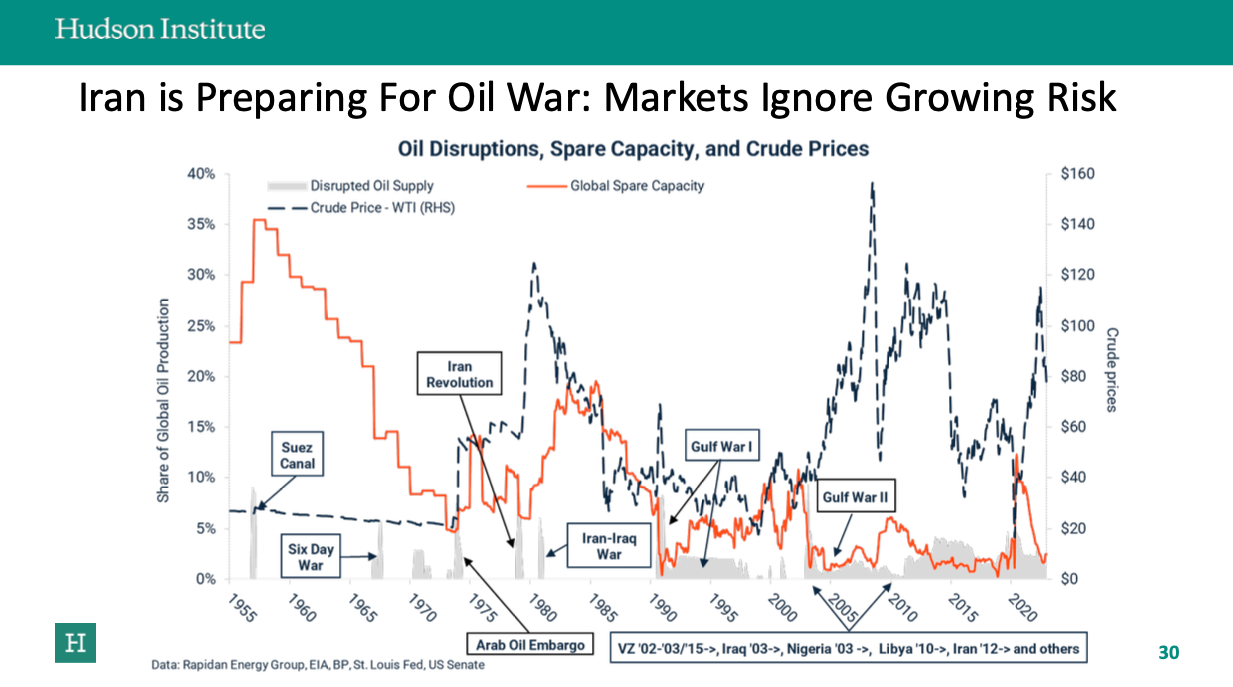
Important to note, and simultaneously, private credit markets are cracking, as we penned last night:
In the overnight, Brent crude futures surged 13% to above $82 a barrel. By 0730 ET, crude futures were trading around the $79 handle. Now, ICE gasoil futures surged 20% on news of the drone strike at Ras Tanura.
By late 2024, Asher penned an op-ed in the Wall Street Journal titled "A Strategy for Striking Back at Iran"...

Asher's roadmap (read here) of how the US would dismantle the Islamic Revolutionary Guard Corps played out this past weekend in Operation Epic Fury.