


Situational Unawareness: Banks Ran Out Of Room To Lever Up The AI Trade, So They Made More
When a bank runs out of room to lend to hedge funds piling into the most crowded trade on the planet, there are two options: stop lending, or find more room. Barclays found more room...
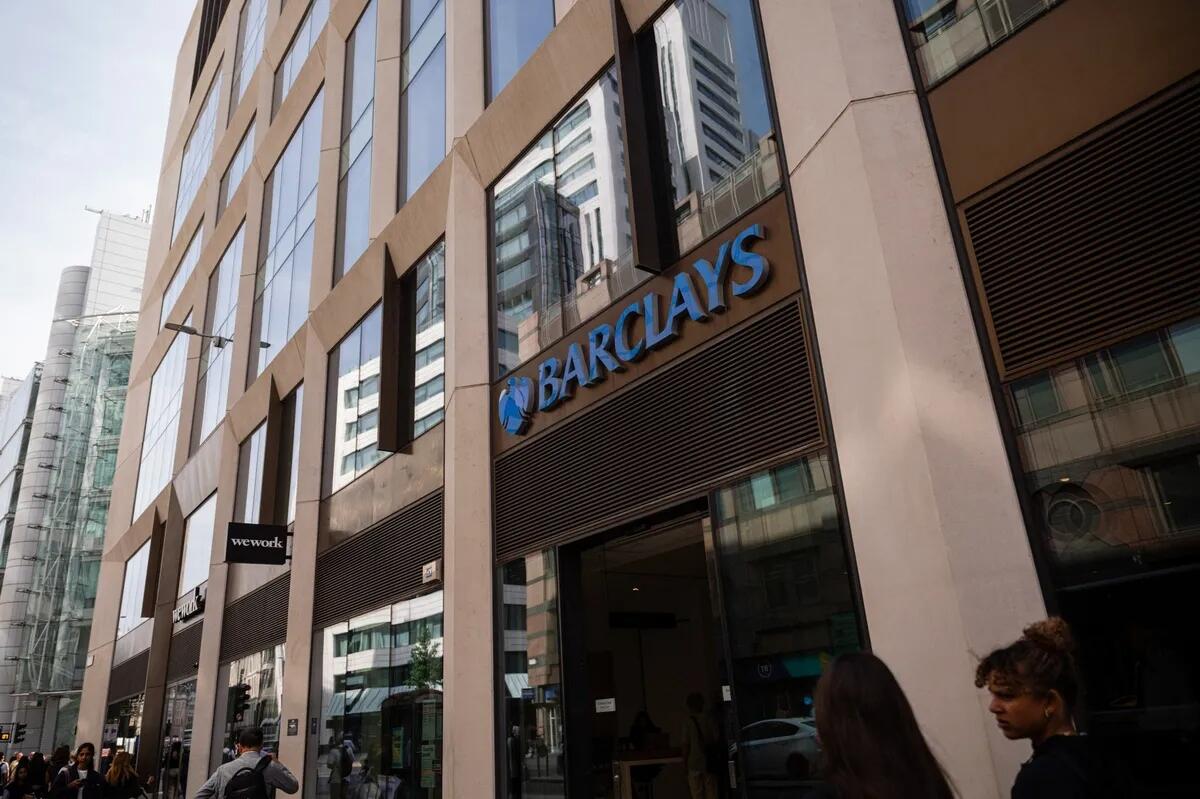
According to a Bloomberg exclusive published Tuesday, Barclays (BARC) executives wanted extra capacity to lend more aggressively to hedge fund clients as Asian AI stocks went vertical earlier this year. The fix: the bank's macro rates traders ended up lending part of their own capital allocation to the prime financing business through an internal auction. The reason they had to: over the summer Barclays had reached its maximum limits on how much financing it could extend to hedge fund clients in Asia. Bloomberg's verdict: Barclays and its peers are "finding ways to meet demand, despite bumping up against internal constraints."
In other words, the internal risk limits did their job, flagged that the bank had lent enough... and the bank responded by moving the goalposts.
Below we walk through why this matters, why Barclays is hardly alone, and why Goldman's own prime book data shows exactly how the banks "fixed" the problem (hint: more shorts, not fewer longs).
"Disciplined"... Right Up To The Limit
The pitch inside Barclays, per Bloomberg's sources, was simple: allocate more balance sheet to higher-returning businesses like prime brokerage (housed in the global markets unit run by Adeel Khan) given the "huge growth" expected in Asian tech stocks. Rates traders, whose returns on balance sheet don't look nearly as sexy as financing Korean memory stocks at peak euphoria, became the donors.
Barclays' official line:
"We deploy our investment bank balance sheet dynamically, responding to client opportunities while maintaining a disciplined approach to risk and returns."
Translation: we found a client opportunity, and we deployed dynamically. Meanwhile, the "disciplined" part kicked in only after the limit was hit.
Regular readers will recall that the Bank of England had already started poking around exactly this corner of the market just as the AI trade was cracking in July:
Bank of England probes Asian equity risk at prime brokers
— zerohedge (@zerohedge) July 29, 2026
Korean degens about to blow up the world
And as we noted when regulators finally found their situational awareness (Sep 24), the BoE is specifically looking at the rapid growth of London prime brokers financing Asian equities this year, after names like SK Hynix went vertical. London prime brokers financing Asian equities... it's almost as if someone had a specific bank in mind.
The Irony: Barclays Was The One That Said No To Leopold
Here's the twist that makes the story worse, not better. Per Bloomberg, Barclays had previously declined to take on Situational Awareness as a client because of concerns over concentration risk in the AI sector. Good call, as it turned out.

For those who missed it (i.e., regulators), Leopold Aschenbrenner's fund was running roughly 4x leverage via total return swaps, largely through Goldman, on a long AI infrastructure / short software book. When AI rolled over in July, the margin calls hit, and the fund dumped its entire public book on Ken Griffin's doorstep at roughly a 10% discount, collapsing from $45 billion to about $10 billion in a matter of days ("Situational Bewareness", Jul 30). Citadel, naturally, soared 6% in July on the firesale (Aug 5), and promptly flipped almost all of it (Aug 21). Our take at the time:
Archegos 2.0 it was.
— zerohedge (@zerohedge) July 30, 2026
*SITUATIONAL AWARENESS ASSETS SAID TO FALL TO $10 BILLION
Down from $45BN less than a month ago. Historic implosion.
Who is Archegos 3.0... there is still about $500BN in TRS excess leverage
So the "prudent" bank avoided the single most obvious blowup of the year, and still maxed out its Asian hedge fund lending to the point where it had to borrow capital from another desk to keep going. Which tells you that Leopold wasn't the problem; he was merely the most visible symptom of a market where everyone was levered to the same AI theme through the same few dealers' balance sheets.
Everyone Ran Out Of Balance Sheet
None of this should come as a surprise. Back in June, we highlighted Bloomberg strategist Simon White's warning that futures funding rates were exploding amid soaring total return swap demand (Jun 15). As White put it at the time:
"We are also seeing dealers offering a record amount of leveraged exposure to stocks via futures and total return swaps. Equity inventory on their balance sheet has risen to a high of $223 billion... This is demand driven, but also dealers' balance sheets are likely running into supply issues due to regulatory constraints." (emphasis ours)
Barclays has now confirmed the "supply issues" part, and how it got around them.
And we know how that story ended:
The chip/memory trade peaked THE DAY total return swap funding costs hit a record (as noted back in June).
— zerohedge (@zerohedge) August 23, 2026
The entire trade was all just leverage - largely from Situational Awareness - masking as narrative
Barclays isn't the only one bumping its head on the ceiling. Bloomberg notes that Goldman said earlier this month that demand for equities financing continues to exceed available industry capacity, with CFO Denis Coleman saying it allowed the bank to "remain selective in deploying resources." Back in July, Coleman said that in prime and FICC financing there was "far more demand across the segment than we're willing to engage." UBS CFO Todd Tuckner, meanwhile, said in July the bank's equities balance sheet was being used "more sparingly" for prime brokerage.
Put differently: Goldman and UBS publicly say they are rationing, and Barclays (which has spent years clawing its way up the prime brokerage league tables) is the one finding creative ways to fill the excess demand its rivals are turning away. When the biggest prime brokers on the Street are telling you demand exceeds what they're willing to finance, being the marginal lender who says yes is not usually a winning position.
How The Banks "Fixed" It: Make The Clients Short More
The most interesting detail in the Bloomberg piece is buried near the end: traders at Barclays, as at other banks including Goldman, worked with hedge fund clients to limit their balance sheet use by encouraging them to take more short positions, which lessen the burden on prime brokers' books (short proceeds help fund the longs internally).
And that is precisely what shows up in Goldman's own prime brokerage data. In his weekend note ("US EQUITIES - heightened demand for protection", Oct 18, available to pro subs), Goldman's Lee Coppersmith wrote:
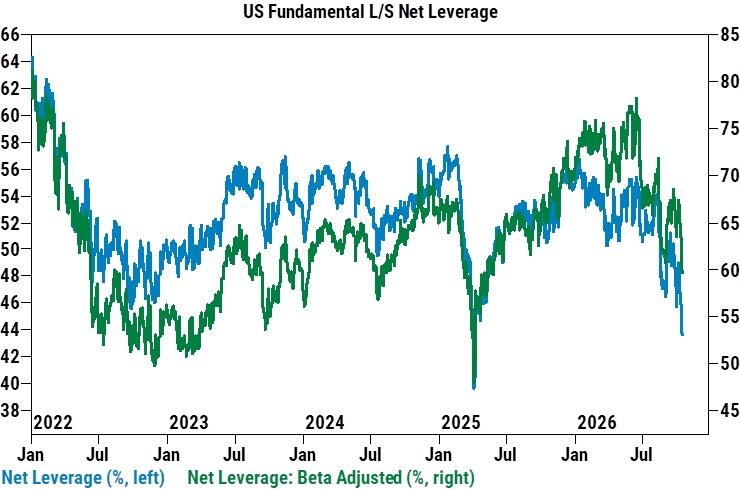
"Our PB data showed US L/S net leverage fell 3.2pts last week, the largest weekly decline since Liberation Day and fourth-largest over the past five years. At 43.7%, net leverage now sits at a five-year low."
But here's the kicker:
"What's notable about the reduction in hedge fund net exposure is that essentially all of it since the end of July has come from an increase in shorts (not a reduction in longs) – h/t GS' Vincent Lin for the stats. Short exposure is now near five-year highs, while long exposure remains in the 53rd/72nd percentiles over the past three/five years… Said another way, managers have aggressively reduced their directional exposure, but haven't meaningfully reduced their long books." (emphasis ours)
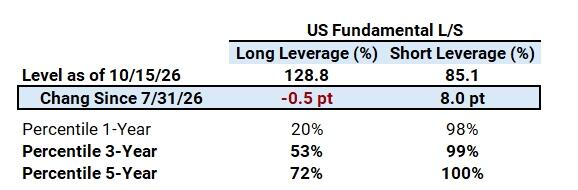
The numbers: since July 31, long leverage is down a whopping 0.5pt to 128.8%, while short leverage is up 8.0pt to 85.1%, the 100th percentile over five years. Do the napkin math and gross leverage is roughly 214%, i.e., up, not down, since the Situational Awareness blowup.
Coppersmith is under no illusions about what that means if the pain continues:
"If the performance pressure continues, there's certainly scope for further de-grossing through long sales and short covering, but it's also worth recognizing just how much more defensive a lot of portfolios now look." (emphasis ours)
And the de-grossing has already started in the very names the prime brokers were financing in Asia:
"Global Tech saw its largest percentage net selling on record since 2016, with semis accounting for 57% of US technology net selling. A pretty remarkable unwind taking place across some of the most popular areas of the market." (emphasis ours)
UBS' trading desk sees the same setup. Here is desk trader Torsten Sippel in his weekly note (Oct 18, available to pro subs):
"This week's action looks like a positioning reset rather than broad equity liquidation, action very similar to the Situational Awareness driven unwind a couple months ago... That distinction matters given Hedge Fund net exposure has already fallen to the 30th percentile while gross remains above the 90th percentile on a five-year basis, leaving portfolios vulnerable to additional de-grossing if P&L pressure persists." (emphasis ours)
Translation: nobody actually de-risked. The longs are still there. The banks simply asked clients to bolt on more shorts so the net looks tamer and the prime broker's balance sheet usage looks lighter. That works beautifully... until longs and shorts move against the fund at the same time, which, as Leopold could tell you, is exactly what happened in July when AI infrastructure dumped and software ripped. A hedged book with 214% gross is still a 214% gross book.
The Payoff Comes Thursday
Why stretch so hard? Because it pays. Barclays' equities arm is expected to report £865 million ($1.2 billion) in Q3 revenue on Thursday, per Bloomberg consensus, which would be its best third quarter since at least 2009, the year after it bought Lehman's North American business. We are sure the Lehman reference is purely coincidental.
Prime brokerage has been the key driver of equities revenue across the Street this year, and the volatility that "fueled much of the surge in trading revenue" was itself largely a function of the leverage the prime brokers were extending. It's a closed loop: banks lend to funds, funds bid up AI, AI volatility generates trading revenue, revenue justifies more balance sheet for prime. Right up until the loop runs in reverse.
Bottom Line
Barclays' spokesperson insists the bank maintains "a disciplined approach to risk and returns." Perhaps. But discipline usually means that when you hit a limit, you stop, not that you hold an auction to borrow capital from the rates desk so you can keep financing the hottest trade in Asia. And when the "solution" to clients' bloated balance sheet usage is to have them pile on shorts, pushing short leverage to five-year highs while long books barely budge, the system isn't less levered; it's just levered in a way that looks better on the prime broker's capital report.
With the BoE already examining London prime brokers' Asian equity books, with UBS saying last week's de-grossing looked like a replay of the Situational Awareness unwind, and with gross leverage still near record, we suspect the question isn't whether Archegos 3.0 is out there, but which prime broker's balance sheet it's sitting on. The one that turned away Leopold may not be the one that turned away everyone.
We'll check back after Barclays reports on Thursday, and listen carefully for whether anyone on the call asks about Asia.