





Who pays when governments avoid a debt crisis?
A debt crisis is easy to imagine: bond prices collapse, yields spike, the government struggles to refinance its obligations...
Markets panic.
The next debt crisis may be much harder to recognize.
Governments have more options than simply repaying their debts or defaulting on them, such as:
- raising taxes
- cutting spending
- tolerating inflation
- suppressing real interest rates
- adopting policies that encourage domestic institutions to hold government debt
Each response can make the debt more manageable, but none makes its cost disappear.
Instead, the crisis can become a question of who absorbs it.
Default makes the cost obvious
An outright default identifies the loser immediately: creditors expected to receive a certain amount and receive less.
That makes default politically and financially disruptive, particularly when government debt sits throughout banks, pension funds, insurance companies, investment portfolios, and other parts of the financial system.
Therefore, governments have powerful incentives to pursue less dramatic alternatives when they can.
Those alternatives can spread the burden across millions of people.
Many of whom may never think of themselves as participants in a debt crisis.
Inflation can turn creditors into involuntary participants
Suppose a government repays every dollar it promised to repay.
Bondholders receive their principal, and interest payments arrive on schedule. No default occurs.
Those payments can still purchase less than creditors expected when they originally lent the money.
Inflation reduces the real value of debt denominated in a country’s own currency. The government’s nominal obligation remains intact while its inflation-adjusted burden declines.
As we explored last week, historical research published by the IMF found that inflation and negative real interest rates helped reduce large public-debt burdens after World War II. Researchers describe financial repression as effectively imposing a tax on bondholders and savers when returns remain below inflation[1].
In that way, the government can honor the contract while transferring part of the adjustment to the people holding its currency and fixed-income claims.
Savers can pay without receiving a bill
Financial repression can make this transfer even less visible.
Governments can create conditions that keep borrowing costs below what an unrestricted market might otherwise demand. Regulations can also encourage financial institutions to hold government securities, creating a more dependable source of demand.
The saver doesn’t receive an invoice marked “debt reduction.”
Instead, the cost appears in the gap between the nominal return on savings and what those savings can actually buy.
The same IMF research found that real interest rates were negative about half the time across advanced economies from 1945 through 1980[1].
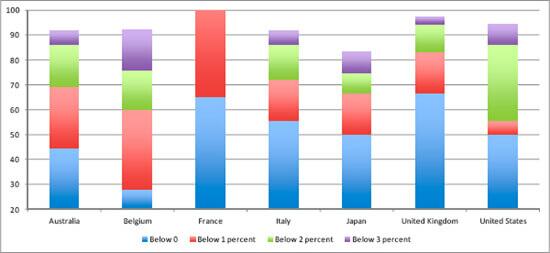
That helped governments reduce the real burden of debts accumulated during World War II.
Consequently, a sovereign debt problem can become a purchasing-power problem for someone else.
Taxpayers can inherit the adjustment
Inflation and financial repression aren’t the only alternatives to default.
Governments can also devote more revenue to servicing debt, raise taxes, or reduce other expenditures.
The Congressional Budget Office projects U.S. net interest outlays rising from about $1 trillion in 2026 to $2.1 trillion in 2036 under current law.
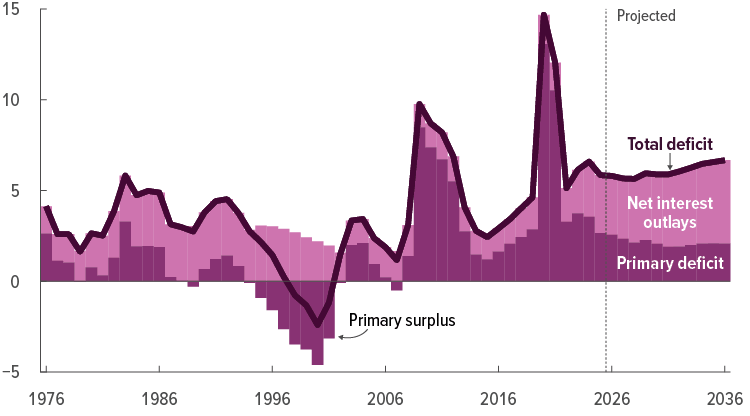
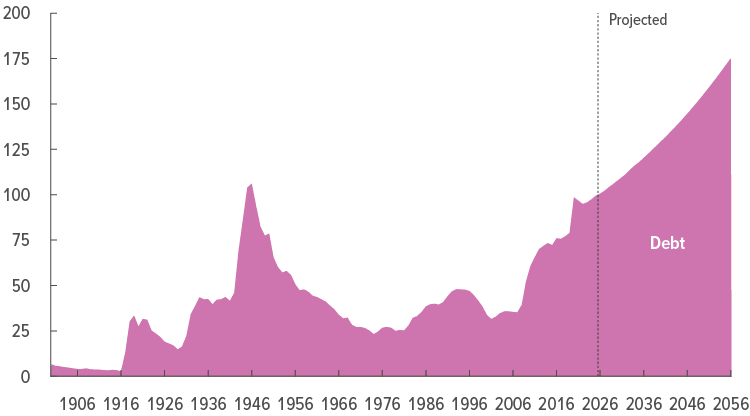
CBO also projects that federal debt held by the public will rise from 101% of GDP in 2026 to 120% in 2036[2].
Higher interest expense doesn’t mechanically dictate which taxes will rise or which programs will lose funding. It does increase the resources required simply to carry existing obligations.
The burden can appear through fiscal choices rather than financial panic.
Businesses can absorb costs they never borrowed
There’s another potential loser outside the government’s balance sheet.
When governments borrow heavily, they compete for capital with private borrowers. CBO’s research finds that greater federal borrowing can put upward pressure on interest rates and reduce private investment[3].
A business may face a higher hurdle for building a factory, purchasing equipment, or financing an expansion even though it had nothing to do with creating the public debt.
The cost has migrated again.
A quiet crisis is still an adjustment
None of these outcomes is inevitable. Economic growth can make large debts easier to carry, fiscal reforms can improve the trajectory, and several adjustments can occur simultaneously.
That uncertainty makes waiting for a spectacular collapse a poor way to identify when debt has become consequential.
A country can avoid default, its bond market can continue functioning, and its government can keep borrowing.
Meanwhile...
- savers can lose purchasing power
- taxpayers can surrender more income
- public spending can face greater constraints
- private borrowers can compete with an increasingly hungry sovereign for capital
Is China preparing for a different kind of debt crisis?
China offers an interesting example of what preparing for this uncertainty can look like. Rather than waiting to discover exactly how monetary or sovereign-debt pressures will resolve themselves, the People’s Bank of China has steadily increased its gold reserves.
Its reported gold holdings reached 2,387 metric tons in August after 22 consecutive months of purchases[4].
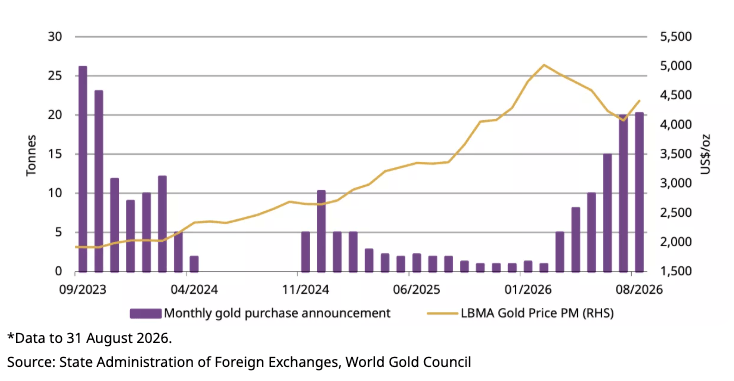
China certainly isn’t alone—central banks around the world have been accumulating gold—but its sustained buying illustrates another way to potentially think about a debt crisis.
Preparing for changes in the value and reliability of financial claims doesn’t necessarily require predicting the event that causes them.
In that sense, China’s gold playbook is less interesting for its specific allocation than for the broader principle it illustrates: reducing dependence on any single financial claim or monetary outcome.
The crisis may not look like the one you expect
The absence of a dramatic debt crisis may not mean that the cost has disappeared.
It may mean someone is already paying it.
In a conversation with the Gold Exchange Podcast, Greyson Geiler explores what investors can miss when they become too attached to expectations about how the monetary system should behave.
And what becomes visible when they consider how the system might evolve instead.
Sources: